
SA watches wayward Bozell, threatens action - IOL
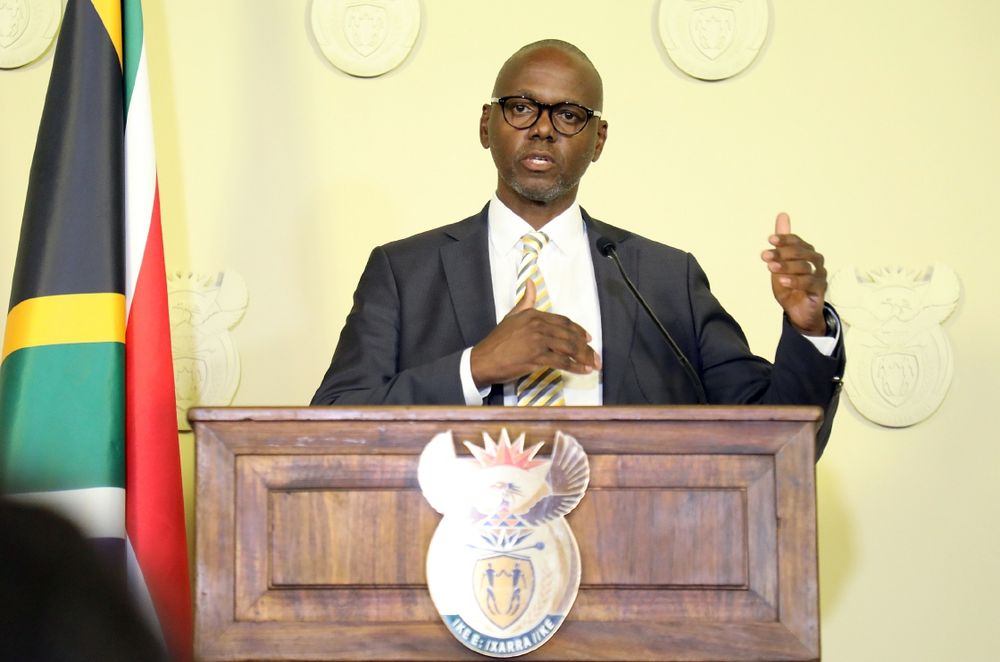
Presidential Spokesperson Vincent Magwenya. South Africa says it has warned US Ambassador Leo Brent Bozell III over alleged undiplomatic conduct, as Parliament and analysts call for a tougher response amid worsening bilateral tensions.
The South African government is keeping a close eye on US Ambassador Leo Brent Bozell III after reprimanding him on several occasions for undiplomatic conduct.
Presidential spokesperson Vincent Magwenya briefed the media in Pretoria last Thursday, where he indicated that the Department of International Relations and Cooperation (DIRCO) had recently warned the ambassador about his waywardness and was monitoring his conduct.
Bozell III has exhausted diplomatic goodwill through persistent provocation and interference in the country's sovereign affairs, with calls for his expulsion mounting.
“The Department of International Relations and Cooperation has held engagements with Ambassador Bozell on what is the sort of expected and established decorum or behaviour from an ambassador.
"They’ve held those discussions. Since then, I’ve not seen anything that we could identify as provocative. Where they need to advise the President for any further action," said Magwenya.
The démarches followed a series of public interviews and statements in which Bozell criticised the South African government's response to a set of demands from Washington on land, race policy, Black Economic Empowerment (BEE), farm safety and South Africa's genocide case against Israel at the International Court of Justice.
South Africa's parliamentary Portfolio Committee on International Relations and Cooperation has also expressed concern, saying diplomats must respect the laws of the receiving state, not interfere in its internal affairs, and raise disagreements through established diplomatic channels — not through public media interviews.
Prominent international relations expert Professor David Monyae called for Bozell's immediate expulsion.
In an exclusive interview with CAJ News Africa in Fuzhou, Fujian province, China, Monyae, a University of Johannesburg academic and think-tank scholar, said Pretoria had more than sufficient justification to declare Bozell persona non grata.
Bozell's controversial utterances on X (formerly Twitter), particularly his warning that American visa restrictions against South Africans were "only the first step", have further inflamed tensions.
His confrontational exchanges with South African officials have also fuelled accusations of diplomatic overreach.
The controversy comes amid Washington's November 2 announcement that South Africa would be suspended from the African Growth and Opportunity Act (AGOA), effective January 1, 2027.
Monyae questioned whether Pretoria should continue accommodating an ambassador whose conduct had become incompatible with diplomatic norms.
"South Africa has been trying to keep the ambassador in a way of protecting AGOA. Now, with the expulsion of South Africa from AGOA, the big question is whether South Africa will continue this self-understanding and keeping an ambassador that is way, way, way out of order in any diplomatic circles," Monyae queried.
He suggested that Pretoria's previous reluctance to expel Bozell might have been influenced by economic and geopolitical considerations.
However, he argued that the deteriorating relationship had rendered such accommodation increasingly difficult to justify.
"My own personal view is, NO, the situation (tension), instead of getting better, is getting worse with time, and therefore there is absolutely nothing wrong in expelling and kicking the man out of the country, as the US has done with its own (SA ambassador) in Washington," Monyae remarked.
He added: "So, I think it's high time South Africa took a decisive position and stood firm on its foreign policy against any country that wants to meddle in its political space."
Monyae called on the African National Congress (ANC), South African patriots and influential voices to support decisive action against what he described as American interference.
"In the end, I think there will be tension within the ANC, in the country and other voices standing against the US ambassador," he said.
He stressed that the crisis was rooted in fundamentally conflicting foreign policy priorities.
"I think fundamentally, the two countries' foreign policies are clashing," Monyae pointed out.
He explained that Washington expected Pretoria to align itself with American geopolitical interests, particularly regarding China, Russia and Iran.
Monyae maintained that South Africa's foreign policy independence was non-negotiable and that no foreign government had the right to dictate Pretoria's international relationships.
His position has found support among political activists from other parts of the Global South.
A Chinese political figure in Fuzhou, who identified himself only as Zhang, condemned Washington's approach.
"Majority political activists here have been observing this sad story from the US against South Africa, but our policy has always been not meddling in other countries' internal affairs, just like what politically undisciplined Washington is doing," Zhang remarked.
A Brazilian political activist also condemned American interference.
"Imagine if another country interferes in US affairs, I bet with my last cent, the entire world would hear from Washington, but now that it's America interfering in the internal affairs of the host country, to them it's normal. These are the double standards the greater Global South would not tolerate," the activist said.
For Monyae and other critics, the message is unequivocal: South Africa must not sacrifice its sovereignty, constitutional independence or foreign policy principles to appease Washington. Diplomatic relations cannot become instruments for intimidating independent nations.
By Savious Kwinika, recently in Fuzhou, China.

