Sabeer Bhatia's 55% inheritance tax idea: Rich or common man, who pays more?
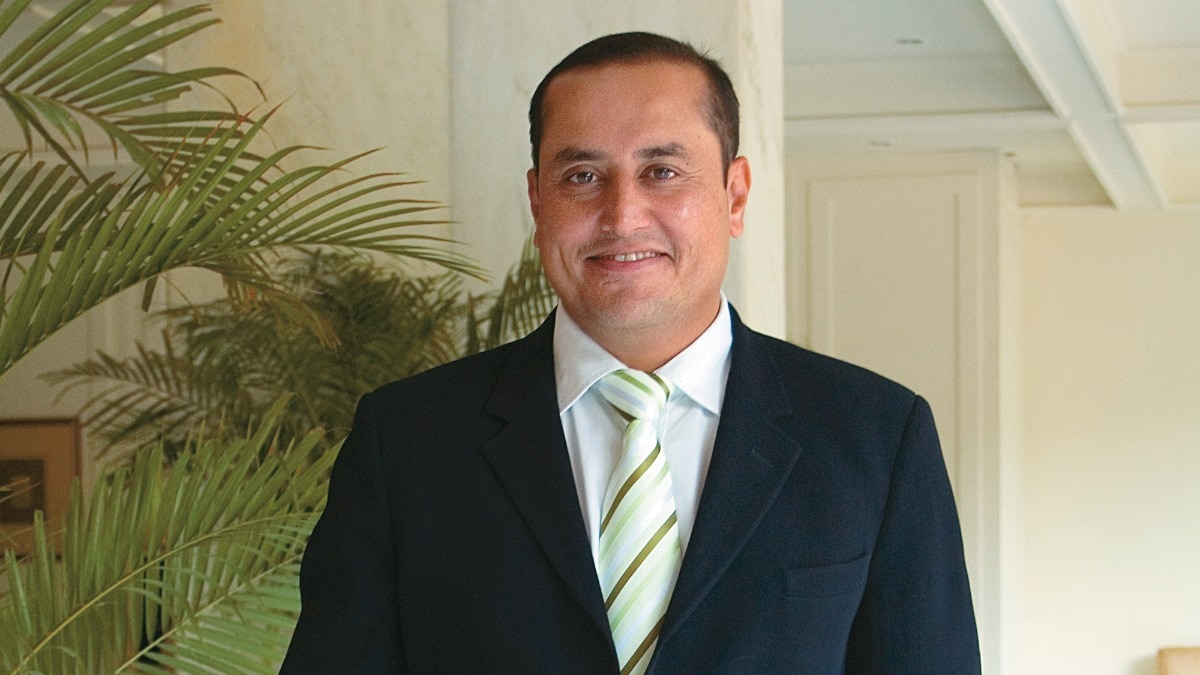
What if a large part of the wealth you inherit from your parents or grandparents had to be paid as tax? That is the debate now gaining attention after Hotmail co-founder Sabeer Bhatia called for a 55% inheritance tax in India.
Bhatia recently wrote on X that if India wants to become a truly competitive nation, it should consider a 55% inheritance tax. He argued that opportunity should come from what people build, rather than simply what they inherit.
The idea has once again put the spotlight on an old and sensitive question: should inherited wealth be taxed heavily, and if so, who would bear the biggest impact — wealthy families with large fortunes or ordinary households passing on a home and savings?WHO WOULD A 55% INHERITANCE TAX TARGET?
Inheritance tax is charged when wealth or assets are transferred from a deceased person to their heirs. A high rate such as 55% would primarily affect large estates if the government sets a sufficiently high exemption threshold.
According to Nishant Shanker, Tax Controversy and Dispute Resolution, Navraj Global Advisors, a well-designed inheritance tax could reduce the concentration of wealth across generations and provide an additional source of revenue for the government.
“It could also promote greater equality of opportunity by ensuring that very large inherited fortunes are taxed when they pass from one generation to another,” he said.
However, the impact would depend heavily on how the tax is designed. A 55% headline rate does not necessarily mean every person inheriting property or money would lose 55% of it to tax.THE COMMON MAN MAY BE PROTECTED — IF THE THRESHOLD IS HIGH
For middle-class families, the biggest concern would be whether an inheritance tax could apply to something as basic as a family home or ordinary savings.
Experts said this could be addressed through a high exemption threshold. Shanker said the tax should ideally apply only above a sufficiently high limit so that ordinary inheritances are not affected.
“A reasonable exemption for a family home and modest financial assets could protect middle-class families. The tax could then increase progressively as the value of the inheritance rises,” he said.
Abhishek Kumar, Sebi-registered investment adviser and founder of Sahaj Money, also said protecting the middle class would require a high initial exemption threshold.
“Indexing these exemption limits to inflation and property market values would ensure that average families passing down a single home or ordinary savings are not forced into distressed liquidation to pay for inheritance tax,” he said.
This means that the structure of the tax could matter as much as the 55% rate itself. A high tax-free limit could keep most ordinary families outside its scope, while large inheritances could face higher taxation.WOULD INHERITED HOMES ALSO BE TAXED?
For many Indian families, the largest asset they own is their house. Even if a family does not have a huge amount of cash or investments, a property accumulated over decades could have a high market value.
This creates a potential problem if the tax is based on the total value of inherited assets.
Both experts pointed to exemptions and payment flexibility as possible safeguards. Kumar said targeted exemptions and special relief for primary residential properties could prevent the tax from disproportionately affecting families inheriting a modest amount.
Shanker suggested that protection for a primary residence, within reasonable limits, along with instalment facilities could help.WHY FAMILY-RUN BUSINESSES COULD FEEL THE PINCH
The impact could be more complicated for families that own businesses, farms or other assets that are valuable but difficult to sell quickly.
Imagine a family-owned company worth hundreds of crores being passed on to the next generation. The heirs may inherit a valuable business, but they may not have enough cash to pay a large tax bill.
“If heirs suddenly face a large tax bill, they may have to borrow money or sell part of the business to meet the liability,” Shanker said.
He added that provisions such as deferred payments or instalments could be needed for genuine family businesses.
Kumar also warned that a steep inheritance tax could disrupt small and medium-sized enterprises if heirs are forced to sell or liquidate core business assets to meet the tax liability.WILL WEALTHY FAMILIES CHANGE HOW THEY TRANSFER MONEY?
A high inheritance tax could also change the way wealthy families plan their finances.
Instead of simply transferring assets after death, families could look at gifting assets during their lifetime, creating trusts or using other legitimate estate-planning structures.
“Wealthy families would have a much greater incentive to undertake succession planning during their lifetime,” Shanker said. He added that they may consider gifting, trusts, family arrangements and other legitimate estate-planning structures.
Kumar said ultra-high-net-worth families could also make greater use of trusts, philanthropic foundations and corporate holding structures to manage the transfer of wealth across generations.
This could make tax administration more complicated and increase the importance of clear rules around such structures.COULD IT LEAD TO TAX AVOIDANCE OR CAPITAL FLIGHT?
A major concern with a very high inheritance tax is that some wealthy individuals may look for ways to reduce their tax liability.
This could include restructuring assets, making lifetime gifts, using trusts or holding assets outside India. Kumar said a high rate could create incentives for capital to move to jurisdictions with more favourable tax regimes.
Shanker also pointed to the possibility of wealthy families restructuring their assets, using trusts or making lifetime gifts.
However, whether such measures become widespread would depend on the final design of the law, enforcement and the rules governing assets held overseas.WHAT ABOUT DOUBLE TAXATION?
Another issue is that some of the assets being inherited may already have been subject to taxes during the owner's lifetime.
For instance, income earned to build wealth may have been taxed, while gains on certain assets may also attract capital gains tax when they are sold.
This raises the question of whether taxing the transfer of the remaining wealth amounts to another layer of taxation.
Shanker said inheritance tax and existing taxes address different things.
“Income tax applies to earnings, while capital gains tax applies when certain investments or assets are sold at a gain. An inheritance tax would target the transfer of accumulated wealth between generations,” he said.
He added that inheritance tax could therefore complement existing taxes rather than necessarily replace them.WOULD IT REALLY IMPROVE EQUALITY OF OPPORTUNITY?
The central argument in favour of inheritance tax is that people should have a greater chance to build wealth based on their own work and opportunities, rather than starting life with vastly different financial advantages because of family wealth.
Both experts said such a tax could potentially reduce wealth concentration.
But there could also be unintended effects.
Kumar said a high inheritance tax could reduce unearned inherited advantages, but could also discourage long-term savings and entrepreneurial activity. He also flagged risks such as capital flight, complex asset-shielding structures and lower domestic investment.
Shanker similarly said the tax could improve equality of opportunity, but warned that a very high rate could encourage wealthy families to restructure their assets or move wealth outside India.SO, WHO WOULD FEEL THE IMPACT THE MOST?
If India were to introduce an inheritance tax with a high exemption threshold, the immediate impact would largely be concentrated on very large estates rather than ordinary inheritances.
But the details would matter. The threshold, treatment of the family home, rules for businesses, valuation of assets and payment options would determine how far the tax reaches.
For wealthy families, a 55% inheritance tax could significantly change succession planning and the way assets are transferred to the next generation. For middle-class families, a high exemption and protection for primary homes and modest savings could keep the tax from becoming a burden.
The bigger question, therefore, may not simply be whether India should have a 55% inheritance tax, but how such a tax would be structured — and whether it can target large inherited fortunes without creating fresh problems for family businesses, ordinary homeowners and the wider economy.- Ends
Jasmine Anand is a Senior Reporter (Emerging Tech) at India Today. With over 15 years of experience, she has earlier worked as a Financial Journalist in a multinational equity research firm, tracking equities, stock market, economy, IPOs and market-moving stories. Jasmine's forte is to scribe meticulously complex facts and figures into lucid and interesting reads. In her leisure time, she loves binging on movies and is passionate about painting, calligraphy, arts and crafts.