
Samajwadi Party sees UP opening. Then what is holding Akhilesh Yadav back? - The Indian Express
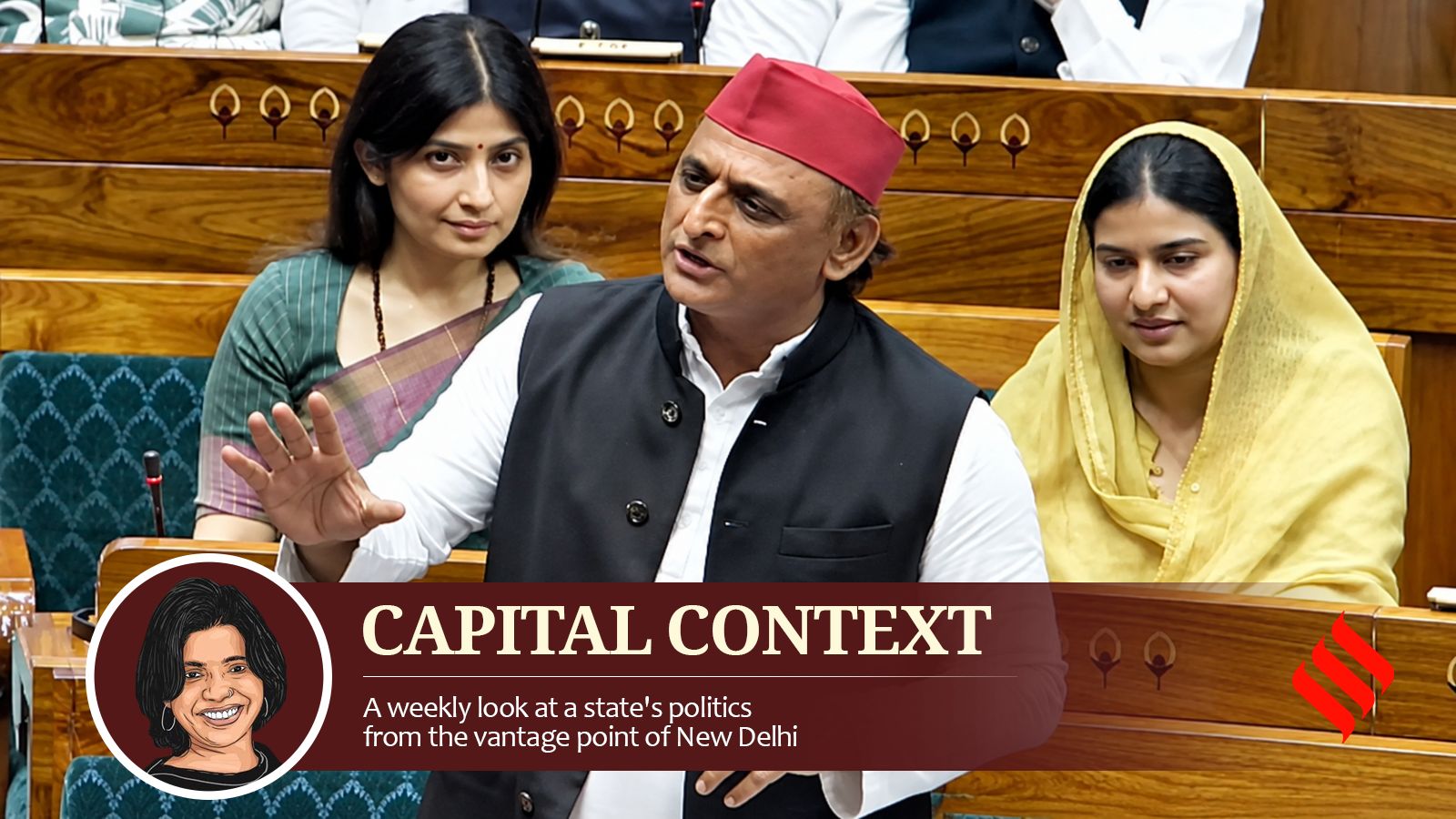
With the Uttar Pradesh Assembly elections months away, the Samajwadi Party (SP) senses an opening. Anti-incumbency, Gen Z’s growing restlessness, a persistent jobs crisis and shifting caste equations have, in the party’s assessment, created conditions favourable for it to build on its breakthrough in the 2024 Lok Sabha elections. Yet, despite its confidence, the SP has so far refrained from launching an all-out offensive against the Yogi Adityanath government.
The hesitation stems partly from an old electoral vulnerability: the perception of it as a “Muslim-Yadav” party. While seeking to retain its traditional support base, the SP is attempting to broaden its social coalition and reach out to other caste groups, particularly Dalits and sections of the Other Backward Classes (OBCs).
There is also uncertainty over its alliance with the Congress. Within the SP, leaders acknowledge that going into the election without the Congress could make Muslim consolidation more difficult. At the same time, going solo could limit the party’s ability to make deeper inroads among upper-caste and Dalit voters as it seeks to translate its 2024 Lok Sabha gains into an Assembly victory in 2027.
SP leaders point to what they describe as a favourable “ground situation”. The party won 37 of Uttar Pradesh’s 80 Lok Sabha seats in 2024, and leaders argue that several issues confronting the state government have since intensified.
“There are issues, from the poor delivery mechanism to the growing antagonism against Thakurvad. The SP has clear advantages. But if the BJP and the government misuse the state machinery like they did in states like West Bengal, it’s going to be a tough task for the party. We have our fears over ruthless communal polarisation too,” said Javed Ali, a Rajya Sabha MP.
While Chief Minister Yogi Adityanath has moved into election mode, SP president Akhilesh Yadav has yet to launch an aggressive campaign. Recently, he cancelled scheduled programmes, including a rally in Bulandshahr, after the district administration denied permission for prominent venues.
BJP leaders alleged that the SP did not accept alternative venues suggested by the administration and instead chose to blame the ruling party and the district authorities. An Uttar Pradesh BJP MP said Akhilesh was “playing it safe”, arguing that large SP rallies at this stage could reinforce the perception of the party as being dependent on Muslim and Yadav voters — an image, he claimed, the BJP would seek to use for polarisation.
The SP, however, is attempting to address precisely that vulnerability by expanding its social coalition. A key focus is the Dalit vote, a constituency being sought by the BJP, SP and Congress as the influence of BSP leader Mayawati has declined.
Akhilesh has stepped up efforts to expand the party’s presence among Dalits across the state as part of an effort to broaden his Pichhda, Dalit, Alpsankhyak (PDA) social engineering formula.
The party’s outreach has also acquired a visible symbolic dimension. BJP leaders have pointed to the addition of the colour blue, traditionally associated with B R Ambedkar and the Dalit movement, to the SP’s traditional red-and-green palette.
The uniform of the Samajwadi Chhatra Sabha (SCS), the party’s student wing, includes blue T-shirts and jeans. Akhilesh was also recently seen wearing a blue scarf, instead of the party’s traditional red one, at a meeting of district and city presidents.
In November, senior SP leader and Rajya Sabha MP Ramji Lal Suman is expected to lead a Dalit conference in Agra, a district with a sizeable Scheduled Caste (SC) population and a significant Jatav presence. Akhilesh is likely to be the chief guest.
The SP chief is also planning a two-day training programme for party workers in Gorakhpur, an important centre in eastern Uttar Pradesh, where Nishads and Brahmins have a significant presence. Both communities are being closely watched by political parties amid claims of their discontent with the BJP.
Jatavs account for more than half of the SC population in Uttar Pradesh, while SC constitute over a fifth of the state’s population.
“Akhilesh wants to penetrate the SC vote base and fortunately for him, there is a section in the SCs, particularly government employees, including bureaucrats, who can be influential. This is a strategy Kanshi Ram had used,” said a BJP leader from Uttar Pradesh.
Kanshi Ram had built an organisational network among government employees through BAMCEF – the All India Backward and Minority Communities Employees’ Federation — before launching the BSP.
The SP chief is also planning a two-day training programme for party workers in Gorakhpur, an important centre in eastern Uttar Pradesh, where Nishads and Brahmins have a significant presence. Both communities are being closely watched by political parties amid claims of their discontent with the BJP.
The SP’s broader strategy is to consolidate its PDA base while seeking to tap into discontent among sections of communities that have traditionally supported the BJP. BJP leaders themselves acknowledge the need to retain support among communities such as the Passis, Kurmis, Sakyas and Mauryas.
“Akhilesh is trying to strengthen his PDA formula that helped him get 37 seats in the 2024 Lok Sabha elections. He wants to cash in on the growing anger against the dominating caste, that is, Thakurs now, under Adityanath, to bring together a new social coalition,” the BJP leader said.
For the BJP, the challenge is compounded by an internal debate over the political risks of what some party leaders describe as a “hardcore Hindutva” line associated with Adityanath.
Some in the party fear that an emphasis on this approach could have adverse political consequences as the BJP seeks a third consecutive term.
Have been in journalism covering national politics for 23 years. Have covered six consecutive Lok Sa... Read More

/file/attachments/2998/14260418_323658.jpg)