SANDF vehicle fleet crisis undermines Operation Prosper - IOL
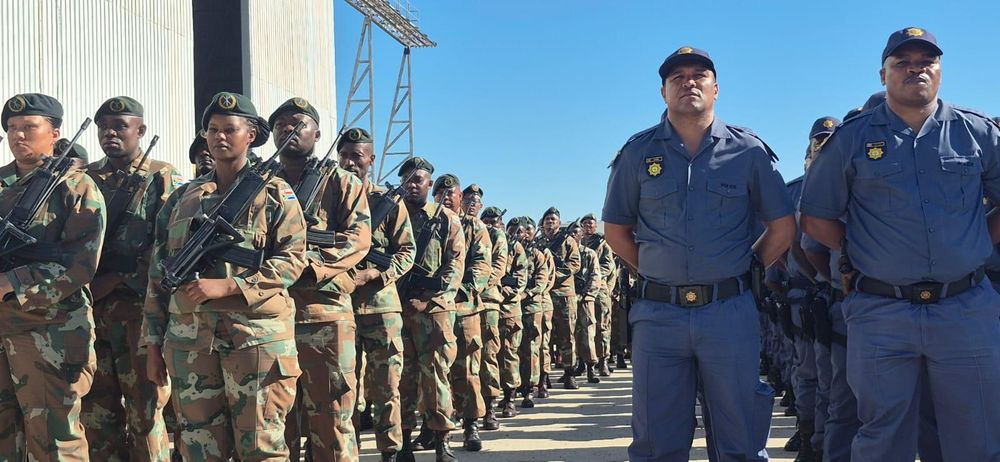
Operation Prosper is currently under way.
The South African National Defence Force's (SANDF) crime-fighting efforts under Operation Prosper are facing severe operational hurdles due to an ageing, unreliable, and poorly maintained vehicle fleet.
Defence Minister Angie Motshekga confirmed these vehicle shortages and maintenance issues in a parliamentary reply, acknowledging that the fleet's condition places significant strain on operations across high-risk urban, rural, and mining areas.
President Cyril Ramaphosa authorised Operation Prosper, sending the army to dangerous communities to assist the police in fighting crime. The 13-month deployment is to back up the police in crime-ridden areas and comes at a cost of just over R823m.
While she could not say how many vehicles were “unserviceable”, Motshekga said her department has instituted measures to mitigate the impact of vehicle unserviceability and to maintain operational mobility.
This was revealed in a written parliamentary reply to EFF MP Muzi Khoza who wanted to know about the measures taken to repair or replace SANDF vehicles that were in poor condition, slow and unreliable.
In his question, Khoza said this posed safety risks to defence personnel and would compromise their operational effectiveness.
“The SANDF has identified vehicle availability and serviceability as an operational sustainment concern in certain areas of Operation Prosper,” said Motshekga.
She said the SANDF continuously monitors the serviceability status of vehicles allocated to deployed force elements, but the exact number of vehicles that are currently unserviceable was subject to continuous technical assessment, maintenance and recovery processes and varied as vehicles are repaired, returned to service or withdrawn for further maintenance.
“It is however acknowledged that the age, condition and availability of portions of the SANDF vehicle fleet place additional pressure on the execution of Operation Prosper, particularly in demanding urban, rural and mining environments,” she said.
Among the measures instituted to mitigate the impact of the problem is prioritising the repair and recovery of vehicles that are essential for the immediate execution of operational tasks, conducting technical inspections and condition assessments of vehicles deployed in the affected operational areas and prioritising available maintenance capacity, spares and other logistical resources towards operationally critical vehicles.
Motshekga said they were continuously reviewing the vehicle allocation and sustainment requirements of deployed units to ensure that personnel are not exposed to avoidable safety risks and that operational effectiveness is maintained.
“The SANDF further recognises that the nature of Operation Prosper requires vehicles that are reliable, mobile and suitable for operations in high-risk urban, rural and mining environments. Vehicle capability requirements are therefore being considered as part of the broader operational sustainment and force-readiness requirements.”
She said immediate provision of resources was being prioritised within the available defence allocation and resources are being directed towards critical operational requirements, including vehicle maintenance and recovery, fuel, spares, accommodation, communications, protective equipment and other essential logistical support.
Ambassador Andy Mashaile, a security strategist said the government lacked “smart and strategic thinking” and that the budgetary constraints argument was not enough.
“The state of the defence resources or the state of the SANDF resources, is a threat to national security. The absence of a targeted and coordinated budget for defence is a threat to national security. It also poses some serious risks for Operation Prosper,” he said.
Mashaile, who is opposed to the deployment of the army in communities, saying it is misdirected, warned that the continued deployment posed a number of dangers because soldiers were not trained to do policing work.
“The environment, enabling factors, the ecosystem in communities is not conducive to their expertise and their skill.”
Mashaile said more money has to be invested in the operations of soldiers, police have to recruit and train more people and the police’s crime intelligence and leadership modus operandi needs to change.
Willem Els of the Institute of Security Studies believes government's focus should be on strengthening the police’s crime intelligence, hiring more detectives and decisively addressing corruption in the service to build trust between the public and the police.
He questioned the poor state of defence vehicles when Ramaphosa announced R823m would be set aside for the operation.
“We can never know if we don't see a breakdown of where that money went to.
“If they did their job right, there should have been a certain portion of that money being earmarked for vehicles, diesel, breakdowns and all of that. Why did it not happen?”
Els, who is against the deployment of the army in civilian operations, said that, besides policing not being the SANDF’s mandate, the military had similar problems to those of the police.
Cosatu’s parliamentary coordinator Matthew Parks said the state of the defence is “extremely worrying”, adding that the army was being “neglected across the board”.
“Soldiers have had to buy their own uniforms and boots, and they are not getting enough training within the army, the Air Force and the Navy. They aren’t getting the skills they need to maintain the vehicles.”