
Sandpaper rot: Time for Cricket Australia, Cummins and ICC to face the bouncers
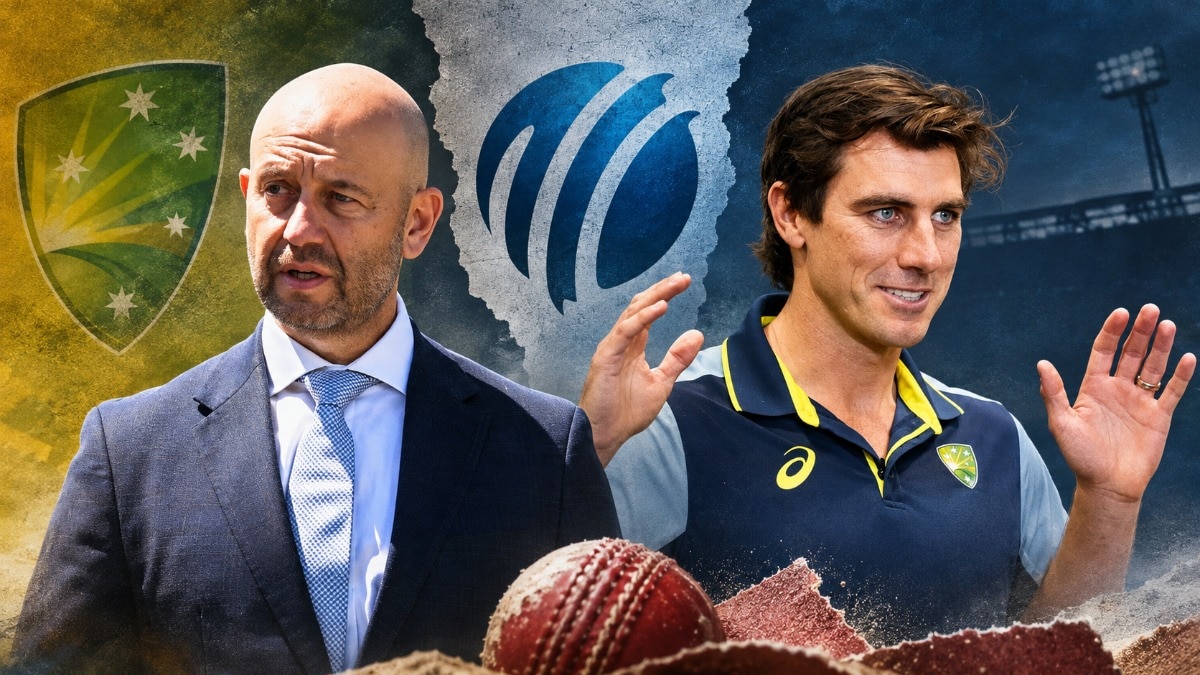
Sandpapergate was supposed to be a closed file. Three players served their bans, one captain wept at Sydney airport, a nation performed its penance, and cricket moved on to its next arguments. But scandals, like reverse swing, have a way of arriving late and from the wrong side.
Eight years on, a book has reopened the dressing room, a 68-minute press conference from the Australian captain has failed to close it again, and within days the man who was caught on camera has produced a column of more than 4,000 words to say that the matter is rather less settled than we were told. The great Australian dressing room, once presented as a vault, turns out to be a group chat nobody remembered to mute.
There is a temptation to make this another debate about ball-tampering. It is not. Ball-tampering is hardly a new discovery in cricket, nor were the Australians the first team to try to alter the condition of a ball. What makes Sandpapergate different, eight years after the Cape Town Test, is that the argument has moved well beyond the sandpaper. It is now about reputations, fractured friendships, the credibility of some of Australia's finest cricketers and, above all, an investigation that many believe did not tell the whole story.
Shoaib Akhtar’s admission that Pakistan used bottle tops to alter the ball, and that “the whole team knew”, is another reminder of how long the practice has been part of cricket. Yet the wider history of tampering does little to answer the questions that have pulled Sandpapergate back into the light.
Were the three players who were punished the only ones who knew what was happening? Did the 2018 investigation establish that fairly? And why are those questions still being contested eight years later?
You may have a view on who knew what. Hold it lightly.THE MISSING ANSWERS
“Everybody will claim to have a version of the truth,” senior journalist and author Ayaz Memon tells IndiaToday.in.
The latest round of Sandpapergate began with Usman Khawaja’s autobiography, Sabr, before Cameron Bancroft’s 4,000-word statement took the confrontation to another level. Pat Cummins had already used a 68-minute press conference to firmly reject the suggestion that he knew about the sandpaper, directly challenging the version of events emerging from Khawaja's book while making it clear he did not wish to revisit the subject publicly. Bancroft's detailed account has placed that position under renewed scrutiny.
By alleging that knowledge of the ball's alteration extended beyond the three sanctioned players, and acknowledging that he withheld details from the 2018 inquiry to protect others, Bancroft has made it harder for Cummins to leave the matter there. The Australian captain's reputation is now caught in the crossfire of two sharply conflicting accounts. Can he continue to stand by his statement that he will not speak about it again?
The bigger question is whether Cricket Australia ever made a genuine attempt to establish the full truth. Its inquiry did little to settle the doubts that have now resurfaced.
“Cricket Australia is the biggest culprit in this. That's my opinion,” says Memon, arguing the board wanted to preserve the image of a team that did not cheat.
“It was a cock-up cover-up, as I call it, because they couldn't do it properly either.” Cameron Bancroft and Steve Smith were among the 3 banned for ball tampering in 2018 (Agency Images)
The shortcomings of the 2018 inquiry are now central to the controversy. Not every member of the touring party was called to testify, players claim, and Khawaja, who has said he was sitting next to Bancroft, was never interviewed, according to him.
Memon notes that the inquiry leaned on the accounts of those it chose to question, including members of the bowling unit who denied knowing about the alteration. “They called who they wanted,” he says.
That is why Cricket Australia's latest offering, an independent forum without a fresh investigation, is hard to accept as a solution. Dubbed a “circuit breaker” by the board, it is designed to stop the current, not find the fault. Players and staff will get a confidential setting to share recollections, with voluntary participation, no new sanctions and no guarantee that findings will be made public. Chief executive Todd Greenberg has said that “no one is compelled to participate."
A safe space may encourage people to speak, but it cannot substitute for an inquiry that tests accounts, establishes what can be established and makes its findings public.
“Cricket Australia can't push this under the carpet by saying let's have an independent forum, create a safe space. You can't do that,” says senior journalist Nikhil Naz.
The board cannot expect the public to accept a process that offers the possibility of fresh accounts without the assurance of answers.PUNISHMENT ISN’T ACCOUNTABILITY
None of this is an argument for more punishment. Ball-tampering is cheating, not match-fixing; it does not belong in the same category as deliberately manipulating the result of a contest for money. The sanctions handed out in 2018 can be debated, but the public humiliation of Steve Smith and the damage to Bancroft's career cannot be undone.
The response, in Naz's view, was “a gross exaggeration”, with Australia turning the episode into a “national calamity”.“Can you give back those 12 months to Steve Smith? Can you give back that moment where he came in and he cried and he was paraded like a criminal?” he asks.
Punishment is what an institution does when it wants to be seen to act. Accountability is what it does when it wants to know.
“It's a question now of whether you are accountable for being party to that or not,” Memon says. That is the question Cricket Australia must answer, rather than leaving it to a voluntary forum.
The captaincy question sits inside that wider reckoning. Cummins is entitled not to answer every question put to him by the media, yet declining to revisit the issue publicly is not the same as being answerable to the authorities.
“He needs to speak to the authorities,” Memon says, “and for that, authorities really need to start an investigation.”
If the latest allegations contradict the account of the current Australian captain, Cricket Australia cannot treat the clash as just another media cycle; it has to establish whether there is a case to answer. Can Pat Cummins afford to keep mum? (AFP/AP Photos) advertisementTHE ICC’S BLIND SPOTCricket likes to call itself the gentleman's game, a label that has often sat uneasily with a rulebook struggling to keep up with players. Mike Atherton was famously photographed with dirt in his pocket at Lord's in 1994, insisting he used it to dry his hands. Shahid Afridi was caught biting the ball in 2010 and received a two-match ban. Faf du Plessis was penalised for rubbing the ball against his trouser zip in 2013 and, separately, for using saliva while sucking a mint in 2016. The methods have varied; the argument over what counts as legitimate maintenance has endured.
The ICC has revised its rules and sanctions over the years, including tightening penalties after Cape Town, yet the sport has repeatedly clarified rules after a controversy rather than ahead of one. Dave Richardson, the ICC's then chief executive, called it “a little disingenuous” for players to claim the rules were unclear.
Eight years later, former Australia captain Greg Chappell has again pressed for greater clarity on what players can and cannot do to the ball.
Memon points to cricket's habit of changing its laws only after an incident exposes a loophole. Chappell’s decision to ask his brother Trevor to bowl underarm against New Zealand in 1981 came when the laws did not explicitly prohibit it.
Mankading, too, was long frowned upon before being recognised in the Laws as a run-out at the non-striker's end.
“Greg Chappell asked his brother to bowl underarm because there was no law to say that you can't do it at that point in time. Then the law came in,” says Memon.
“Then Mankading was frowned upon. Now it's part of law.”
“We need to be very clear what is allowed, what is not allowed, and to be very strict about it,” he says, urging the ICC to make a “very strong endeavour” to close loopholes that let sharp practices flourish.
The ICC, too, cannot be kept entirely out of the frame. Sandpapergate has grown beyond a dispute over an internal inquiry; a fractured dressing room and damaged credibility affect the wider game. Still, can the governing body pull up Cricket Australia over an inquiry conducted by the board itself? There is little precedent for it.
“I can't think of a past precedent where ICC has said something about an internal investigation of another home board,” Naz says.
The goal is not to punish Australia twice, but to stop the next controversy from being settled by television footage, a hurried inquiry and years of conflicting recollections. The ICC must draw a clear line between skill and cheating, and make sure every team is held to the same standard.THE BOWLER’S CASE
There is another side to this debate that rarely gets invited to the press conference: the bowler. The ball is not merely an object to be guarded from interference; it is also the tool that determines how much help a bowler can extract. With saliva still banned since the Covid-19 pandemic, and even conventional swing is becoming less common, the balance between bat and ball deserves attention.
Naz believes the ICC should consider allowing bowlers legitimate ways to rough up the ball and revive reverse swing.
“Without reverse swing and now even conventional swing going out of currency, I think that's not great,” he says.
It is a concern worth taking seriously. The debate has already drawn in voices as prominent as Sachin Tendulkar and Mohammed Shami, underlining that this is no longer a fringe concern among bowlers. Cricket must protect the art of reverse swing, but the debate over how to do that cannot overshadow the questions Sandpapergate has left unanswered.
The damage, after all, goes beyond the condition of the ball. The Australian stars at the centre of the scandal are also among the players who bring fans to the game and make it richer.
Yet, as Ayaz Memon puts it, “They are the guys who bring in the fans, make the sport richer. But they also made it poorer. That is the irony and the tragedy.”
Eight years after Cape Town, the fallout is no longer confined to a single match or three banned players. A dressing room once sold as a fortress of mateship now looks divided, and an inquiry meant to draw a line under the affair only postponed the reckoning. A confidential forum behind closed doors will not supply that reckoning, nor will leaving the rulebook vague.
Eight years on, the sandpaper may be gone. The questions remain, and so does the stain on a game that has yet to find the courage to answer them.- EndsTune InMust Watch
Chennai guy who is making money out of watching and writing on sports from New Delhi. Ex-Engineer who loves going that extra mile for keeping people informed. My girlfriend tells me that I keep watching cricket a bit too much. I have fallen in love with racquet sports as well.

