Santos Brasil plans R$3.5bn investment to expand port operations - Valor International
Santos Brasil has unveiled a R$3.5 billion investment plan through 2030 to expand its container terminal (Tecon) and vehicle terminal (TEV) at the Port of Santos and develop a new area for general and project cargo. The investment is tied to the early renewal of the TEV concession, which expires in 2035, for an additional 25 years, as well as the incorporation into port operations of Prainha, a nearby federal government-owned area adjacent to the vehicle terminal that is still partially occupied by homes. About 40% of the investment will go toward equipment.
The detailed plan was formally presented to the Santos Port Authority (APS) and discussed at a meeting on Thursday (5) in Brasília with representatives of the Ministry of Ports and Airports and the National Waterway Transportation Agency (Antaq).
Brazil sets December port auctions with R$582.7m in investmentsSão Paulo considers renegotiating urban rail, highway concessionsLula poised to reshape Brazil’s regulatory agencies by 2030
Under the proposal, the vehicle terminal would be relocated to the Prainha area, where an additional berth would be built. This would allow Tecon to take over part of the land currently occupied by the vehicle terminal, while a new area for general and project cargo would be created between the two terminals. Once the investment is completed, Tecon’s annual handling capacity would rise by 33%, from 3 million TEUs (twenty-foot equivalent units) to 4 million TEUs. Santos Brasil expects to handle 2.9 million TEUs in 2026, close to the terminal’s current capacity limit.
The TEV’s annual capacity would increase from about 310,000 vehicles to 360,000, a 16% gain. The new general and project cargo area, which will be included in the TEV concession contract, would be able to handle up to 239,000 tonnes a year and would have a dedicated berth.
The project would also bring logistical improvements through a new rail yard designed to accommodate and operate entire trains measuring 1,600 meters, cutting the time required to unload containers from the current 12 hours to three hours.
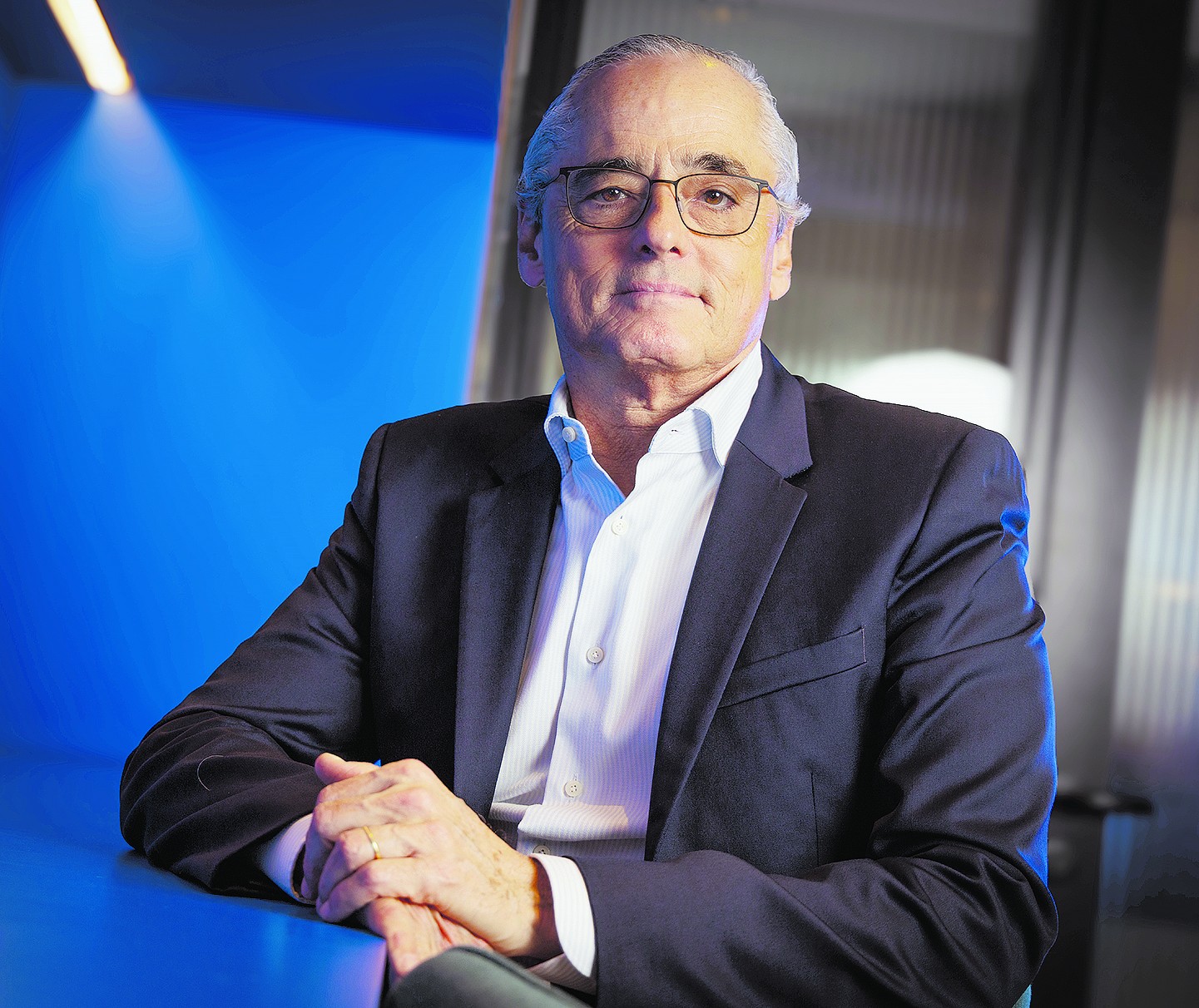
“The port currently handles close to 200 tonnes of cargo, and our immediate priority is to increase the capacity of existing facilities. In the container segment, the main operators are Santos Brasil, DP World [Dubai Ports] and BTP [a joint venture between MSC and Maersk]. Looking ahead, there is also STS-10, which remains under discussion,” said Antônio Carlos Sepúlveda, president of Santos Brasil. “Our project is a bridge until STS-10 is ready.”
The Port of Santos is expected to handle 6.3 million TEUs in 2027 and 7 million TEUs in 2030. “We believe that level will be reached sooner. Tax reform, by eliminating tax incentives offered by other states, should accelerate cargo growth at Santos, affecting both segments in which we operate—containers and vehicles,” the executive said.
In defending the incorporation of Prainha into the port area, Sepúlveda said it represents “the best and most efficient use that can be made of the land.” “The federal government is entitled to put the area up for auction, but on its own it has access constraints. The site would not be economically viable on its own, would not have the scale needed for container operations, and would not be able to accommodate larger ships,” he noted.
Casemiro Tércio, former president of the Santos Port Authority and a partner at 4Infra, said it would be possible to build a container terminal in the Prainha area, but noted that it would face difficulties achieving economic viability. “Costs are spread across the volume of cargo handled. A small container terminal is not viable anywhere in the world today,” he said.
With the expansion plan, according to Sepúlveda, the Port of Santos would eventually have two large container terminals—Santos Brasil and STS-10—and two medium-sized ones, operated by BTP and DP World. STS-10 is expected to have capacity of 3.2 million TEUs, a figure Tércio disputes. “In my assessment, it would not exceed 2.7 million TEUs,” he said.
The plan will now go through a series of administrative steps, starting with the opening of a public consultation, which could take place later this week. A public hearing is scheduled for the 24th, with this stage expected to conclude on the 30th of this month.
“Because the project involves replacing one area with another—relocating the TEV —a public consultation and hearing are mandatory under the regulatory framework. Given that the project also involves relocating the local community, a public consultation is all the more important,” explained Bruno Stupello, the company’s director of strategic project development.
Residents of Prainha are being relocated to other areas under a social program coordinated by the APS, the Guarujá city government, and the São Paulo state government. About 1,100 families still live in the area, while nearly 1,500 have moved out.
After the public hearing, the proposal will be submitted to Antaq, which will assess the economic and financial balance of the concession contracts and whether the TEV concession can be renewed ahead of schedule. It will then be sent to Brazil’s public spending watchdog, the Federal Court of Accounts (TCU).
Sepúlveda estimates the administrative process to be completed by mid-2027. The company would then need about another year to obtain the necessary permits before construction can begin. “The idea is to start construction during 2028 and, in phases, have the terminals operating at their expanded capacity between 2029 and 2030,” he said.
The expansion will be funded primarily through the company’s cash flow and, if necessary, supplemented by tax-exempt infrastructure bonds. Santos Brasil is currently wholly owned by France’s CMA CGM, one of the world’s largest container shipping companies. No external investment in the project is expected. Cargo carried by ships belonging to its controlling shareholder accounts for 40% of the total volume handled by Santos Brasil.
In addition to its assets in Santos, the company operates two other container terminals, in Imbituba, in Santa Catarina state, and Vila do Conde, in Pará state; a general cargo terminal in Imbituba; and three liquid bulk terminals in Itaqui, in Maranhão state.
This article was translated from Valor Econômico using an artificial intelligence tool under the supervision of the Valor International editorial team to ensure accuracy, clarity, and adherence to our editorial standards. Read our Editorial Principles.