Saudi Aramco stops crude supplies to India. Here's why oil could get costlier
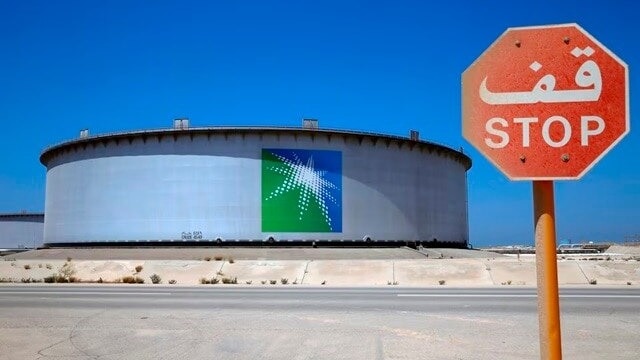
Saudi Aramco has stopped supplying crude oil to Indian refiners until further notice following an attack on Saudi Arabia's critical East-West pipeline, reported The Economic Times reported.
The development could raise crude procurement costs for Indian refiners as they look for replacement barrels amid higher global oil prices and rising freight rates.
According to the report, the East-West pipeline was shut late last week after it was allegedly attacked by drones operated by an Iraqi militia. The pipeline had emerged as Saudi Arabia's key alternative route for supplying crude after the Strait of Hormuz was disrupted.
Aramco has now stopped supplies to India through both the Red Sea and the Strait of Hormuz, according to people cited in the ET report. Supplies through Hormuz had already fallen to very low levels before the pipeline attack.
The disruption comes at a time when crude oil prices are already elevated. Brent crude was at $103.46 a barrel in the latest market snapshot, down $1.36 or 1.30%, while WTI crude stood at $101.06 a barrel, down $0.85 or 0.83%.ARAMCO SUPPLIES ABOUT 9% OF INDIA'S CRUDE IMPORTS
Saudi Arabia has been an important crude supplier for India. According to the ET report, Aramco has supplied about 9% of India's crude imports since the beginning of the war.
Indian refiners are currently not receiving their contracted term supplies from Saudi Arabia, according to people familiar with the matter cited by ET.
Aramco generally supplies crude to India and other customers through annual term contracts at official selling prices rather than through the spot market. This makes the latest disruption significant for Indian refiners that now need to find alternative supplies.
However, finding replacement crude is not expected to be the biggest problem.
The bigger challenge could be the price at which those barrels are secured.REPLACEMENT CRUDE COULD COST MORE
Indian refiners are confident of finding alternative crude supplies, but the cost of those barrels is expected to be higher as international oil benchmarks have risen and discounts on Russian crude have disappeared, according to the ET report.
Spot-market prices can also rise much faster than futures prices during a supply disruption.
That could increase procurement costs for Indian refiners even if they are able to replace the Saudi barrels relatively quickly.
Tanker freight rates are another concern. Rates are already close to record highs, according to the report, adding to the cost of transporting crude.
At the same time, dwindling global inventories are adding further pressure to oil prices.
For Indian refiners, the impact therefore may come through both higher crude prices and more expensive shipping.
Although Aramco has stopped its direct supplies to Indian refiners, some Saudi crude is still expected to reach India through traders.
Saudi Arabia has sold some spot cargoes to traders that are expected to deliver small volumes to Indian refiners through the Strait of Hormuz.
These traders are taking on the additional risk involved in moving crude through the disrupted route.
The reported trading route involves buying Iraqi crude at a deep discount and moving it through the Strait of Hormuz to the Gulf of Oman. There, cargoes can be transferred between ships before being taken onward to India and other customers.
This could provide some additional barrels to Indian refiners, but such volumes are expected to remain small compared with regular contracted supplies.WHY THE EAST-WEST PIPELINE MATTERS
The East-West pipeline had become particularly important after disruption around the Strait of Hormuz.
The pipeline provides an alternative route for Saudi crude that avoids the maritime chokepoint. Its shutdown therefore removes one of the key options available to Saudi Arabia for moving crude when shipping through Hormuz is disrupted.
The latest attack has consequently added another layer of uncertainty to global oil supplies.
Saudi Arabia is among the world's most influential oil suppliers, with about a tenth of global production capacity and the ability to adjust output in response to market conditions.
If Saudi crude remains off the global market for an extended period, the impact could be more significant, particularly because global oil inventories are already low.
The immediate concern for Indian refiners is not only whether they can replace Saudi barrels but also how much they will have to pay to bring those barrels to India.
Oil benchmarks have moved above $100 a barrel, while tanker rates are also elevated.
Refiners could therefore face a double increase in costs: higher prices for the crude itself and higher transportation costs.
The impact could become more pronounced if the disruption continues for a longer period or if other supply routes are affected.
Indian refinery executives are also concerned that the conflict involving Saudi Arabia and Iran-aligned Houthis could intensify, increasing risks to energy infrastructure and making crude supplies less predictable.INDIA'S CRUDE IMPORTS FELL IN AUGUST
The latest disruption comes even as India's crude imports declined in August.
India imported 19.01 million metric tons of crude oil in August, down more than 11% from the previous month, according to government data.
On a year-on-year basis, crude imports were down 3% from 19.60 million metric tons in August last year, data from the Petroleum Planning and Analysis Cell showed.
India's fuel consumption also declined 6.3% month-on-month to 18.61 million metric tons in August, its lowest level since September 2024.
Imports of petroleum products, however, rose more than 9% from July to 2.72 million metric tons, although they were about 40% lower than a year earlier.
Petroleum product exports fell more than 13% year-on-year to 4.92 million metric tons.
LPG imports rose to 1.30 million metric tons in August from 870,000 metric tons in July, while fuel oil imports declined to 132,000 metric tons from the previous month. Fuel oil imports were also sharply lower than the 365,000 metric tons recorded in August last year.WHAT HIGHER OIL PRICES MEAN FOR INDIA
The latest disruption adds to the risks facing India's oil market at a time when crude prices are already above $100 a barrel.
Brent crude was trading at $103.46 a barrel in the latest snapshot, while WTI crude was at $101.06.
For India, which depends heavily on imported crude to meet its energy needs, sustained higher international oil prices can increase the cost of importing crude and put pressure on refiners.
The immediate impact of Aramco's supply halt will depend on how quickly Indian refiners secure alternative barrels, the price of those supplies and the cost of transporting them.
But if Saudi supplies to India remain disrupted for an extended period, higher crude prices, elevated freight rates and tighter global inventories could make the replacement process more expensive.- EndsPublished By: Sonu VivekPublished On: Sep 18, 2026 17:16 IST