
Saudi-Houthi War: 3 Scenarios For What Happens Next - Newsweek
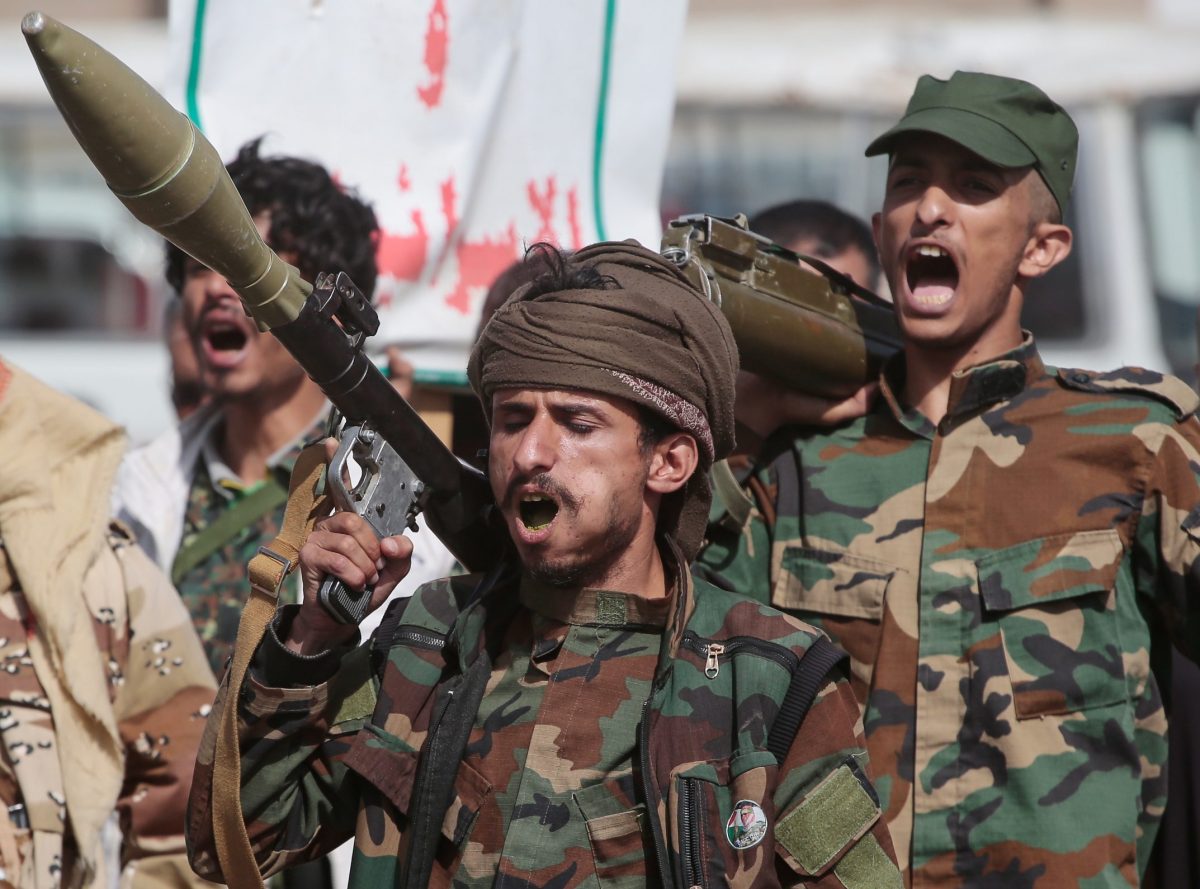
More than a decade ago, Saudi Arabia went to war in Yemen to stop the Houthi rebel group from becoming an entrenched armed power on its southern border. Today, we can safely say they failed.
Last week, the Houthis surged out of their strongholds in northern Yemen to seize the Red Sea port of Mokha and several islands inside the Bab el-Mandeb Strait, strengthening their control over one of the world’s most important shipping corridors despite years of Saudi, American, British and Israeli strikes.
At the same time, Houthi missiles and drones have battered Saudi cities and energy infrastructure, and Riyadh on Tuesday claimed Saudi air defenses intercepted a drone headed toward the holy city of Mecca. The Houthis denied this, but the episode encapsulates the potential for this conflict to tumble over the precipice and hurtle toward catastrophe.
For America and the rest of the world, the timing of the Saudi-Houthi flare-up could hardly be worse.
The U.S. and Iran remain at an impasse that continues to throttle traffic through the Strait of Hormuz—and Trump’s approval ratings. Bab el-Mandeb normally carries about 12 percent of global trade and is an alternate route for Saudi oil exports, but now the Houthis have an even greater capacity to make that route more dangerous and expensive, and force the global economy to foot the bill.
For the Saudis, the stakes are even greater. Oil exports have fallen sharply, its critical infrastructure is under attack, and Crown Prince Mohammed bin Salman’s ambitious plans to convince global investors that Saudi Arabia is stable, secure and open for business are taking a beating.
With the help of regional and security experts, Newsweek explores three possible paths forward from here.
On paper, Saudi Arabia has an enormous military and economic advantage over the Houthis—a non-state movement in a country where nearly two-thirds of households lack adequate food, according to the World Food Program.
But, just as Washington made the uncomfortable discovery that its overwhelming military power was unable to prevent Tehran from placing the Strait of Hormuz in a stranglehold, the Houthis possess an outsized ability to inflict pain on Riyadh.
Saudi Arabia has been at war with the Houthis since 2015, pounding the rebel forces with airstrikes while funding and backing a coalition of forces aligned with Yemen’s internationally recognized government to fight them on the ground. The Houthis have withstood it all, and are evidently capable of striking back.
Riyadh could therefore "accept the new reality and return to the political track, including addressing some of the Houthis’ demands," to settle the conflict and prevent further damage to its energy infrastructure, Ahmed Nagi, senior Yemen analyst at the International Crisis Group, told Newsweek.
But last week’s offensive has dramatically improved the Houthis’ hand in negotiations. Capturing Mokha and Mayun Island has strengthened their ability to threaten global shipping through Bab el-Mandeb and restrict southbound Saudi oil exports.
"There is still a deal to be had, but it would be an exit arrangement for Saudi Arabia rather than peace for Yemen," Andreas Krieg, an expert on Middle East security and senior lecturer at the School of Security Studies at King's College London, told Newsweek.
"The bargain would be expensive. In return for no attacks on Saudi territory, infrastructure or shipping and no closure or unilateral tolling of the Bab el-Mandeb Strait, Saudi would likely have to offer the Houthis billions in aid, unfreeze public sector payments that have long been blocked, and increased political participation in Yemen. That could get Saudi Arabia out."
This is not an isolated dispute between two states, however. The Houthi foothold inside Bab el-Mandeb also gives the rebels’ regional backer, Iran, another potential source of leverage over the U.S. in their negotiations over the Strait of Hormuz. Last week, its Islamic Revolutionary Guard Corps (IRGC) called for any settlement with Washington to include Yemen.
"The Yemen/Houthi front is not separate from the US-Iran confrontation, and reading it any other way is misguided," Dr. Burcu Ozcelik, senior research fellow for Middle East Security at the RUSI think tank, told Newsweek. "The Houthis are not within a clear command-and-control structure under the IRGC, but that they are in step should be in no doubt."
Since Saudi Arabia and Yemen struck a U.N.-brokered truce in the spring of 2022, the contours of the conflict remained mostly locked in place. The Yemeni group began a campaign of intermittent attacks on Red Sea shipping in late 2023 in response to Israel’s war on Gaza, but had refrained from attacks on Saudi Arabia—until this summer.
With the chances of a negotiated settlement looking slim given the recent Houthi advances, Saudi Arabia could pursue a limited military operation designed to reset the game board and return the conflict to a more equitable position from which to begin fresh negotiations.
"Riyadh is likely to combine military pressure and the rebuilding of anti-Houthi forces to regain leverage, before reopening indirect negotiations with the Houthis and seeking a parallel regional understanding with Iran," Professor Elham Manea wrote in an analysis of the conflict for the Sana’a Center, a Yemeni think tank.
The difficulty for Riyadh lies on the ground.
The Houthi offensive last week was only made possible by what appeared to be a rapid retreat of Saudi-backed Yemeni government-aligned forces. Saudi’s air force could resume strikes to weaken the Houthis’ grip on their newly seized territory, but to dislodge them altogether would probably require a robust counterattack on land.
Unless Riyadh is willing to risk deploying its own armed forces onto Yemeni soil, the Saudis must rely on Yemeni forces, whose poor coordination and divided political loyalties made the Houthi advance possible in the first place.
Kristian Ulrichsen, a Middle East fellow at Rice University’s Baker Institute, recently told Newsweek: "It is not clear whether the preferred Saudi response of increasing the funding and arming of Yemeni groups controlled by the internationally recognized government will be sufficient to deter or defeat the Houthis.
The Houthis’ expansion does create vulnerabilities, however.
Arman Mahmoudian, of the University of South Florida’s Global and National Security Institute, told Newsweek that holding more territory requires more manpower and resources. Some newly captured areas also offer less cover, potentially leaving Houthi forces more exposed to Saudi airpower.
But even if a consolidated Saudi air campaign and counterattack on land by Yemeni government forces were to repel the Houthis back up the Red Sea coast, the underlying threat posed to Riyadh—and global trade and energy markets—will remain.
"The Houthis don’t need to enact a full naval blockade of the Bab el-Mandeb; rattling mariners and insurers enough to reroute ships, and raise insurance premiums and risk is sufficient to ‘close’ a critical waterway. The Houthis have an array of short-range missiles and drones to be able to do just that for as long as they are able to hold their positions, and this was the case even before the current lightning-speed advance," Ozcelik said.
Last week, Trump reportedly refused a request by Saudi Crown Prince Mohammed bin Salman to launch strikes on the Houthis, and revealed over the weekend that the rebels had contacted the White House. "The Houthis called us and they don’t want to fight with us," the U.S. president said, adding they "don’t want us to go after them" and "would much prefer not having us involved".
U.S. and Houthi representatives then met for private talks in Oman on Sunday, according to Reuters, where the Houthis reportedly told Washington’s diplomats they had no intention of striking American vessels in the region and were committed to the U.S.-Houthi ceasefire struck last year.
All this to say, if bin Salman is waiting for Washington to come to his rescue, he could be waiting a long time—provided the Houthis don’t overplay their hand.
"I don’t think another attack on a tanker by itself brings the United States back into the war," Krieg said, "but significant American casualties, indiscriminate disruption of Bab el-Mandeb, or an economic shock caused by a combination of reduced energy flows from Hormuz and Bab el-Mandeb might." Mahmoudian identified similar trigger points, such as a mass-casualty attack on commercial shipping or a large-scale Houthi assault on Saudi oil infrastructure.
If the Houthis go too far, their quarrel with Riyadh could quickly erupt into a global conflict.
"Once Washington starts bombing to reopen Bab el-Mandeb, it effectively assumes responsibility for keeping it open," Krieg said. The U.K. and other energy-starved European countries have previously bombed Houthi positions in response to attacks on Red Sea ships, and could well join the U.S.’ bombing campaigns once again, piling pressure on Sana’a.
Meanwhile, should the Houthis ramp up their attacks on Saudi Arabian soil, the Gulf state’s new partners Turkey and Pakistan—who in August joined a mutual defense pact known as the Mecca Joint Defense Agreement—would be incentivized to come to Riyadh’s aid with more than just strongly worded statements.
But all the experts contacted for this article agreed that we will probably be spared such a messy conflict of global precautions. Now, it seems, everybody has a little too much to lose.
"As it stands, we don’t expect significant international support for Saudi Arabia," Sorana Parvulescu, a Dubai-based Partner at strategic intelligence and security firm Control Risks, told Newsweek.
"President Trump is highly unlikely to be willing to commit additional military effort to open another front, particularly with midterms approaching. Pakistan and Turkey would probably only consider intervening militarily if there was a significant Houthi advance in Saudi territory, or if there was an active threat or actual harm to the Holy sites in Mecca and Medina. But the Houthis will know better than to cross that red line."
The experts Newsweek spoke to broadly converged on the same answer: the Saudi-Houthi conflict will probably stop short of becoming a full-scale international war—but it will probably get worse before it gets better.
Krieg expects "armed bargaining" to gradually produce a new Saudi-Houthi modus vivendi. The Houthis would retain significant maritime leverage, Saudi Arabia would strengthen its defenses and continue to support Yemeni government forces, and both sides would periodically test each other without crossing the threshold that triggers a major intervention by an external power.
Mahmoudian reached a similar conclusion, predicting an "unstable armed stalemate" characterized by Saudi air operations, intermittent Houthi attacks and "a Bab el-Mandeb Strait that remains navigable, but considerably more dangerous and expensive”.
That would nevertheless represent an important shift in the Middle East’s security landscape. Saudi Arabia may not have to accept Houthi dominance, but it may have to treat them as a regional security actor that cannot simply be bombed into irrelevance.
Turning that grudging recognition into something durable will require much more than a simple bilateral ceasefire, though—and all roads to a lasting truce lead through Washington and Tehran.
"I don’t think the conditions are ripe yet for Riyadh to see a negotiated settlement with the Houthi movement as its best option," Ozcelik said. "The battle for Bab al Mandeb is still in play, we are in the midst of an active Houthi operation and counter-operations, and the outcome remains contested for now. What should be apparent is that any settlement will involve some degree of Iranian oversight and endorsement."
Mahmoudian added: "The development most likely to change the unstable armed stalemate would be a broader U.S.-Iran de-escalation, accompanied by a separate Saudi-Houthi arrangement. That could substantially reduce the incentives for continued escalation."
"The single biggest hinge is the US-Iran-Hormuz track. If Iran begins receiving concrete economic and maritime benefits from de-escalation, Tehran suddenly has something valuable that uncontrolled Houthi escalation could destroy. If that process fails, Yemen remains one of the cheapest ways to impose costs on Saudi Arabia and Washington."
What we have here, then, is almost a copycat conflict. The U.S. is mired in a conflict with a much smaller, yet highly capable adversary over a critical waterway. Saudi Arabia now finds itself in the same position. The resolution of one war most likely depends on the resolution of the other, and both Washington and Riyadh face the prospect of making painful concessions or launching a major escalation from which there is no return.
If Trump could wind the clock back to February 27, 2026, would he launch Operation Epic Fury all over again?

