Scientists Find Potential Way to Preserve Muscle During GLP-1 Weight Loss - Newsweek
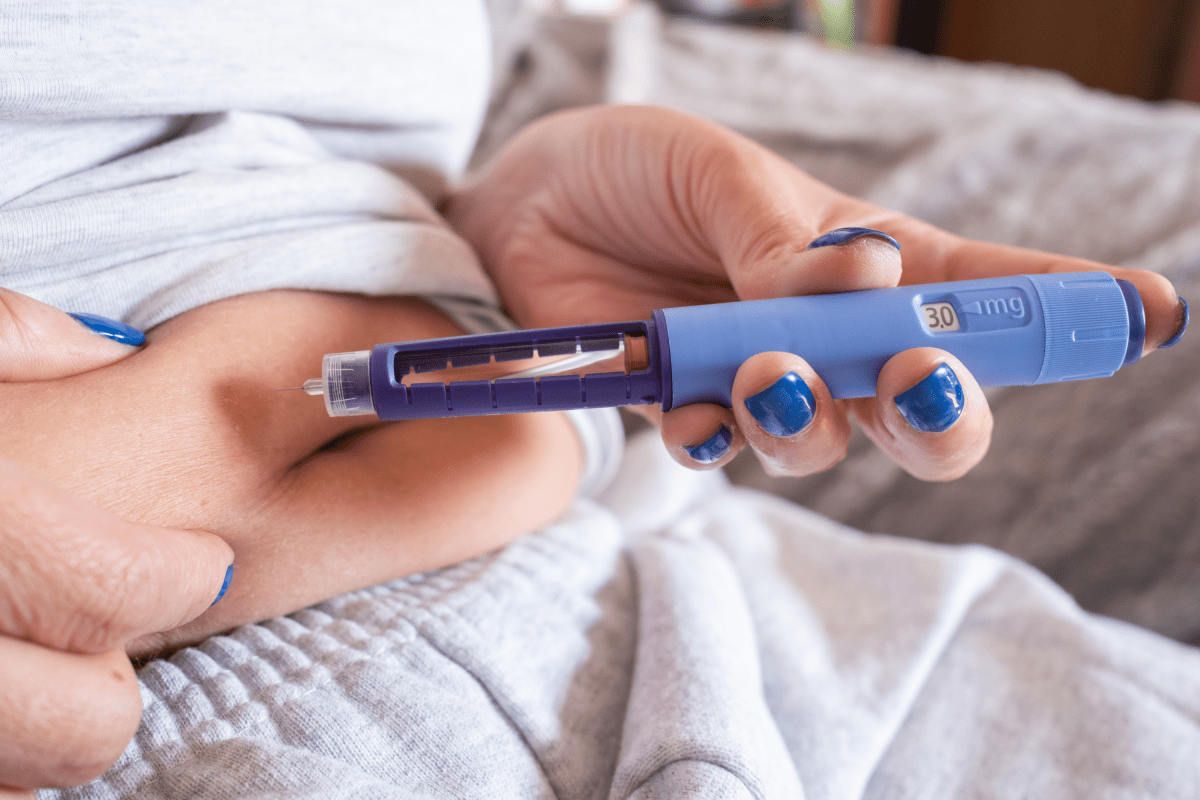
GLP-1 medications have transformed obesity treatment, helping millions of people lose weight.
But they come with a drawback that concerns doctors and users alike: people often lose a significant amount of muscle, or lean mass, alongside body fat.
Now, researchers at Northwestern University believe they may have found a way to solve that problem.
In a new study published in the journal Proceedings of the National Academy of Sciences, scientists developed an experimental RNA therapy that helped mice lose more weight and body fat while preserving more muscle when used alongside the GLP-1 medication semaglutide.
"The major advance in our work is to have developed a new strategy to specifically induce the conversion of pre-existing white fat (an energy storing tissue) to brown fat (an energy burning tissue)," senior author Dr. Joseph Bass, director of the Center for Diabetes and Metabolism at Northwestern University Feinberg School of Medicine, told Newsweek.
"In doing so, we unexpectedly observed potent effects on metabolic health without any depletion of muscle mass," he said.
The therapy works by turning on thermogenesis, a process in which the body burns calories to generate heat.
Researchers achieved this by reprogramming white fat, which stores energy, into so-called beige fat, a more metabolically active form of fat that helps burn calories.
To do that, the team used a small strand of RNA to silence a gene known as ZFP423. The gene acts as a biological brake that prevents white fat from transforming into calorie-burning beige fat.
Bass said the therapy works differently from GLP-1 drugs because it promotes weight loss by increasing energy expenditure rather than reducing appetite.
"We believe that the major reason for the muscle preservation is that weight loss and, importantly, metabolic health with the RNA therapy arise due to the dissipation of energy rather than inhibiting energy intake," he said. "In other words, 'melting' deleterious adipose tissue circumvents the problems associated with inhibiting appetite as a mechanism of weight loss."
The researchers first tested the therapy in mice who were fed both standard and high-fat diets.
They found that the treatment improved glucose tolerance (how well the body processes sugar) and reduced body fat without causing muscle loss.
Encouraged by those results, they combined the therapy with semaglutide. The combination produced what Bass described as the study's most exciting findings.
Mice receiving both treatments lost more weight and body fat than those given semaglutide alone, while also retaining more lean mass.
Animals treated with the combination lost just 5.5 percent of their lean mass, compared with around 10 percent among mice receiving only semaglutide.
The differences in body fat were also notable.
At the end of treatment, mice given both therapies had roughly 4 grams of body fat, compared with nearly 8 grams in the semaglutide-only group.
In addition to helping preserve muscle, the combination treatment improved glucose tolerance and other markers of metabolic health.
While the results are promising, the therapy remains in the early stages of development and has only been tested in mice.
Bass said preserving muscle during weight loss could have important long-term health benefits if the findings translate to humans.
"The long-term benefit may be to curtail the initial atrophy, and from this to circumvent the long-term challenges of weight maintenance related to such atrophy—including mobility, cardiometabolic risk and insulin sensitivity," he said.
The team is now testing related RNA therapies in human cells, though Bass cautioned that significant work remains before the approach could be used in people.
"We remain optimistic but emphasize the tremendous infrastructure that enables fundamental scientific work to make the leap to therapeutics," Bass said. "We remain highly optimistic based on our observations in experimental models that this therapy will open a new avenue for lean mass preserving obesity treatment."
The study is titled “An RNA thermogenic therapy to preserve lean mass and enhance metabolic health during GLP-1 weight loss.” It was supported in part by the National Institutes of Health (grants R01DK090625, R01DK132647, P30DK020595, R01DK127800, R01DK113011, R01DK142852, R01AG065988, P01AG011412 and T32HL007909).