Scientists Think Humans Could Live on the Moon. One Obstacle Stands in the Way - Newsweek
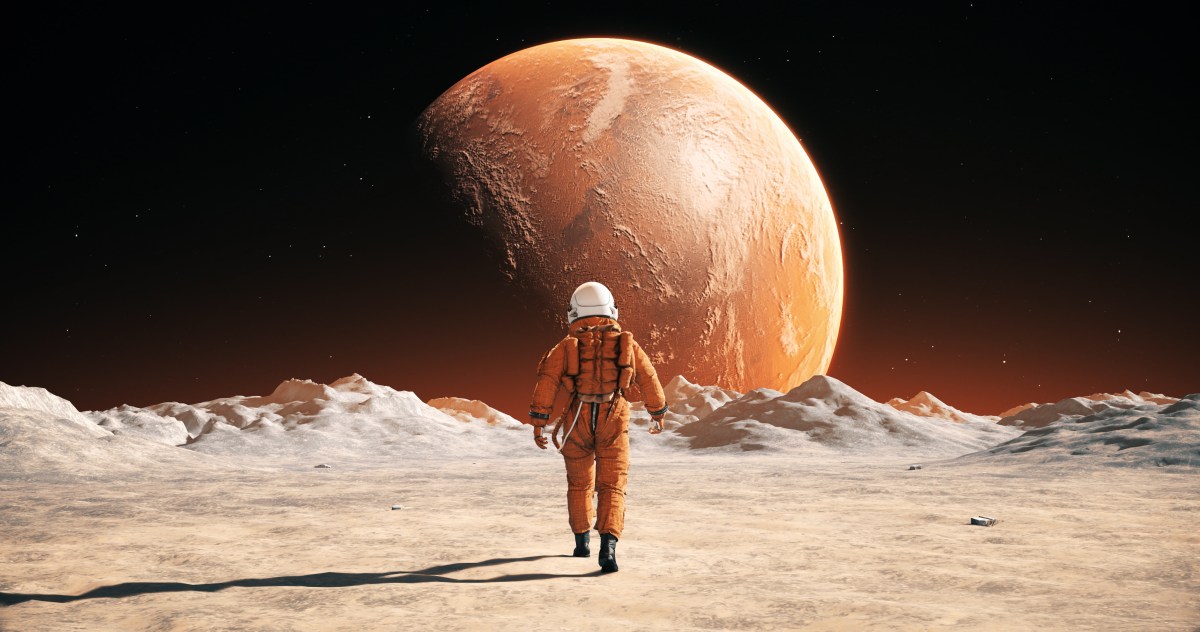
Ambitious visions of sprawling cities on the moon could face a fundamental obstacle—water.
A new study published in Frontiers in Space Technologies suggests that while there may be enough water ice on the moon to support a small settlement for centuries, the available supply is unlikely to sustain a city of hundreds of thousands or millions of people over the long term.
The findings come as interest in permanent lunar habitation continues to grow. Earlier this year, NASA unveiled its phased strategy for establishing a sustained human presence on the Moon by 2032. The discovery of water trapped in permanently shadowed craters near the lunar poles has fueled hopes of creating lunar bases and eventually larger settlements.
“The discovery of water in dark craters at the Moon's poles has sparked a ‘moon rush’ to establish bases there, and then villages, cities, and heavy industry,” the study’s lead author, Martin Elvis, an astrophysicist at the Harvard-Smithsonian Center for Astrophysics and astronomer at the Smithsonian Astrophysical Observatory, said in a statement.
George Sowers, a professor in the Space Resources Program at the Colorado School of Mines who previously served on the NASA Advisory Council's Human Exploration and Operations Committee, told Newsweek that “developing water ice is probably one of the very first economically viable uses of moon resources.”
According to the recent study, energy generation may not be the main barrier to long-term habitation.
Elvis said the rims of polar craters receive nearly constant sunlight, making them ideal locations for large solar power installations. He noted that kilometer-high (around 3,281 feet) towers covered with photovoltaic arrays could potentially generate around three gigawatts of electricity. Because the Moon contains abundant silicon, solar panels could eventually be manufactured locally, creating opportunities for industries ranging from fuel production to AI data centers.
“This could even make AI data centers on the Moon possible,” Elvis said, adding that such developments could form “the start of a true lunar economy.”
The study similarly concluded that power is not a major constraint on lunar population growth. Water availability, however, presents a far greater challenge.
Researchers examined whether the estimated water reserves trapped within permanently shadowed regions near the lunar poles could support large populations. They found that roughly one billion tons of water, a generous upper-end estimate, would still be insufficient to sustain a city of one million people using current International Space Station (ISS)-level recycling technology for more than about a century.
The importance of water extends well beyond drinking supplies.
Sowers explained that lunar water ice is preserved inside permanently shadowed polar craters that never receive sunlight. Because the moon has almost no axial tilt, sunlight remains close to the horizon at the poles, allowing crater bottoms to remain in darkness for billions of years. Water exposed to sunlight on the Moon is unstable and “the water will just boil or sublimate immediately” due to the vacuum environment, Sowers told Newsweek.
He said water will likely become the moon's most valuable early resource because it can be split into hydrogen and oxygen through electrolysis and used as rocket fuel.
“Water is going to be the most important initial resource,” as developments emerge around the solar system, Sowers said, adding that the moon is also rich in metals and other resources.
Elvis said the outlook becomes even more challenging when considering current estimates for lunar water reserves.
“Even in the best-case scenario, with 98 percent efficient recycling of water—the same as achieved on the ISS—a one-million-person city will run out of water in just over a century,” he said.
He added that today's best estimates suggest the moon contains about 30 times less water than that generous one-billion-ton assumption. Under those conditions, even a small city could exhaust its available resources within roughly a decade.
The study concluded that, unless major breakthroughs in recycling technology occur or substantially larger water reserves are discovered, large-scale long-term habitation of the moon is unlikely. Researchers wrote that improving recycling rates by roughly a factor of 10, or finding a similarly increased water supply, would be necessary to change that outlook.
While cities may face resource limits, smaller settlements appear far more realistic. Elvis said a village of around 1,000 people or even a town of 10,000 could remain sustainable for centuries.
The researchers stated that if a settlement remains a “Moon Village” of roughly 1,000 inhabitants, comparable to the winter population of Antarctica, lunar water could be used relatively freely. Once populations approach 100,000, water management becomes far more critical, and populations of one million appear unsustainable beyond about a century unless new solutions are found.
Hao Chen, an assistant professor at Stevens Institute of Technology who studies space-based construction, told Newsweek that lower lunar gravity offers unique architectural possibilities. With only about one-sixth of Earth's gravity, designers face fewer mass-bearing constraints and can create larger volumetric spaces than those possible on Earth.
However, Chen said: “The main challenge is the extreme environment. We need to consider pressure containment, radiation and micrometeorite protection, extreme thermal cycles, and abrasive lunar dust.”
Nathan Silvernail, co-founder and CEO of advanced manufacturing company Plantd and a former SpaceX engineer who worked on Crew Dragon life-support systems, agreed, citing radiation exposure, temperature extremes, and the difficulty of transporting building materials as major challenges. For these reasons, “a civilization on the moon will most likely be subterranean,” he told Newsweek.
Looking further ahead, Chen said that a typical neighborhood on the moon may resemble industrial campuses centered around power generation, resource production, and underground habitats.
Over the next century, Chen envisions “multi-level subsurface” settlements built around lava tubes, containing housing, food production, recycling systems, laboratories, and manufacturing facilities.
For now, as the recent study suggests, while the Moon may be capable of supporting villages and modest towns for generations, the dream of vast lunar cities remains constrained by one of humanity's most basic needs—water.
Elvis, M., & McDowell, J. (2026). No Cities on the Moon: a Billion Tons of Water is Not Enough for Sustainability. Frontiers in Space Technologies. https://www.frontiersin.org/journals/space-technologies/articles/10.3389/frspt.2026.1894104/full
Do you have a tip on a science story that Newsweek should be covering? Do you have a question about life on the moon? Let us know via life@newsweek.com.
Contact Newsweek editors on this story: Kara Dolman and Gray R. Thomas