Senate Candidate Destroys Flock Security Camera With Shotgun in Campaign Ad - Newsweek
Montana Senate candidate Seth Bodnar released a campaign video showing himself blasting a Flock Safety surveillance camera with a shotgun.
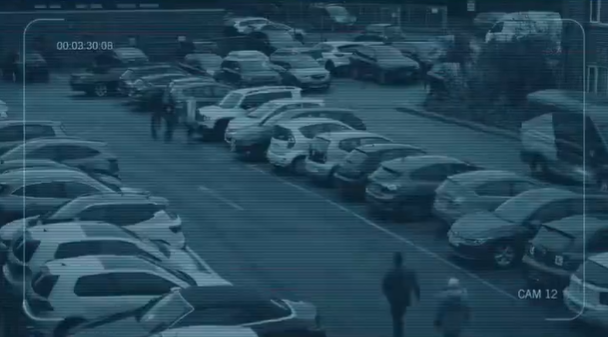
The stunt thrusts the already‑heated fight over automated license plate readers deeper into the 2026 midterms and signals escalating political pressure on states, tech companies, and law enforcement agencies that rely on the rapidly expanding surveillance network.
Montana voters now face a race where digital privacy, police access to data, and the future of AI‑driven monitoring could shape policy far beyond the state’s borders. The ad arrives as federal investigations, statewide bans, and even criminal cases mount against the controversial cameras.
The video features Bodnar declaring, “Flock off, man!” before accusing the cameras of tracking Americans “getting groceries,” “going to church,” and “seeing a doctor.”
Newsweek has reached out to Flock Safety, as well as the campaigns for Seth Bodnar and Kurt Alme, for comment.
Montana independent Senate candidate Seth Bodnar released the video Monday, positioning himself as the latest political figure to target Flock Safety’s automated license plate readers.
In the ad, Bodnar fires a shotgun at a Flock camera mounted beside a bag of flour, using the moment to dramatize his opposition to what he calls an unchecked surveillance system.
The video leans heavily on fears about constant monitoring. Bodnar warns viewers that Flock cameras watch people “getting groceries,” “building a new deck,” “going to church,” and “buying ammo for the season.”
He argues the devices collect far more than traffic‑violation data, capturing every vehicle that passes and storing identifying information in cloud systems he says are ripe for misuse.
Flock Safety, which operates more than 120,000 cameras across 49 states, insists it does not sell or access user data and that law enforcement agencies own the information they collect.
Bodnar ties the cameras to a broader commercial ecosystem, saying the system is “part of a massive economy designed to buy and sell our personal data.”
Whether Bodnar faces legal consequences will depend on who owned the camera and the circumstances under which it was destroyed. As of September 14, no law enforcement agency has publicly announced an investigation, and there is no public evidence that the camera shown in the advertisement was a functioning government-owned surveillance device.
Bodnar’s ad lands amid a wave of political and legal clashes over Flock Safety. In Tennessee, independent House candidate Adam Lee Heimerman was arrested in July and charged with four felony vandalism counts for allegedly shooting four operational Flock cameras.
The case emphasized how the devices have become symbols of government overreach for some candidates—and criminal evidence for prosecutors.
Heimerman’s arrest drew national attention, especially as candidates in other states began using anti‑Flock messaging to energize voters skeptical of surveillance technology.
The Tennessee case also highlighted how deeply the cameras have penetrated local policing, making them both a political target and critical infrastructure.
The backlash has reached Washington. U.S. Senator Josh Hawley launched a formal congressional investigation accusing Flock Safety of creating an unauthorized national surveillance network that performs over 20 billion vehicle scans monthly.
The investigation has fueled calls for federal regulation, especially as privacy advocates warn that AI‑driven monitoring risks outpacing existing legal protections.
Several states have already taken action. Florida Governor Ron DeSantis ordered the removal of automated license plate readers from state highways, citing severe privacy concerns.
Rhode Island Governor Dan McKee paused new camera installations amid public backlash.
These moves show how quickly the issue has shifted from niche privacy debates to mainstream political fights. In Florida, Democratic Senate nominee Angie Nixon is selling campaign shirts reading “FLORIDA NEEDS TO GET THE FLOCK OUT,” signaling how candidates across parties are capitalizing on voter frustration.
Montana has already positioned itself as a national leader on digital privacy.
The state recently became the first to close the “data broker loophole,” blocking law enforcement from purchasing sensitive digital information—including precise geolocation—without a warrant.
The new law, SB 282, builds on Montana’s decade‑long push to restrict face recognition, protect genetic data, and recognize digital information as constitutionally protected from unwarranted searches.
In the video, Bodnar criticizes Republican candidate Kurt Alme for refusing to take a position on automated license plate readers. He vows not to stay silent “by a long shot” before firing the shotgun. The attack suggests Bodnar sees the surveillance issue as a wedge that could differentiate him in a crowded four‑way race.
A September 11 Montana Free Press-Rutgers Eagleton poll found Republican Kurt Alme leading independent Seth Bodnar 38 percent to 30 percent, with Democrat Alani Bankhead at 16 percent. The poll surveyed 845 registered Montana voters polled between Aug. 27 and Sept. 7. The ad may help Bodnar consolidate voters who distrust both government surveillance and big‑tech data collection.
Bodnar’s background—West Point valedictorian, Rhodes Scholar, Green Beret, former University of Montana president—gives him credibility on national security and technology issues. His tenure at General Electric, where he oversaw digital locomotive systems, adds another layer to his critique of large‑scale data infrastructure.
But his record also includes controversy: the University of Montana settled a $350,000 sex‑discrimination lawsuit in 2024 that alleged a “good ol boys club” culture under his leadership. The surveillance fight may let Bodnar shift attention to a populist privacy message rather than past administrative battles.
Bodnar’s shotgun ad is likely to intensify scrutiny of Flock Safety as the midterms approach.
With federal investigations underway, statewide bans expanding, and candidates facing criminal charges over the cameras, the technology has become one of 2026's most volatile issues.
Whether the stunt helps Bodnar close his polling gap remains unclear, but the political momentum behind anti‑surveillance messaging is unmistakable.
As Montana continues to lead on digital privacy legislation, the state’s Senate race may become a national test case for how voters respond to AI‑driven monitoring—and how far candidates are willing to go to oppose it.
Contact Newsweek editors on this story: Samantha Beech and Gray R. Thomas