Senate Democrats welcome a red-state revolution - Semafor
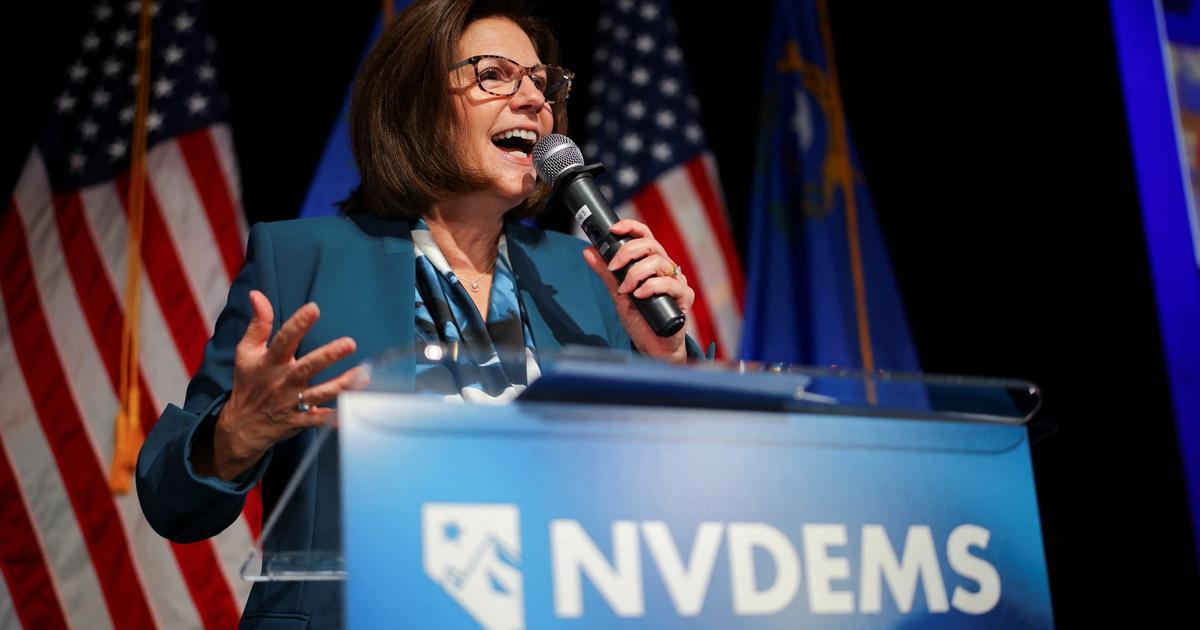
Catherine Cortez Masto was one of just three senators in the Democratic caucus to oppose last year’s government shutdown. She clashed openly with her own Democratic colleague over police grants. She seemed, at times, like a lonely centrist.
Democratic victories deep in red territory this week did more than power the party back to the Senate majority. They gave Cortez Masto reinforcements; the influx of red-state members next year will dramatically reshape the Senate Democratic Caucus. Self-styled moderate senators-elect like Iowan Josh Turek and Kansan Adam Hamilton could be joined by Mississippi and Alaska Democrats by the time the next Congress begins.
Progressives like Michigan Sen.-elect Abdul El-Sayed grabbed more headlines than centrists like North Carolina Sen.-elect Roy Cooper this year. But Cortez Masto, who supported an inordinate number of moderates this cycle, expects something striking to happen in 2027: the center and the left will align on the bread-and-butter priorities of the party.
“We are going to be united about restoring the [Obamacare] tax credits, or getting rid of the harmful tariffs, or reining in Trump’s ability to wage this war, and standing strong against a completely out of control ICE that’s killed American citizens,” the Nevada Democrat said in an interview this week.
There will be a natural divergence, too, on some high-profile issues. It might not fully show up until a Democratic president gets elected, but voters should not expect Texas Sen.-elect James Talarico to vote with the rest of the party on energy issues.
“If someone goes after the hundreds of thousands of oil and gas jobs in Texas and Alaska, I would expect those senators to stand up for that. Just like if somebody is going after the thousands of good-paying union jobs in mining in Nevada or my gaming industry, I’m going to stand up for it,” Cortez Masto said.
Turek told Semafor last month that he’s a proud moderate who would have supported the Laken Riley Act and its stricter penalties for noncitizens accused of crimes — a bill Cortez Masto also backed. The Iowan also said he would have voted with Republicans on farm and data center legislation that most Democrats opposed.
His comments are a preview of how hungry some new senators will be for bipartisanship, despite a Democratic base that wants to use new majorities to fight the Trump White House.
“One of the things I’m the most proud of in my time in the legislature, is I’m independently recognized as one of the most bipartisan and one of the most effective. 700 times I voted with Republicans,” Turek said.
As chair of the centrist ModSquad group, Cortez Masto worked behind the scenes to elect moderate candidates, raising $4 million for Democrats, hosting fundraisers for Turek, Peltola, New Hampshire Democratic Sen.-elect Chris Pappas, Mississippi Democrat Scott Colom and Illinois Sen.-elect Juliana Stratton.
The associated PAC spent $18 million across the country, including $3.5 million in Iowa, $2 million in New Hampshire, $1.5 million in Texas, $1 million in North Carolina, $385,000 in Alaska and nearly $5 million backing incumbent centrists in Virginia and Colorado, according to details provided to Semafor.
The group also spent for Reps. Angie Craig, D-Minn., and Haley Stevens, D-Mich., both of whom lost their Senate primaries to more progressive candidates. El-Sayed will have company on the left in the new class, joined by Sens.-elect Peggy Flanagan of Minnesota, Troy Jackson of Maine, and Stratton.
Cortez Masto still predicts Democrats will hang together.
“Moderates are united in really seriously tackling the affordability crisis, just like our progressive colleagues,” she said.
The new senators won’t be sworn in until next year, but big decisions for Democrats await in the lame duck. Next week the Senate will vote on a bipartisan permitting reform bill that is being criticized by environmental groups.
That bill will need support from senators like Cortez Masto, who said “there’s some good, positive things in there for the state of Nevada” but that she’s working on protecting tribal lands in the bill before she can commit to supporting it. Democrats will also have major leverage on a potential year-end government funding deal.
Next year’s new Democratic majorities will debate how much energy to spend on working with Trump, who likes cutting deals but often struggles to get negotiations done. Cortez Masto said the Congress needs to focus on sending him bipartisan legislation like this year’s housing bill, which became law without Trump’s signature.
“There’s many things we can do in a bipartisan way for him to sign. The question is whether he’s willing to do it,” she said.
Trump has sounded some conciliatory notes after the election, saying that he’ll “get along, probably, with the Democrats unless they want to be destructive.”
That period of divided government will play a major role in the 2028 campaign as voters watch whether the Democratic majorities can be effective. Cortez Masto is up for reelection in Nevada; though she didn’t explicitly commit to running for a third term, she said “I’m not done fighting. I’m going to continue to be in this.”
Asked if she was genuinely undecided on running again, she replied: “No, I’m just telling you right now, my focus is on putting a plan in place to address affordability and accountability.”
Red- and purple-state Democrats are the majority makers of the Senate, and most of them skew toward the center. Their priorities will be critical for incoming Majority Leader Chuck Schumer, who could compete for a filibuster-proof majority in 2028 if he plays his cards right.
That will require showing voters that Democrats actually did something about the rising costs and corruption they spent two years railing against. If Democrats follow through, someone like Cortez Masto could have a far easier reelection campaign in two years than she’s used to — and more GOP-held Senate seats in red states could be up for grabs.