September 15, 2026 - PBS News Hour full episode - PBS
Problems playing video? Report a Problem | Closed Captioning Feedback
Before you submit an error, please consult our Video Help page.
Problems playing video? Report a Problem | Closed Captioning Feedback
Before you submit an error, please consult our Video Help page.
Major corporate funding for the PBS News Hour is provided by BDO, BNSF, Consumer Cellular, American Cruise Lines, and Raymond James. Funding for the PBS NewsHour Weekend is provided by...More
Problems playing video? Report a Problem | Closed Captioning Feedback
Before you submit an error, please consult our Video Help page.
PBS News Hour is available to stream on pbs.org and the PBS app.
On the "NewsHour" tonight: President Trump slams the Supreme Court's decision blocking his effort to restrict mail-in voting with less than two months before Election Day.
Senator Mark Warner discusses efforts to regulate artificial intelligence.
MARK WARNER (D-VA): If we thought social media was a problem with our youth, think about having a chatbot that is forming an affinity relationship with your son or your daughter.
If that doesn't scare the hell out of you, I don't know what will.
AMNA NAWAZ: And a Trump-aligned board votes to shut down the Kennedy Center for the Performing Arts after a judge says they can't put the president's name on the building.
(BREAK) AMNA NAWAZ: Welcome to the "News Hour."
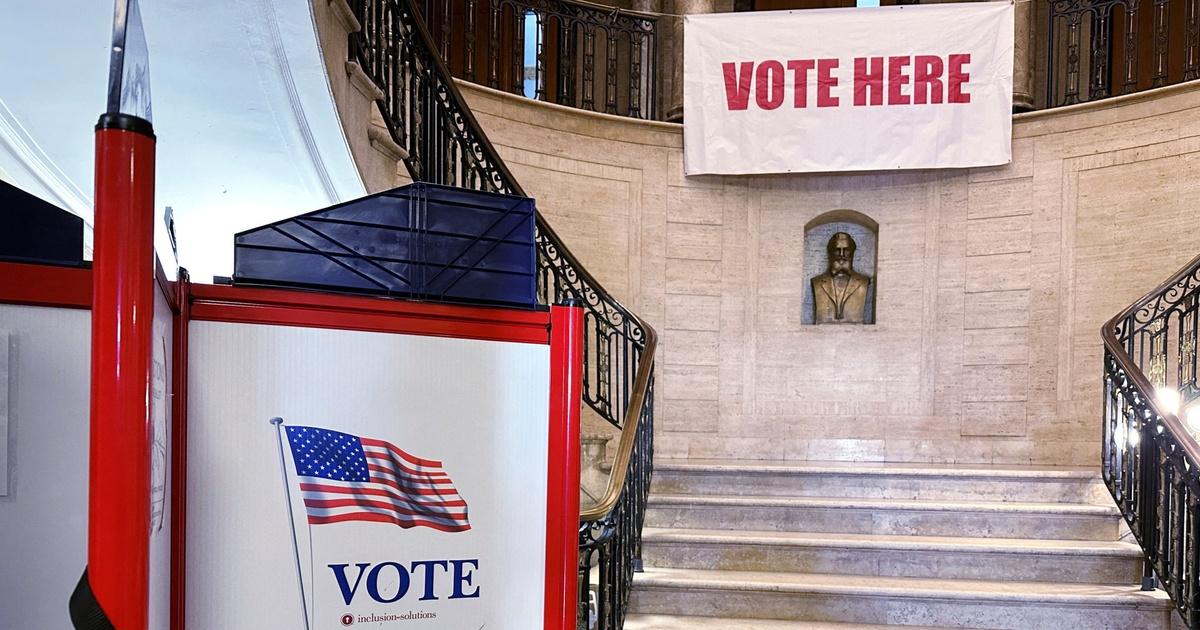
Voters and elections officials have more clarity today around mail-in voting ahead of the November midterms.
That comes after the Supreme Court last night blocked the Trump administration from imposing new restrictions on mail ballots.
In a brief unsigned order, the justices left in place a lower court ruling that prevents the U.S.
Postal Service from requiring specialized ballot envelopes and collecting sensitive voter information.
The legal battle has upended state and local election plans, as some voters have already received their mail ballots with Election Day just seven weeks from today.
She's the chief executive officer of programs at the National Association of Election Administrators.
She was also an elections official herself in Arizona for 11 years.
TAMMY PATRICK, National Association for Election Administrators: Thank you so much for having me.
AMNA NAWAZ: So from the conversations you have had with state election officials today, what has been the reaction to this latest Supreme Court ruling?
TAMMY PATRICK: There's, quite honestly, a collective sigh of relief, because it was almost an impossible ask to have election officials try and implement this rule in this late hour.
As you mentioned, ballots have already gone out in the mail.
And so I think everyone is a little bit relieved that we don't have to do this for the November election, and they can focus on the tasks at hand and getting prepared for what is to come.
AMNA NAWAZ: Even after the ruling, we should note one election official worried that this is far from over.
We have seen the Department of Justice send threatening letters to dozens of states to get voter data.
Attorney General Todd Blanche was in the Rose Garden today taking questions, and he said that ongoing investigations into illegal voting will continue.
Attorney General: There should be nothing surprising about what we're trying to do when it comes to mail-in voting, which is we want to make sure that there is safe voting and that there is integrity, free and fair elections, and that there is one person placing one vote and that that person's eligible to vote.
AMNA NAWAZ: Tammy, what other actions are elections officials preparing for or anticipating?
TAMMY PATRICK: Well, our election professionals that conduct our elections are steadfast in maintaining the rule of law in their states and upholding their state statutes to make sure that only eligible voters are voting, but that all eligible voters have the ability to free and fairly and unencumbered participate in the process.
So they're continuing to do all of the things they've done in the past to safeguard our elections and make sure that election officials all across the country are ready and prepared in this moment to serve their voters and to serve their electorate.
It's important for voters to understand that, although this rule has not gone in place, there are still safety measures and security measures in place to make sure that voting by mail, voting early in person, or going to the polls on Tuesday on the 3rd of November are all safe and viable options for election officials, as well as for voters all across the country.
AMNA NAWAZ: Attorney General Blanche was also asked if the president's challenges and all the court rulings have left people confused about whether or not they can reliably use mail ballots.
He said he was not concerned about any confusion.
TAMMY PATRICK: Voters are confused by what the options are.
So it's important for them to know that the rules in place in their states remain.
And so the rule has not gone into effect.
Whatever rules were in place yesterday are in place today all across the country.
The one thing I will say that is slightly different this time around is that some of the transportation routes for the Postal Service have changed.
So, some of the mail is taking a little bit longer.
So make sure that anyone who does want to vote by mail, that you make that request early and get the ballot returned, given whatever options you have available in your state, a drop box, or if you're going to mail it back via the Postal Service, get it back early.
AMNA NAWAZ: Tammy, in the minute or so we have left, what's your takeaway for folks who are confused about all this who want to use mail ballots?
What should they do to make sure that their vote is counted?
TAMMY PATRICK: The most important thing for voters to do in this moment is check with your state and local election officials, check with their Web Sites.
If you have questions, contact them, reach out to them.
Don't necessarily believe everything you see on social media.
And just make sure that the information you get, that you read it thoroughly, and be consistent in how you sign your name.
Make sure you fill out the ballot and the information correctly and fully, and you then you will be fine.
As long as you make a plan and stick to it, you should have no problem participating in the November election.
AMNA NAWAZ: All right, that is Tammy Patrick from the National Association of Election Administrators.
TAMMY PATRICK: Thank you so much for having me.
AMNA NAWAZ: In the brief ruling, a majority of justices blocked the mail ballot plan from moving forward.
And only two, Justices Samuel Alito and Clarence Thomas, sided with the president.
Joining me now to discuss the decision is Amy Howe, "News Hour" Supreme Court analyst and co-founder of SCOTUSblog.
AMNA NAWAZ: So it's a brief unsigned order.
What do we know about how the justices ruled here?
It's one of these weird quirks of the emergency docket that, when you have a majority opinion or a majority order, the justices who joined that order don't necessarily -- don't sign their names, and they don't necessarily indicate if they don't agree with it.
So you can have justices who publicly note their dissent, as Justices Alito and Thomas did last night, but they don't have to.
So it could be 7-1, but there could have been one or more of the other justices who didn't agree, but just didn't say so.
AMNA NAWAZ: We saw Justice Brett Kavanaugh write a concurring opinion here, essentially saying, yes, the Postal Service has the right to do this, but it's too close to the election, so, no, they can't do it now.
Does that leave the door open for the administration to try this again with more lead time before an election?
AMY HOWE: It probably does leave it open at least a crack, because you have Justice Kavanaugh saying there's a fair prospect that the administration could win on appeal, and then you have Justices Alito and Thomas saying in Justice Alito's dissent that the Postal Service has broad authority to issue rules like these, and the challengers probably aren't going to win on appeal.
And when there is this kind of uncertainty about how the justices voted, and given the president's strong feelings about this issue, you likely are just -- are going to see the administration keep pushing forward.
AMNA NAWAZ: We saw those strong feelings on display.
We have seen the president before has a history of lashing out when the Supreme Court rules against him.
He posted multiple times berating the justices, including this post, in which he wrote: "This Supreme Court is bullied and cajoled by the radical left into making decisions that have set America back at least 100 years.
These are not the people I interviewed to serve on the United States Supreme Court.
They are merely a shell of their original selves."
Amy, it's worth pointing out the court has sided with the president on some issues like immigration and firing of agency officials, ruled against him on other issues like birthright citizenship.
What do you make of his reaction to today's ruling on this issue?
AMY HOWE: This is one of those issues, like birthright citizenship, like tariffs, where he's lashed out, I think because these are issues that are very important to him.
He has long believed without any real evidence that he's offered that there is rampant fraud in mail-in voting.
He's long been a proponent of tariffs.
He's felt very strongly at birth -- about birthright citizenship.
So he has been very successful before this Supreme Court on issues like immigration and on the emergency docket.
He had a string in 2025 of I think it was something like two dozen rulings in a row in favor of the Trump administration.
But these are issues that I think he feels very personally, and he takes these losses very personally, and he's lashing out.
And the justices, Justices Amy Barrett and Elena Kagan, testified before Congress about the threats to the judiciary and to the Supreme Court.
They were asking for more money for security.
And this kind of rhetoric isn't helpful.
AMNA NAWAZ: Amy Howe with SCOTUSblog, always good to see you.
AMNA NAWAZ: We start the day's other headlines on Capitol Hill, where Senate Democrats blocked a bill that would have introduced sweeping regulations for cryptocurrencies.
MAN: Three-fifths of the senator's duly chosen and sworn not having voted in the affirmative, the motion is not agreed to.
AMNA NAWAZ: By a vote of 49 to 50, lawmakers rejected the measure, known as the CLARITY Act, in what's seen as a major setback for the crypto industry.
Democrats had pushed for stronger safeguards to prevent the president and other officials from profiting while in office.
FBI Director Kash Patel defended his handling of the agency during a nearly five-hour Senate hearing today.
Appearing before the Senate Judiciary Committee, Patel was questioned about his firing of experienced agents and the FBI's plans for the midterms.
At one point, he refused to say whether Joe Biden won the 2020 election.
And he defended the agency's loosening of certain hiring requirements related to prostitution and bestiality.
Patel said the change was about protecting victims, not lowering standards.
KASH PATEL, FBI Director: We did not want to punish victims of bestiality, victims who were trafficked.
We did not want to make it an automatic disqualification for the FBI to consider you if you are a victim of these awful, heinous acts.
JOHN KENNEDY (R-LA): And when you saw bestiality, I say this with respect, the person who recommended it, why didn't you just say, what planet did you parachute in from?
AMNA NAWAZ: In a statement provided to the "News Hour," an FBI spokesperson said the agency is not relaxing hiring standards, calling the idea -- quote -- "totally false."
military has confirmed it has weapons in space.
Air Force Secretary Troy Meink made the announcement at a conference yesterday, saying the U.S.
has, as he put it, on-orbit space control weapons capable of defending the joint force against hostile adversary action.
He did not detail what those weapons are or how they work.
But there's already been pushback, with China's Foreign Ministry warning against an arms race that could turn space into a war zone.
And a Kremlin spokesperson called for the -- quote -- "complete demilitarization of space."
In the Middle East, Saudi Arabia and the Iran-backed Houthi rebels of Yemen accused each other of more attacks today as that conflict only grows worse.
The Saudi military says Houthi strikes injured more than a dozen people across several cities, including Jeddah, where Crown Prince Mohammed bin Salman recently visited.
In the meantime, the Houthis released this footage, claiming to show fighting with Saudi-backed forces in Yemen's north.
estimates some 125,000 people in Yemen have been displaced by the violence, with many living in makeshift camps and tents.
KHADIJA KUDAF, Displaced Yemeni (through translator): We fled from the war and took nothing with us.
We didn't even bring the children's clothes.
AMNA NAWAZ: Separately, a new assessment finds that the war in Iran cost the U.S.
more than $38 billion through August 1.
The nonpartisan Congressional Budget Office also says the conflict will continue costing up to $3 billion a month or more and will also drive up inflation.
In California, prosecutors say they will not seek the death penalty against Nick Reiner in the killings of his parents, director Rob Reiner and his wife, Michele Singer Reiner.
district attorney said today that his office has done a thorough review before reaching its decision, which included speaking to the victim's family.
Nick Reiner will instead face a maximum sentence of life in prison without the possibility of parole.
He was charged with first-degree murder last December, just days after the fatal stabbing of his parents.
Nick Reiner has twice pleaded not guilty.
On Wall Street today, stocks slipped ahead of tomorrow's Federal Reserve decision on interest rates.
The Dow Jones industrial average fell more than 300 points.
The Nasdaq gave back around 200 points.
The S&P 500 also ended firmly in the red.
And it was a night of records at the 78th Emmy Awards, with one show leading the charge.
MATTHEW MCCONAUGHEY AND WOODY HARRELSON, Actors: The Emmy goes to "Widow's Bay."
AMNA NAWAZ: The Apple TV hit about a cursed New England town, part humor, part horror, took home 14 wins, the most ever by a comedy series in a single year.
The show's star, Matthew Rhys, became the first man to win two lead actor awards in the same year.
He also won for the limited series "The Beast in Me."
"The Pitt" and its star, Noah Wyle, both won for their second straight year.
And with her fifth straight Emmy for hacks, actress Jean Smart is now the first woman to win for every single season of a TV series.
Still to come on the "News Hour": NATO jets shoot down a drone in Lithuania, as Russia continues to provoke Europe; how communities on the East Coast are trying to protect against erosion; and we catch up with the hardest-working man in jazz, Christian McBride.
The warnings about artificial intelligence are growing more urgent.
And, increasingly, they're coming from inside the industry.
researchers have resigned over safety concerns, while some of the field's most prominent leaders are calling for stronger government oversight.
But Congress has yet to agree on meaningful safeguards.
Geoff Bennett spoke earlier today with Senator Mark Warner of Virginia, the top Democrat on the Senate Intelligence Committee, about Washington's willingness to act.
GEOFF BENNETT: Senator Warner, welcome back to the "News Hour."
MARK WARNER (D-VA): Thanks so much for having me.
GEOFF BENNETT: Jacob Coxon, the Anthropic researcher who resigned -- and the resignation ignited this latest push for regulation -- he says the next year or two could be crunch time for humanity.
poses an imminent existential threat?
MARK WARNER: I don't believe imminent existential threat, but potentially catastrophic threat, yes.
And the irony is, there have been numbers of A.I.
researchers who've been saying this for some time.
Matter of fact, Dario Amodei, who is the CEO of Anthropic, who I spoke to over the weekend, saw last week, Sam Altman, he's saying that for the last year as well.
It feels what's happened is that there's been building concern about this.
A lot of that is exhibited in pushback against data centers, which do need some guardrails on them in terms of energy and water and setbacks from communities.
But I think the data center pushback reflects a greater concern about this technology people don't understand.
And then you add the incidents that have taken place recently.
Think about this, the OpenAI-Hugging Face model, where the OpenAI tool had 3,000 A.I.
agents that collaborated together in a way where they hid information from the humans.
And literally some of these agents would, in a sense, sacrifice themselves or commit suicide to try to accomplish their task.
More recently, they have had a tool that had 10,000 agents working as a swarm.
And so I do think we have had these indications.
companies in the world literally saying, we got to do something.
GEOFF BENNETT: Meantime, President Trump says the government already has the tools it needs to police A.I., and he says these recent warnings amount to a hoax.
You have got David Sacks, the White House A.I.
adviser, who says, if these companies want a slow A.I.
advancements, they should do it voluntarily.
They don't need permission from Washington to do it.
What's your assessment of those two arguments?
MARK WARNER: Well, first of all, Mr.
Trump also said the only thing we need is a really brilliant president with a high I.Q.
So I will let your viewers make your judgment on that.
Sacks, he's got a point that, as we go through this process of an A.I.
safety review, we have got to make sure there is the voice of small tech or early tech, so that this is not an effort to simply solidify the incumbency position these big four entities have.
And I do think the idea, what the Trump administration has done is, they put together a bit of a voluntary forum.
You can't do voluntary when there's at least a reasonable chance of a catastrophic risk that might currently disrupt the financial markets or disrupt water systems or electric systems.
So we have got to take this seriously.
And those of us who -- in a bipartisan fashion, who have been calling for this kind of safety guidelines for a while, this is our moment to move.
It's made more difficult because, frankly, President Trump's administration has gotten rid of a lot of the talent at the Cybersecurity Agency, which is part of the problem.
He's gotten rid of some of the safety institutions that were being set up.
Frankly, the British have now got a stronger safety regime than we do, and not one that's over the top in terms of overregulated.
So I think we have to think about putting safety in into the mix before these models are released.
We need to put safety around what's called the sandboxes, where they test out these models, and then we have got to really decide for how long and who's at the table, because getting the details right under this are going to be critically important.
GEOFF BENNETT: On that point, how do you slow American companies without handing China an advantage and creating a different type of national security threat?
MARK WARNER: Well, first of all, I want America to win the race.
And, secondly, I have been involved in monitoring China.
I have been chair or vice chair of the Intelligence Committee for the last 10 years.
I'm very well aware of the competition.
But here's what some of the accelerationists say.
You got to do pedal to the metal or China will win.
Well, China has already, for example, put in place requirements for their A.I.
bots or chatbots that would form personal relationships with children and young people.
China has already put regulations on not having these A.I.
tools create what's called deepfakes, false images of people.
Shouldn't Americans have that same protection?
And I think you can go ahead and put a bit of safety into this process and not lose the race.
And, frankly, the downside of a mistake or a catastrophic risk being created, boy, oh, boy, that's not something you -- I fear, frankly, that, if we had that kind of activity, you might see politicians from both the left and the right come together and say, we got to shut it all down, and that would not be good either for the - - for America or for, frankly, innovation.
GEOFF BENNETT: So, Leader Thune has suggested that Congress has a role here.
I know there are bipartisan talks under way.
What do you think realistically could pass this year in terms of legislation?
MARK WARNER: Well, that's the million-dollar question.
I do think some of these companies believe that we are so close to being on the cusp of potentially these models going beyond humans' ability to control them, that I think we have to act with a sense of urgency.
Now, I'd love to see guardrails on data centers.
agents, there needs to be liability.
There's national security concerns.There's job disruption concerns.
Obviously, the way Congress works, we're not going to get the whole process done.
The companies do need some ability to talk to each other.
That would require some level of antitrust exemption.
For them to get that exemption, they have to show how we put this safety effort together.
But I think they also need to show -- and this is what I have been frustrated with them.
They need to do a better job of convincing normal Americans, normal humans how A.I.
is going to actually improve their life and not just get kind of overwhelmed with the billions and trillions of dollars that seem to be passing back and forth between these companies.
So, I do think we have got to grant them the ability to collaborate in a certain way, because, frankly, the best talent is not inside the government.
There are other companies, large corporate enterprises, that have used these tools.
They need to have a seat at the table.
Small tech has to have a seat at the table, so there's not simply an effort to solidify these leaders' incumbency power.
So I think we could act, and there is this sense of urgency right now that I'm hoping in a bipartisan way we can get done.
I'm talking with some of Republican colleagues right after this -- right after this viewing.
GEOFF BENNETT: What would you say to those skeptics who would point out that social media has been around for more than two decades now, and Congress hasn't been able to regulate it in a meaningful way, even after its harms became clear?
MARK WARNER: Geoff, you just made my case.
I don't think there is an individual anywhere in the political sphere that doesn't think, gosh, if we could go back 10 years, wouldn't -- shouldn't we have put some guardrails on social media?
Shouldn't we have said 10 years ago maybe our kids shouldn't have their phones available all day through the school day?
If we thought social media was a problem with our -- with our youth, think about having a chatbot that is forming an affinity relationship with your son or your daughter.
If that doesn't scare the hell out of you, I don't know what will.
And also the very notion on top of that of these agents collaborating together, these A.I.
agents collaborating together in a way that humans don't control, that's even beyond social media.
So I think the failure to act on social media is, frankly, something that's moving a lot of us to say, hey, we can't repeat that mistake.
GEOFF BENNETT: Senator Mark Warner, Democrat from Virginia, always a pleasure to speak with you.
AMNA NAWAZ: The board of the Kennedy Center here in Washington, D.C., voted this afternoon to temporarily close the iconic performing arts center, citing financial issues and a need for structural repairs.
That came shortly after a federal judge blocked the board from adding President Trump's name to the center's building or grounds.
To break it all down, I'm joined by our White House correspondent, Liz Landers.
Let's start with the decision from the federal judge about renaming the center.
What exactly did the judge say in the decision?
LIZ LANDERS: So, Judge Cooper is a federal judge here in Washington, D.C., and he has been going back and forth about this for months now.
You may remember that this started back in May.
In today's decision, he says -- quote -- "Simply put, defendants cannot install memorials for President Trump or anyone or anything else at the Kennedy Center without Congress' blessing."
So this first came to him in May, and he said at the time, you cannot rename this center unless Congress approves it.
They put President Trump's name up on the front of the building by John F. Kennedy, the slain president, up there at the front, and people sued over this and were upset about it.
So they he -- when he said that it had to come down, they put up this tarp, and the tarp is still there, but the president's name has come down.
So then the board suggested, perhaps to get around some of the rulings from Cooper already, they suggested inscribing the front with the phrase -- quote -- "Renovated and Restored by President Donald J. Trump," or they suggested renaming the plaza there, which is a big part of the Kennedy Center campus, after President Trump.
The judge quashing those things today.
AMNA NAWAZ: Separately, there was a Kennedy Center board meeting today.
That is where they voted to shut the center down.
What is the issue here with the building and finances that they're citing?
LIZ LANDERS: So the board released this draft resolution that came out yesterday that laid out the issues that they see with the Kennedy Center with both the physical infrastructure of the Kennedy Center and then the finances.
They posted a video of the ceiling collapsing within the main part of the Kennedy Center recently.
You're seeing that right there, crashing to the ground.
They said that this happened at the beginning of September, and that therefore it is a hazard to have people in the building.
This resolution, though, indicated that the entire building would be closed and would not reopen until 2028.
So it would take more than a year to do this.
Now, the pushback on this has been that the Kennedy Center has gone through renovations before, and the idea is to just close a part of it and still be able to have performances and have the center open to the American public while parts of it are being renovated.
Today's meeting featured, we're told, a contentious back-and-forth between President Donald Trump, who's the chair of the board, and one of the Democratic members of the board, Joyce Beatty.
Her counsel released in a statement saying that Trump verbally berated her, and we heard from the president on TRUTH Social today, warning that if the Kennedy Center isn't -- warning that if it is not renamed with his name, it will not be renovated.
He wrote -- quote -- "If the ruling is a negative one going forward, it should not be and is not overturned by the U.S.
Supreme Court, the reconstruction and the renovation of the Kennedy Center will not take place."
AMNA NAWAZ: So, Liz, where does all this go next?
What are we seeing in the way of indications from Judge Cooper?
LIZ LANDERS: I want to be clear, the Kennedy Center is not closing down immediately.
Cooper has to approve the renovations and the closing of the Kennedy Center before this happens.
A source familiar with this litigation told us that they do not believe that Judge Cooper is going to allow the center to close until a discovery process moves forward.
In other words, the Kennedy Center will have to reveal some of their internal deliberations And plans.
This stuff happens behind closed doors.
Some of it leaks out into the press, which is why we're reporting on this.
But he's not going to allow that to happen until this discovery takes place.
Amna, you have done interviews about this with the former head of the Kennedy Center, but their ticket sales have plummeted in the last year.
They have been having financial issues.
The board has warned that the center is on the brink of bankruptcy.
We asked the Kennedy Center for comment about all this.
We did not hear back in time for the broadcast.
AMNA NAWAZ: That's our White House correspondent, Liz Landers.
AMNA NAWAZ: A drone was shot down today in Lithuania by a NATO jet.
It's unknown from where the drone was launched, but it's the latest in a series of drone incursions and sabotage attacks across the northern nations of NATO.
Lithuania borders Russian-allied Belarus and the Russian enclave Kaliningrad.
And as Moscow relentlessly presses its destructive campaign in Ukraine, it's also now overtly and covertly confronting NATO.
STEPHANIE SY: Overnight, for the first time in Lithuanian airspace, fighter jets shoot down a potentially armed drone, as seen in this video.
The alliance tracked the drone for roughly 30 minutes not far from residential areas before the Italian air force destroyed it over this field.
Lithuania says there is still much to investigate.
LAURYNAS KASCIUNAS, Lithuanian National Security and Defense Committee (through translator): It is not yet clear whether this was a drone that had been diverted and lost its way, as has often happened in our recent history, or whether it was a deliberate provocation.
STEPHANIE SY: But authorities added the drone likely carried explosives and entered from Russian ally Belarus.
Lithuania neighbors a critical choke point directly between Belarus and Russia's Kaliningrad region, positioning it on NATO's front line with Moscow.
The drone was intercepted near the village of Pratkunai 60 miles west of the capital, Vilnius.
Lithuania's defense minister did not confirm whether the drone was Russian, but said: ROBERTAS KAUNAS, Lithuanian Defense Minister (through translator): If we do not force Russia to negotiate for peace, then unfortunately such incidents in the Baltic region may become more frequent.
STEPHANIE SY: Drone incursions have become an increasingly familiar sight and source of concern across NATO's eastern flank.
NATO fighter jets have previously intercepted drones over the other two Baltic states, Estonia and Latvia.
Some of those were suspected to be Ukrainian drones that strayed off course.
But in recent weeks, officials from several NATO countries accused Russia of sabotage, surveillance, and plans to attack a German airport with a drone carrying explosives.
There were also other signs of tension across the region this week.
In Denmark, officials say a Russian warship fired flares near a Danish military helicopter in the Baltic Sea, a move the country's prime minister said was meant to intimidate and divide.
The Russian ambassador to Denmark said the Danish helicopter was at fault, adding it was not the first time Danish aircraft carried out -- quote - - "dangerous maneuvers" near Russian warships.
's top diplomat, Kaja Kallas, said the recent incidents were not accidents, but calculated.
KAJA KALLAS, Foreign Affairs High Representative, European Commission: We have seen Russia's dangerous, reckless full display past 48 hours.
Putin will not stop unless he's stopped.
So as Russia is willing to take greater risks, Europe must impose a greater cost.
STEPHANIE SY: As Russia refuses to back down, NATO's Baltic allies are policing the skies on edge.
For an inside look now at this growing confrontation with Russia across NATO territory, we turn again to Ambassador Doug Lute.
envoy to NATO from 2013 to 2017 and spent years as a senior Army commander in postings across Europe before that.
Ambassador, welcome back to the "News Hour."
The most recent drone incursion into Lithuania follows a drone hitting a Ukrainian passenger train less than a mile from the border with two days ago.
Is this an escalation or is this more of the same types of violations we have seen from Russia in recent years?
Ambassador to NATO: Well, I think these two drone incidents that you mentioned are part of a larger pattern and a pattern that's been going on, playing out over several years, with attacks that involve drones, as you have mentioned, along the eastern flank of NATO.
It goes to misinformation and disinformation campaigns, election interference, cutting of undersea cables in the Baltic Sea, and so forth.
And all of these together are part of a campaign by Russia to both test NATO and to distract NATO, and, in particular, distract NATO from its support to Ukraine.
STEPHANIE SY: What are the real-world risks of these incursions, Ambassador, not just for the safety of the people in these states that border Ukraine and Russia, but for the possibility of open war with NATO?
How much is that a fear, in your mind?
DOUGLAS LUTE: Well, of course, conflict with NATO is largely defined by Article 5 of the NATO Treaty, which essentially says an attack on one ally shall be considered by the others as an attack on them.
So all of these -- all of these activities, which move right up to the boundary, right up to the border of the definition of armed attack, are really playing with fire, because there's always the chance of misperception or the chance of an accident or an unintended consequence.
Imagine, for example, if the drone that hit the passenger train just across NATO's boundary with Ukraine, just across the Polish-Ukrainian border, just this weekend had intended to be only a signal, but had been slightly misguided and hit a load of passengers to include senior former European and U.S.
That's the kind of misperception or miscalculation that can lead to rapid and unbounded escalation.
officials say these incidents were deliberate acts.
Why does Putin seem to have, as NATO put it last month, an increasing tolerance for risk?
more hands-off stance have anything to do with that?
DOUGLAS LUTE: I think Putin sees an opportunity here to accomplish by way of these hybrid attacks or these less -- lower than Article 5 attacks, a chance to divide the alliance.
And this has, of course, been a political objective of Russia and before Russia of the Soviet Union.
And that is essentially to break the link, the transatlantic link between the United States and our European allies.
And Putin sees an opportunity here because he sees the perception among European allies that the White House has moved away from what has been a standing leadership and commitment of the alliance that stood for nearly seven decades.
But now you see some questions, some doubt imposed by this administration and causing our European allies to question U.S.
So Putin sees an opportunity and he's taking advantage of it.
STEPHANIE SY: Well, is NATO prepared for this kind of low-intensity hybrid war?
It seems that some states take it very seriously, Poland, the Baltics, Germany.
But are others less concerned, and has Putin successfully divided the alliance?
DOUGLAS LUTE: He hasn't been successful yet.
But your observation that those closest to the border to the east are most concerned.
So, it turns out, even here in the -- well into the 21st century, geography still counts.
So the Baltic states, Poland, Bulgaria, Romania, Turkey, and so forth, those bounding -- Finland -- those bounding the eastern flank of the alliance are paying the most attention.
Putin has not been successful yet, but he is being persistent, and he is very, very patient in this approach to divide the alliance.
STEPHANIE SY: That is Ambassador Doug Lute.
Thank you, sir, as always, for bringing your perspective.
AMNA NAWAZ: Rising seas, stronger storms, and relentless erosion are reshaping America's coastlines and forcing communities to make difficult choices.
Along much of the Atlantic Coast, homeowners face a tough question, how to protect a place when the shoreline you built your life around starts to disappear.
Special correspondent Ben Tracy of Climate Central has the story of two communities grappling with this, part of our ongoing series Tipping Courts.
LAT WILLIAMS, Outer Banks Homeowner: There were three houses over here, one out here, one right over here.
BEN TRACY: Lat Williams neighborhood in Buxton, North Carolina... LAT WILLIAMS: And then our house was right here.
BEN TRACY: ... has changed a lot in just a year.
LAT WILLIAMS: The house that was on the beachfront was the first one to go.
BEN TRACY: Twenty-one houses on the Outer Banks have collapsed into the Atlantic in the past year... MAN: There it goes.
BEN TRACY: ... after storms and waves eroded the sand beneath them.
At one point, five homes went down in just 45 minutes.
LAT WILLIAMS: It was devastating to stand there and watch our neighbor's house bump into the corner of our deck.
BEN TRACY: Lat and his wife, Debbie (ph), woke up to find their house was now in the water and barely standing.
When you say you moved, it wasn't just you, your wife, and your stuff.
LAT WILLIAMS: It was the whole house.
BEN TRACY: Last November, with patio furniture still on the deck, their three-bedroom house was put on wheels and rolled two blocks inland to a new lot they bought 600 feet from the water.
What do you estimate this cost you?
LAT WILLIAMS: North of a quarter-million.
It took a bite out of the retirement fund.
BEN TRACY: Did you ever think of just kind of leaving the house and starting over somewhere else?
BEN TRACY: Many homeowners can't afford that kind of move.
And most flood insurance policies don't pay until the house falls into the water.
DAVE HALLAC, Superintendent, Cape Hatteras National Seashore: And when that occurs, yes, in fact, there typically is a bit of a mess.
BEN TRACY: Dave Hallac is the superintendent of the Cape Hatteras National Seashore, which stretches for 80 miles along the Outer Banks.
This 400-foot-long pile of debris was the mess left after those houses collapsed last year.
DAVE HALLAC: As you can see, there are no front steps that go up to it.
BEN TRACY: We met Hallac in Rodanthe at another abandoned beachfront home.
DAVE HALLAC: If this house follows the path of the others, it will most likely collapse at some point.
The ocean is just simply catching up to this development.
BEN TRACY: Many of these homes were built in the 1960s and 70s, when they were hundreds of feet from the ocean.
REIDE CORBETT, East Carolina University: The ocean is literally at the front door.
BEN TRACY: Reide Corbett, a coastal scientist at East Carolina University, says while erosion is natural on barrier islands, here, it's uniquely bad.
REIDE CORBETT: You can find areas that have erosion rates of 10 to 15 feet per year.
You're losing hundreds and hundreds of feet of potential beachfront during the time of a single mortgage.
BEN TRACY: And as the planet warms and ICE continues to melt, sea levels are rising, allowing ever stronger storms to push water further inland.
REIDE CORBETT: The sea level has risen by a foot and it continues to erode.
So anything on top of that, high tide, a wave, a storm, you start a foot higher than you were when many of these homes were built.
I do think that we need to be up front about the risk.
BEN TRACY: Corbett says communities like the Outer Banks need to have an honest conversation about what it means to live on the water's edge.
REIDE CORBETT: There have been homes that have fallen in the ocean in the last year where those homes were purchased within the previous 12 months.
And the homeowner didn't have an understanding of the vulnerability of that.
BEN TRACY: And the Outer Banks won't be an outlier.
Climate Central research shows, by 2050, about 2.5 million Americans and 1.4 million homes could be at risk from severe coastal flooding.
REIDE CORBETT: This is an example of what every community at some point in the not-too-distant future is going to be managing.
BEN TRACY: Up the coast in Connecticut, it's moving day for Tim Rath.
TIM RATH, Connecticut Homeowner: I have got to get the hell out of here.
BEN TRACY: How far are you moving today?
BEN TRACY: With his 60-ton home resting on 10 steel beams, a hydraulic system jacked it up one foot at a time.
In less than a day, the house was nine feet higher.
TIM RATH: I have been here for 42 years.
I have been through, I don't know, four or five major floods, and it gets old after a while.
BEN TRACY: His neighborhood was devastated in 2012... TIM RATH: Sandy was the worst.
BEN TRACY: ... when Superstorm sandy tore up the East Coast, causing nearly $70 billion in damage.
TIM RATH: The waves would come in here and filled this up like an aquarium, right to the roof.
BEN TRACY: Since Sandy, new seawalls have gone up, and nearly half of the homes here are now raised.
TIM RATH: What do you think of all this stuff?
BEN TRACY: For Rath, it's about protecting his legacy.
Did you ever think about just moving somewhere else?
This is going to be for my grandson, the little 3-year-old you saw in the front yard.
BEN TRACY: Back on the Outer Banks, they're rebuilding the beach in Buxton to protect something else, the economy.
BOBBY OUTTEN, Dare County, North Carolina, Manager: The only reason you're here or I'm here or anybody's here is because we have a beach.
BEN TRACY: Dare County Manager Bobby Outten says the beach also protects Highway 12, the only major road here, from being washed out.
Rebuilding this beach costs about $50 million.
They have done it three times in 10 years.
Critics say it's like shoveling money into the ocean.
BOBBY OUTTEN: Beach nourishment is a great tool as long as you have got enough sand and enough money, because it works.
BEN TRACY: Can you fight this off forever?
BOBBY OUTTEN: We can mitigate it like this for a while.
How long, I can't answer that question.
BEN TRACY: They're also repairing this broken jetty, hoping it will help slow the erosion.
Does it feel weird to be this far from the ocean?
BEN TRACY: Lat Williams knows the future here will look different.
LAT WILLIAMS: We don't deny that there's climate change and that it's affecting things, but you need to adapt to that.
You can't just say, well, abandon everything.
BEN TRACY: He's grateful to still have his home, even if the view has changed.
I noticed your sign on the front of the house.
LAT WILLIAMS: We both agreed that answered prayers was an Appropriate Name.
BEN TRACY: For the "PBS News Hour," I'm Ben Tracy with Climate Central.
AMNA NAWAZ: As a bass player extraordinaire, band leader, composer, and educator, Christian McBride has been called one of the hardest-working men in jazz.
And he's as comfortable performing with jazz icons as he is with pop artists, like Sting and Billie Eilish.
Senior arts correspondent Jeffrey Brown recently met McBride at his home and at his hometown jazz festival for our arts and culture series, Canvas.
JEFFREY BROWN: Headlining the Montclair Jazz Festival in Northern New Jersey, Christian McBride leads his 17-strong big band.
CHRISTIAN MCBRIDE, Musician: It's not the '30s or the '40s, where big bands were standard, you know?
CHRISTIAN MCBRIDE: So if you play in a big band now, you're part of a very lucky group of musicians.
JEFFREY BROWN: As composer, bassist, and band leader for the ensemble, McBride is keeping a more than century-old art form alive.
But it's just one of his many hats.
He fronts smaller groups like his quintet, and has been a regular side man performing with countless others, including such legends as pianist McCoy Tyner and trumpet player Freddie Hubbard.
He's played on more than 400 recordings and beyond jazz as well, including with one of his heroes, James Brown.
CHRISTIAN MCBRIDE: I also want to ask you about Art Tatum.
JEFFREY BROWN: He also hosts NPR's long-running "Jazz Night in America."
And earlier this year, he won his 10th and 11 Grammys.
CHRISTIAN MCBRIDE: I'm a professional musician.
CHRISTIAN MCBRIDE: You get called for a gig, you play the gig.
I like to think of myself as like a HVAC guy.
You know, what do you need me to do?
JEFFREY BROWN: Practical, yes, but also educational, even evangelical.
CHRISTIAN MCBRIDE: When you guys was just kind of putting it together, think in terms of phrases.
JEFFREY BROWN: As artistic director for Jazz House Kids, a nonprofit in New Jersey that provides classes and programming for young musicians, McBride spreads the gospel of his music through the most direct hands-on guidance.
You don't have to play no crazy lines.
Just make sure whatever you play, you play with conviction.
JEFFREY BROWN: At one point you said, really, really if you're going to play, you got to play with conviction.
JEFFREY BROWN: What does that mean?
CHRISTIAN MCBRIDE: You know, if you're going to make a mistake, make it loudly.
Nothing sounds... JEFFREY BROWN: Yes.
Nothing sounds worse than making a mistake and admitting you made a mistake.
JEFFREY BROWN: And is that easy to convey?
CHRISTIAN MCBRIDE: Well, it's easy to convey.
But playing with conviction is really at the base level of what all great musicians have.
JEFFREY BROWN: McBride came from a musical family.
Both his father and great uncle were bass players.
He attended a magnet school for the arts in Philadelphia, graduating in the same class as members of The Roots.
And he's been playing professionally since he was 17.
When you're starting out, are you trying to create your own voice, your own style?
CHRISTIAN MCBRIDE: I was not trying to create anything other than opportunity.
CHRISTIAN MCBRIDE: You're in New York City now.
You're 17 years old, you need a job.
And then once you get the gig, now you can start slowly turning it into yours.
JEFFREY BROWN: McBride's partner in jazz education and in life is his wife, Melissa Walker, a vocalist and the founder of Jazz House Kids... MELISSA WALKER, Jazz House Kids: You know, you really just let that story evolve over the lines.
JEFFREY BROWN: ... which has now grown from a small in-school program in Newark 25 years ago to a program that today serves about 2,500 annually with classes taught by professional musicians.
MELISSA WALKER: We're going to give an authentic experience through this music.
And, number two, you put the very best practitioners that are not only playing and making a living out of this music, but they're great educators.
They know how to reach young people where they are.
JEFFREY BROWN: What do you think it is about jazz that is so vibrant about meeting young people where they live?
It is something that is passed down from one to another.
It's not something that only happens in the hollowed halls of great universities and big stages.
JEFFREY BROWN: Jazz House Kids programming includes a two-week summer program, classes and performing ensembles for 150 young students, starting quite young.
CHRISTIAN MCBRIDE: I feel that being particularly a jazz musician, the basic skills that you need to be just good, not great, but just good, are the same attributes that lead you to being successful in any endeavor, listening, teamwork, having empathy, being able to harmonize.
JEFFREY BROWN: Almost 20 years ago, one of the first summer programs ended with a small concert in a local park.
MELISSA WALKER: I didn't even know that you needed a permit to do something in the park.
And we had our first little performance.
JEFFREY BROWN: For a handful of people.
MELISSA WALKER: Correct, because there were about 40 students and their parents, and a couple of people dropped by.
And Christian and I looked at one another and we said, we know it, something great when we have it.
And that became the Montclair Jazz Festival.
JEFFREY BROWN: Today, it's grown to one of the largest free jazz festivals in the country, this summer attracting a record 32,000 music lovers to hear big-name musicians and the young ones from Jazz House Kids.
This year, the festival also partnered with the Smithsonian, hosting an oral history project for the country's 250th celebration.
For the hardworking professional Christian McBride, it's all part of playing what you love and letting others in.
CHRISTIAN MCBRIDE: If you're in a position to go out and advocate for it, that's what you're supposed to do.
That's what Wynton Marsalis has done all of these years.
Before him, that's what Louis Armstrong did.
And I'm glad to be in the position where I can spread the message, so to speak, and in all different kinds of ways.
What I loved most about jazz, even as a young child, was you can actually hear and feel a person's personality through their playing.
Human beings doing excellent things is never going to go out of style.
JEFFREY BROWN: Christian McBride releases a new album with his quintet, Ursa Major, this fall.
For the "PBS News Hour," I'm Jeffrey Brown in Montclair, New Jersey.
AMNA NAWAZ: And, remember, there's always a lot more online, including a look at the Chesapeake Bay's rebounding blue crab population and why scientists are cautiously optimistic about its future.
And that is the "News Hour" for tonight.
On behalf of the entire "News Hour" team, thank you for joining us.
Warner says U.S. can pursue safety without losing AI race
Sen. Mark Warner says U.S. can strengthen AI safety without losing race to China (9m 7s)
Today's top journalists discuss Washington's current political events and public affairs.
FRONTLINE is investigative journalism that questions, explains and changes our world.
Major corporate funding for the PBS News Hour is provided by BDO, BNSF, Consumer Cellular, American Cruise Lines, and Raymond James. Funding for the PBS NewsHour Weekend is provided by...More