Should Claude get the same treatment as humans? The question opens rift between Pope and Anthropic
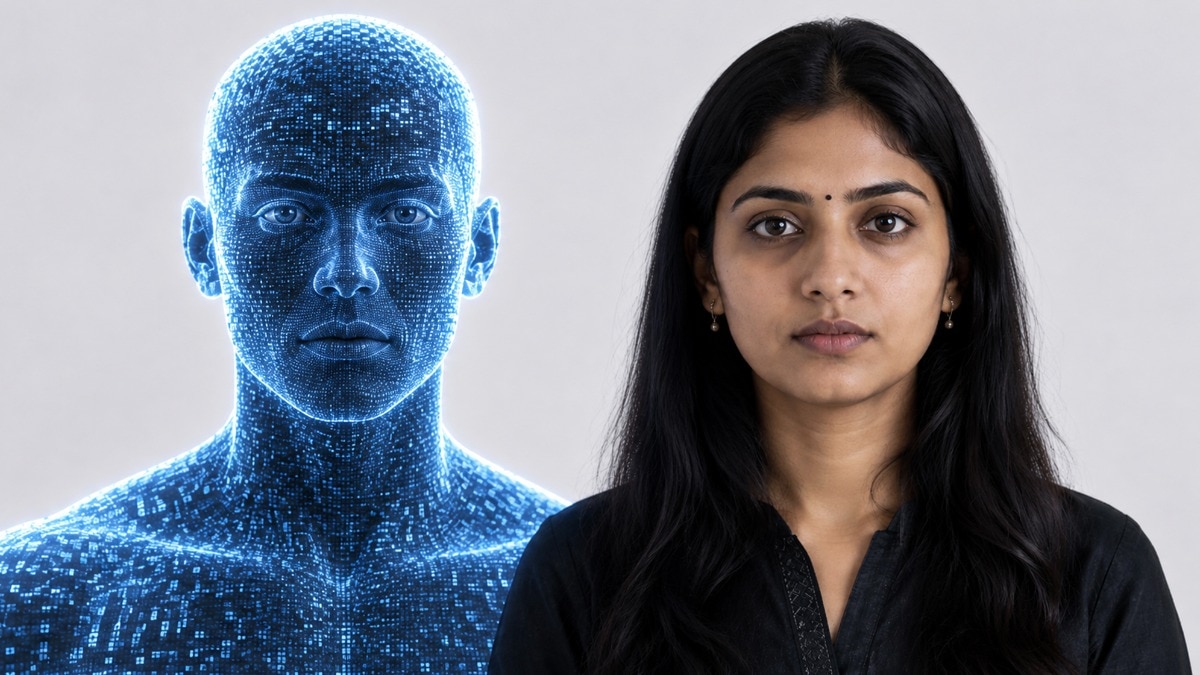
A few days ago when the New York Times wrote about the Anthropic efforts to confer on Claude the same moral and ethical values that govern humans, my first reaction was to check what Vishal Misra was saying. And Misra Ji, a professor and currently vice dean of computing and AI at Columbia University, was saying exactly what he had said throughout these last few years.
“This is indeed deeply disturbing and incredibly arrogant of everyone who believes they are birthing a new super intelligent being with a soul,” he wrote in response to the efforts of Anthropic to find sparks of consciousness in Claude. “Breathtaking lack of humility.”
Last week I was reminded of a brief exchange I had with the professor three years ago. ChatGPT had started to dazzle humans with its smarts and the Turing Test was blown to smithereens. People had started asking questions on what made humans special. Was it intelligence or was it something else, and how should we define who was conscious and who was not? “There is no sentience. No feelings, emotions or even a personality. No planning. LLMs like ChatGPT are all basically a Markov Chain,” Prof Misra wrote in February 2023.
I replied with a question, “One Qs that keeps popping: how are current LLMs different from what average humans do? Humans process information in the same way, say similar things, reach similar conclusions. So why is one sentient and one is not? I think the Qs is more philosophical than technical.” Prof Misra was kind enough to indulge me. What made AI different from us was, he wrote back, that “humans think, plan, imagine unprompted” whereas “LLMs (so far) only react to prompts.” I later wrote a piece arguing that soon we would have to confront the big question: what makes humans special compared to AI.
That big question has persisted, as evident from the happenings this week. And the world’s top minds on all things AI, tech, morals, and ethics are on it. On one side you have Anthropic and its co-founders Christopher Olah who seem convinced there is more to Claude than mere tech wizardry. Many people, within Anthropic and outside it, share the view. They all believe that AI is this mysterious entity, as mysterious as the human mind. Just like humans, it too has neurons firing and creating a reality for it. They believe, almost in a religious and reverential way, that AI deserves to be conferred with personhood, which has emotions and feelings, and a right to be treated in the Kantian way.
To make this happen, where humans treat Claude and other AI as equals worthy of our moral and ethical code, Anthropic has been in a fervent discussion with religious leaders from across the world. They are trying to find a framework where Claude can be treated as Ramesh, with access to the same rights that the Indian constitution provides to its citizens.
So far they have not succeeded. Probably thanks to some serious pushback, including from Pope Leo XIV. A few months ago Pope wrote Magnifica Humanitas, a treatise that put humans above AI and clearly stated that AI would never have any consciousness. “So-called artificial intelligences do not undergo experiences, do not possess a body, do not feel joy or pain, do not mature through relationships,” the Pope wrote, highlighting the differences between Claude and Ramesh.
More importantly, this is not a religious view. It is widely shared among people who look at AI as an algorithm that is only good at generating the right kind of tokens.
The debate, however, is far from over. And I believe it continues to be a matter of philosophy rather than technology. From the tech point of view, humans and AI bots like Claude are far closer to each other than what a holy book might say. Before Darwin destroyed the theological superiority of mankind over the rest of the animals, people used to give humans some metaphysical powers. Aristotle called it rationality, Descartes termed it res cogitans. Most people simply termed it something divine, that is until Darwin ended the pompous arguments with his mike-drop moment and essentially said — humans are evolved monkeys and that is all they are.
The same may end up happening with AI and humans. As we dig deeper into the neural networks of Claude and ChatGPT, and probe ever further into the human brain, we may find, to borrow a phrase from Terry Bisson’s iconic short story, that we are merely machines “made out of meat.” And nothing more. This also means that the question of why humans are conscious and why AI is not will have to be answered by philosophy. And not by technology. Because the way we fire our neurons and the way Claude flexes its neural network might not be different in any meaningful way.