Six in 10 women say childbirth left them humiliated, powerless or mistreated - IOL
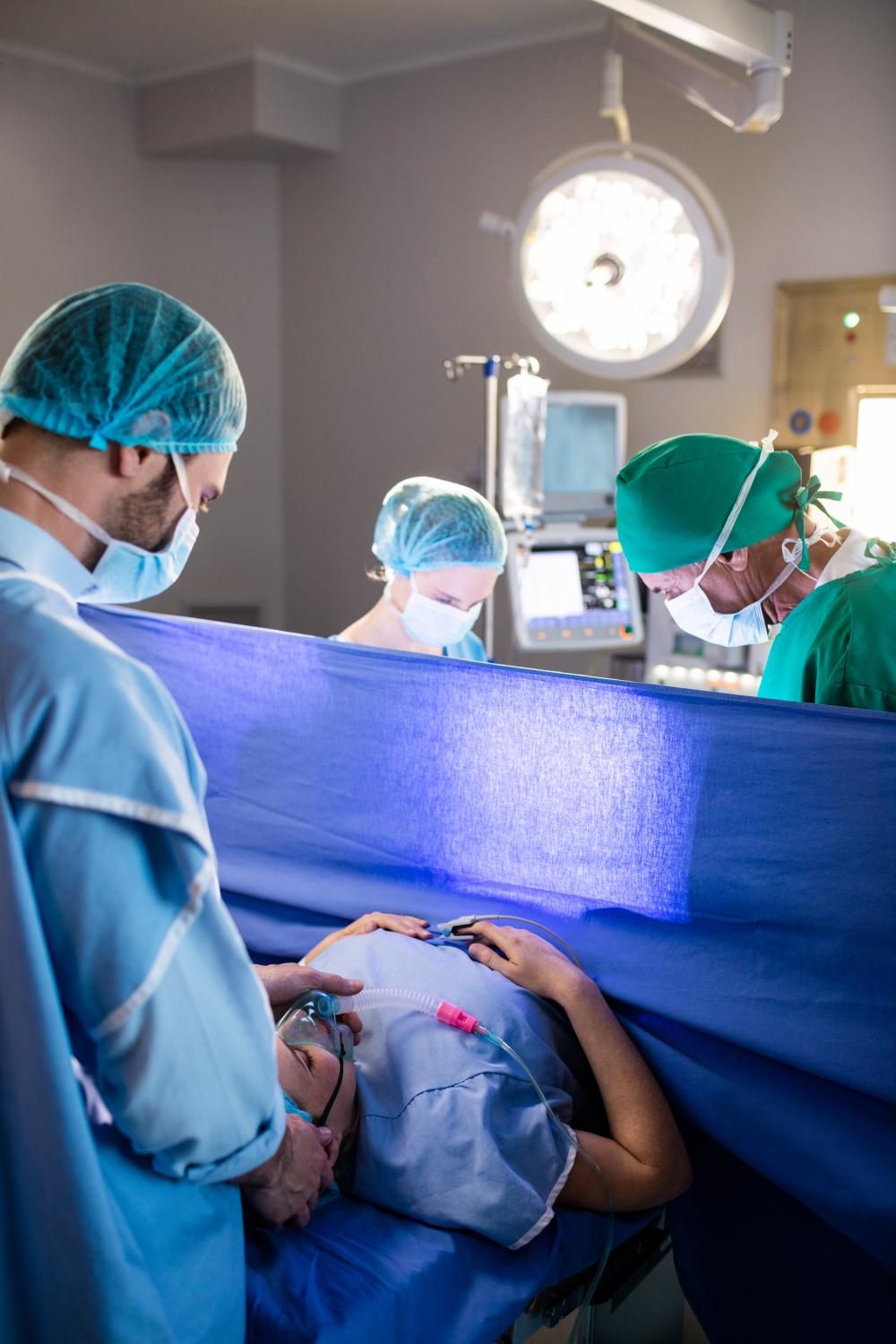
A Caesarean section is already a major abdominal procedure.
For thousands of women, childbirth is expected to be one of the most significant moments of their lives.
But new research suggests that for many women in KwaZulu-Natal and Gauteng, the experience of giving birth also involved humiliation, verbal abuse, physical mistreatment, procedures they did not consent to and care that left them feeling powerless.
A 2025 Birthing Survey conducted by Social Surveys Africa for Embrace, the Movement for Mothers, and the DG Murray Trust estimates that 1.79 million women who gave birth in KwaZulu-Natal and Gauteng between 2015 and 2025 experienced some form of obstetric violence.
The figure represents about 60% of women who gave birth in the two provinces during the 10-year period.
The study was based on household interviews with 845 respondents across 24 areas in six municipalities in the two provinces.
The findings paint a troubling picture of what women can experience while seeking maternity care.
Obstetric violence is used to describe a range of physical, verbal and emotional mistreatment experienced during pregnancy, labour, childbirth or maternity care.
The research found that women reported being shouted at, insulted, belittled, ignored and subjected to rough treatment.
Some reported being slapped, pinched or humiliated, while others described procedures being performed without their consent.
According to analysis of the research, women who experienced obstetric violence reported an average of four incidents during their labour.
That means the experience was often not a single incident, but a series of different forms of mistreatment occurring during the same birth.
The research also found that more than a third of women said they underwent a procedure against their will, either because consent was not requested or because they felt pressured into agreeing.
Episiotomies accounted for around four in 10 of these procedures.
For a woman in labour, the issue is not simply whether a procedure is medically necessary.
It is whether she was informed, whether she understood what was happening and whether her consent was respected.
Perhaps one of the most striking findings is that many women did not recognise their experiences as abuse.
Bhekisisa reported that only one in three women who experienced mistreatment recognised that what happened to them was wrong.
Only 7% reported their experiences.
That means the overwhelming majority of incidents never became formal complaints.
For women who have spent years being told to accept poor treatment as part of life, being shouted at or humiliated during labour may not immediately register as something they have the right to challenge.
Rachel Jewkes, a specialist researcher at the South African Medical Research Council who has been involved in research into obstetric violence for decades, said that women may have low expectations of being treated well because they experience abuse in other areas of their lives.
The result is a cycle in which mistreatment can become normalised and therefore difficult to measure or challenge.
The latest research raises an uncomfortable question: why are women still describing similar experiences decades after South African researchers first began documenting obstetric violence?
Jewkes was involved in some of the earliest South African research into violence and mistreatment during childbirth almost 30 years ago.
Yet the latest survey contains accounts similar to those documented in earlier research, including women reporting being slapped, shouted at and shamed during labour.
“Violence during childbirth won’t be rooted out without leadership from the top,” Jewkes said.
For Julie Mentor, who leads Embrace, the consequences can last long after a woman leaves the maternity ward. Some are also distressed at the possibility that their daughters could experience similar treatment.
The survey also raises questions about the environment in which women give birth.
About three-quarters of women surveyed said they were not allowed to have someone with them during birth.
Four in 10 said there were no curtains separating them from the next patient.
The lack of privacy and support can make an already vulnerable experience even more difficult.
National maternity guidelines provide for women to have a birth companion, who can provide emotional support and potentially help advocate for a woman when she is unable to do so herself.
But in practice, women can face resistance when requesting a companion.
The concerns raised by healthcare workers include limited space, privacy and the behaviour of companions.
Advocates argue that the starting point should instead be that women are entitled to support during childbirth, with healthcare facilities finding practical ways to make this possible.
The overall 1.79 million estimate covers both KwaZulu-Natal and Gauteng.
KwaZulu-Natal alone accounts for an estimated 923,130 women, according to the survey's findings, with 63% of women who gave birth in the province estimated to have experienced obstetric violence.
The research also found that 94% of reported abuse cases in KwaZulu-Natal occurred in government hospitals.
That makes the provincial response particularly important.
The question is not only how many women have experienced mistreatment, but how many have complained, what happened after they complained and whether the system is identifying incidents that women themselves do not report.
The Department of Health has indicated that it is preparing a response to concerns around respectful maternity care.
An online training course on respectful maternity care is scheduled to launch on the department's Knowledge Hub on 22 September.
Fikile Ndlovu, deputy director-general for maternal health, said the department wants the training to potentially become compulsory for healthcare workers operating in maternity settings.
Importantly, the training would not only apply to doctors and midwives. It is intended to cover other workers in maternity facilities, including security personnel, cleaners and assistant nurses.
The course consists of three lessons with embedded videos and takes approximately 3.5 hours to complete.
But for advocates, training alone may not be enough.
If women are not reporting mistreatment, and if many do not recognise their experiences as abuse, accountability becomes difficult.
The survey provides a picture of the scale of obstetric violence in two provinces.
But statistics cannot fully capture what it feels like to be in labour, in pain and dependent on healthcare workers for your own safety and that of your baby.
That is why the next part of the conversation needs to move beyond numbers.
Women need to be able to tell their stories.
Healthcare workers need to be held accountable where misconduct occurs.
And health authorities need to demonstrate that complaints are taken seriously.
If women have been reporting similar experiences for decades, how much longer can mistreatment during childbirth be treated as an unfortunate part of the maternity experience rather than a systemic problem that demands action?