SMOKERS’ CORNER: ESCAPING THE CULT

In the last decade or so, global politics began moving towards highly emotive, personality-driven territory. American scholars such as Steven Hassan, in his research on authoritarian control and cult dynamics, and Ruth Ben-Ghiat, in her work on ‘strongman’ politics, have described this form of governance using terminology traditionally reserved for fringe cults.
This comparison serves as an analytical framework for understanding how certain modern political groups operate. In a recent piece for The Guardian, the American journalist Rachel Leingang highlighted the emergence of support networks, such as ‘Leaving Maga’, which assist disillusioned members in leaving the populist Maga (Make America Great Again) movement. Leingang wrote that walking away from contemporary populist movements often resembles breaking an addiction or escaping a high-control cult.
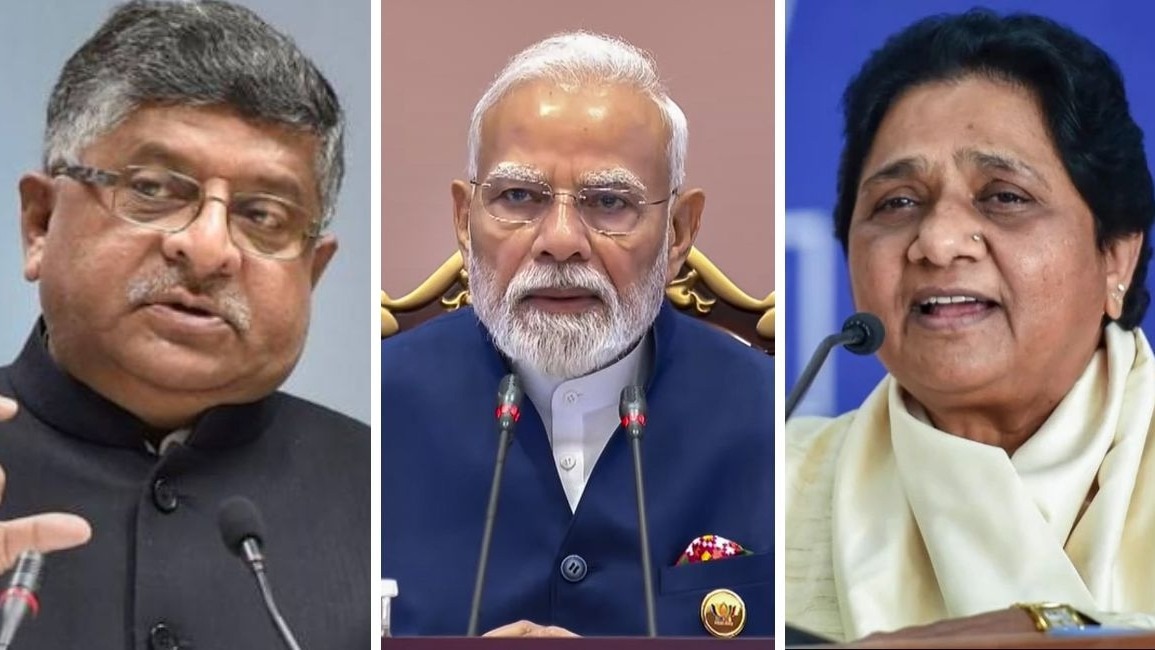
The dynamics that define such movements include total devotion to a messianic figure, deep social enclosure and an all-encompassing identity. Donald Trump’s Maga movement in the United States, Narendra Modi’s Bharatiya Janata Party (BJP) in India and Imran Khan’s Pakistan Tehreek-i-Insaf (PTI) are prominent examples, along with similar movements across the globe, such as Javier Milei’s La Libertad Avanza in Argentina and Bolsonarismo [political movement tied to Jair Bolsonaro] in Brazil.
At the core of any movement described as ‘cult-like’ is a charismatic leader. As the early 20th century German sociologist Max Weber observed, charismatic authority relies on followers projecting extraordinary, almost supernatural qualities on to a figurehead.
Charismatic leaders, digital echo chambers and the politics of absolute loyalty are defining features of contemporary populist movements, walking away from which often resembles breaking an addiction or escaping a high-control cult
Chilean political scientist Cristóbal R. Kaltwasser and German historian Jan-Werner Müller posit that modern populism and/or ‘political cults’ inherently rely on a central trope: a supposedly pure, virtuous populace pitted against a ‘corrupt’, entrenched establishment. Modern political cults position their top leader as the sole saviour capable of defeating this establishment.
In the American context, Trump presented himself as an outsider who alone could “drain the swamp.” In India, Modi carefully cultivated an image of an incorruptible chowkidar [watchman] and spiritual ascetic who alone could restore national pride, contrasting his humble origins as a chai-wala [tea boy] with the entrenched dynastic elite of the Congress Party. In Pakistan, Khan built PTI around a powerful cult of personality, capitalising on his status as a cricket hero and national philanthropist to present himself not merely as a politician but as a morally superior saviour, sadiq [truthful] and ameen [trustworthy], standing against a corrupt political order.

In all three cases, the movement/party became inseparable from the leader. In such cases, the party platform matters far less than absolute personal loyalty to the leader. This singular focus gives rise to a binary worldview, rooted in moral and religious language rather than pragmatic political disagreement. Political rivals are no longer viewed as fellow citizens with differing opinions but as existential threats or moral enemies. As documented by the American sociologist and cult recovery specialist Janja Lalich, former Maga members describe falling into a state of heightened fear and rage when confronted by any opposition against the leader. This is often perceived as a malicious plot by ‘deep state’ forces.
In India, Modi’s supporters and party apparatus frequently equate criticism of their leader with anti-nationalism or treason, framing Modi’s authority as synonymous with the nation itself. PTI frames its ‘struggle’ to force Khan’s release from prison as a sacred duty. Khan himself frequently framed his political career as an eternal cosmic battle between haq [truth] and baatil [falsehood].
With this framing of political participation in spiritual and existential terms, criticism of the leader becomes equivalent to moral betrayal. When Khan was ousted via a vote of no-confidence in 2022, his followers readily adopted his narrative of a foreign-backed conspiracy, rejecting official legal processes and nuanced economic explanations in favour of complete loyalty to the leader’s account. What truly cements the ‘cult’ designation of these largely right-wing populist movements is the social enclosure and intense sense of belonging they provide.
According to Canadian political theorist Laura K. Field, the community-building aspect of modern populist movements is frequently underestimated. She posits that members find purpose, validation and a pre-packaged social identity within the group. However, this total integration comes at a price: isolation from the outside world. Traditional cults achieve this through physical isolation, but as American social scientists Shoshana Zuboff and C. Thi Nguyen point out, modern digital platforms achieve the exact same result, virtually through personalised content algorithms.
Machine-learning models designed to optimise engagement inevitably prioritise moral outrage, anger and conspiracy theories. Over time, these algorithms construct ‘filter bubbles’, a concept coined by the American activist and author Eli Pariser. These bubbles confine members to an alternative reality, shielding them from dissenting facts, while feeding them a steady diet of radicalising content.
This psychological enclosure is further reinforced by what American legal scholar and cognitive scientist Dan Kahan describes as “identity-protective cognition.” When individuals tie their self-worth directly to a group’s ideology, accepting factual corrections feels like a threat to their personal survival. To guard against this discomfort, followers engage in motivated reasoning, dismissing objective evidence while clinging to comforting, convoluted narratives that protect their leader’s infallibility. This is why critics often lament that reasoning with fervent supporters of populist parties feels like speaking to a brick wall.
As the American philosopher Jason Stanley emphasises in his analysis of fascist and authoritarian propaganda, cult-like political movements methodically destroy shared public reality by replacing truth with loyalty tests. Expressing doubt or nuance leads to social penalisation by fellow members.
Populist leaders leverage social platforms to bypass traditional checks, broadcasting unfiltered directives directly to millions. This fosters decentralised online armies that aggressively police discourse, launch targeted campaigns against critics and enforce group conformity. According to American scholars Jonathan Haidt and Jon Askonas, social interactions in digital spaces are “gamified” through likes, retweets and shares, which function as instant dopamine rewards for blind loyalty and hostility toward ‘enemies’.
Describing modern populist groups as cults reflects the psychological toll they exert on their followers. When politics ceases to be a rational debate or pragmatic negotiation over governance and transforms into an algorithmically enforced system of identity, leaving it needs an exit strategy rather than a simple ballot choice.
Initiatives such as Leaving Maga demonstrate that recovering from these movements requires addressing the psychological trauma, fear and loss of community experienced by the defectors. Whether analysing Maga in the West, Modi’s dominance in India, or PTI in Pakistan, the underlying dynamic remains the same. Many troubled supporters struggle to get out.
When a political movement demands total moral devotion to a single leader and uses digital echo chambers to cut off critical thought, it ceases to function as a mainstream political entity and crosses into the realm of the cult.
Published in Dawn, EOS, September 13th, 2026