
Soil Health Card: Supporting better soil management in Uttar Pradesh
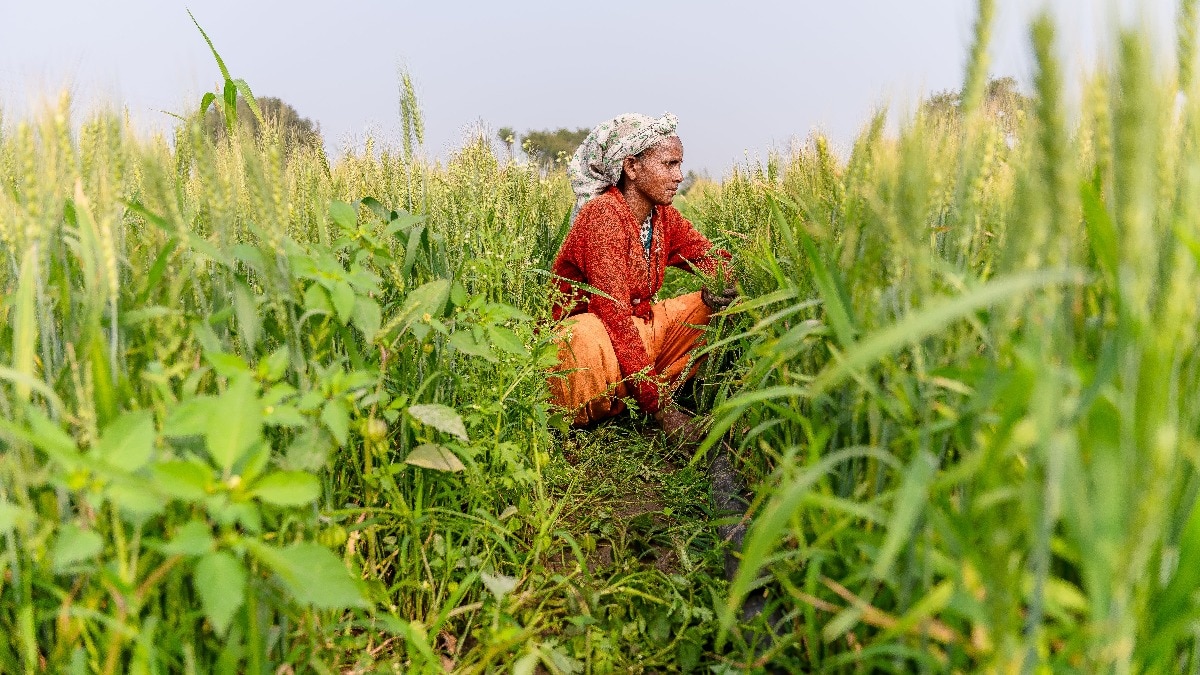
A good crop does not begin with fertiliser. It begins with knowing what is already in the soil.
That is the idea behind the Soil Health Card (SHC) scheme, a Government of India programme implemented through the Agriculture Departments of states and Union Territories, including Uttar Pradesh. The scheme uses soil testing to give farmers a clearer picture of the nutrient status of their fields and helps them decide what fertilisers and soil amendments are needed.
Instead of applying fertiliser without knowing what the soil lacks, farmers can use the test results as a reference for nutrient management.WHAT DOES A SOIL HEALTH CARD TELL A FARMER?
The Soil Health Card covers 12 parameters that indicate the condition of the soil.
These include the primary nutrients nitrogen, phosphorus, potassium and sulphur, along with micronutrients such as zinc, iron, copper, manganese and boron. It also measures pH, electrical conductivity and organic carbon.
The results are used to provide recommendations on fertiliser application and the use of soil amendments for the farmer's holding.
In simple terms, the card is meant to answer two basic questions: What does the soil already have, and what does it need?
That information can help farmers make fertiliser decisions based on the condition of their soil rather than applying nutrients without knowing whether they are required.
The process starts with collecting a representative soil sample from the field.
Under the scheme's sampling guidelines, samples are generally collected from a depth of 15–20 cm. Soil is taken from different points in the field, mixed and then sent to a soil-testing laboratory for analysis.
The scheme follows prescribed sampling grids, with one grid covering 2.5 hectares in irrigated areas and 10 hectares in rain-fed areas.
Testing can be carried out at government soil-testing laboratories as well as other approved facilities, including ICAR institutions, Krishi Vigyan Kendras and State Agricultural Universities.
The aim is to ensure that the sample gives a useful picture of the soil in the area being assessed.FROM SOIL TEST TO FERTILISER DECISION
Once the sample has been analysed, the results are used to prepare the Soil Health Card.
The card provides an assessment of the soil's nutrient status along with recommendations on the type and quantity of fertilisers and soil amendments required.
This matters because fertiliser requirements can differ from one field to another. A field with adequate levels of a particular nutrient may not require additional application, while another field may need more of it.
Soil testing, therefore, is not simply about producing a report. The information is intended to help farmers decide how to manage nutrients in their fields.
For farmers, this creates a simple chain: test the soil, understand its nutrient status, and then make fertiliser decisions accordingly.WHY SOIL TESTING MATTERS
Fertiliser is an important input in agriculture, but the requirement is not necessarily the same for every field.
Soil testing provides farmers with information about the existing nutrient balance of their fields. This can help them make more informed decisions about the nutrients that need to be applied and the soil amendments that may be required.
The approach also shifts the focus from simply adding more fertiliser to understanding what the soil actually needs.
For farmers in Uttar Pradesh, where soil conditions can vary across agricultural areas, having a soil-test-based reference can help bring greater clarity to nutrient management.A THREE-YEAR CYCLE
A Soil Health Card is issued once during a three-year cycle. Subsequent cycles allow changes in the soil's nutrient status to be assessed over time.
This makes the programme more than a one-time soil test. Repeated assessments can provide a longer-term reference for understanding the condition of agricultural soil and making nutrient-management decisions.
Ultimately, the value of the Soil Health Card lies in making soil testing useful at the farm level — giving farmers information about their fields before they decide what to put into them.- EndsPublished By: Tanu jainPublished On: Sep 20, 2026 15:55 IST


