Solar system manufacturing urged
Direct Source Verification:
This story is aggregated from The Express Tribune (tribune.com.pk). Full reporting rights and copyright belong to the primary publisher.
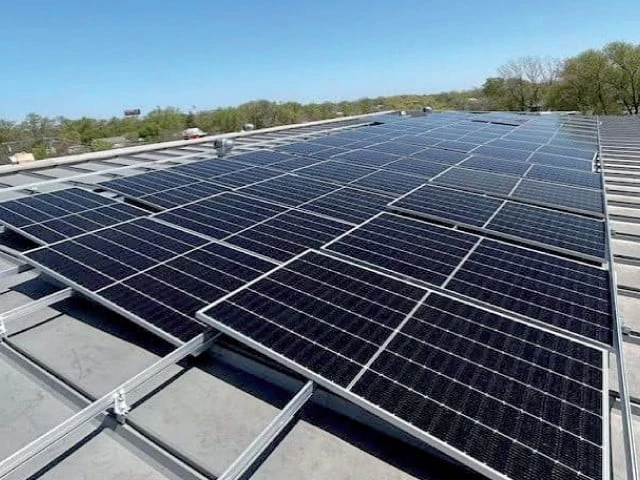
Governor says development of industry will create millions of jobs, earn forex
Punjab Governor Sardar Saleem Haider Khan has called for establishing a policy framework to promote the domestic manufacturing of solar systems, saying Pakistan can create millions of jobs, generate clean and affordable energy and earn foreign exchange by developing a local solar industry.
"It is unfortunate that solar system manufacturing is not being done due to the lack of a government policy," the governor said while addressing the 3rd International Solar Power Conclave & Solar Technology Excellence Awards 2026, organised by the Energy Update in collaboration with the Pakistan Solar Association (PSA), the Renewable Energy Association of Pakistan and the Pakistan Alternative Energy Association on Friday.
He said the high cost of electricity had made solar energy increasingly important for ordinary Pakistanis, describing sunlight as "Allah's gift" that should be utilised to reduce the burden of electricity bills while also protecting the environment.
"If we are able to set up a solar manufacturing industry, it will create millions of jobs and also produce clean, green energy, which is cheaper for consumers' pockets and better for the environment," he said.
The governor urged the solar business community to take the initiative and begin manufacturing solar systems locally instead of waiting indefinitely for a government policy. He pointed out that the industry had already brought solar technology to Pakistan without substantial state support and said a similar initiative could now help establish a domestic manufacturing base.
With local production, he said, Pakistan would not only meet its own growing demand but could also export solar systems and earn much-needed foreign exchange. He stressed that it was encouraging to see the rapid spread of solar panels across the country, observing that "almost 90% of roofs" in cities appeared to be covered with solar panels.
Highlighting the government's efforts to expand access to solar energy, the governor said the Sindh government had distributed hundreds of thousands of solar panels free of cost among livestock farmers and flood-stricken communities. "We have been bestowed with abundance of sunlight, which must be used to serve the interests of the masses," he remarked.
Referring to recent disruptions to the energy supply chain caused by the war in the region, the governor said electricity load-shedding had increased when LNG containers could not arrive. However, the growing availability of solar energy could eventually make expensive grid electricity less relevant for domestic consumers.
Speaking on the occasion, Punjab Minister for Energy Faisal Ayub said Pakistan had experienced its worst electricity load-shedding crisis beginning in 2009-10, which was overcome during the PML-N government's 2013-18 tenure. He recalled that in Punjab, the then chief minister Shehbaz Sharif had installed power plants to address electricity shortage, but said the country was now facing a different challenge - the high cost of electricity.
"Although it is a federal subject, we will provide support to the solar energy sector to overcome this challenge of expensive electricity," Ayub said. He observed that whether or not governments promoted solar energy, consumers and the industry would eventually move towards it because of the economics of solar power. "The government, therefore, needs to align its policies with this transition."
The minister assured the solar sector of the Punjab government's full support, saying the provincial government would engage the federal energy minister and bring PSA representatives on board to devise a policy to facilitate the expansion of solar energy in Pakistan.
"We will welcome suggestions from energy experts to promote this sector," he said, warning that failure to support the solar sector at this stage could damage Pakistan's interests. He noted that a friendly policy for the solar industry could generate prosperity not only for businesses associated with renewable energy but for the country as a whole.
PSA President Adil Mahmood said solar energy was already contributing up to 40,000 megawatts to Pakistan's energy supply and argued that without this contribution the country would otherwise be experiencing five to seven hours of load-shedding every day.
He said the government was charging four paisa per unit, adding that it translated into a cost of around Rs1.5 million per MW per month, which he said needed to be removed.
Mahmood pointed out that the solar market had expanded rapidly when there was no tax on solar panels, but subsequent measures created hurdles in the way of the industry. He also mentioned that net metering had now been abolished, describing such developments as impediments to further promotion of solar energy.
He urged the government to abolish duties and sales tax on batteries and proposed the establishment of local lithium battery manufacturing plants, which could eventually produce batteries for export as well.
Original Source
https://tribune.com.pk/story/2631469/solar-system-manufacturing-urged