Some Gas Stations ‘Out of Diesel’ as Prices Surge - Newsweek
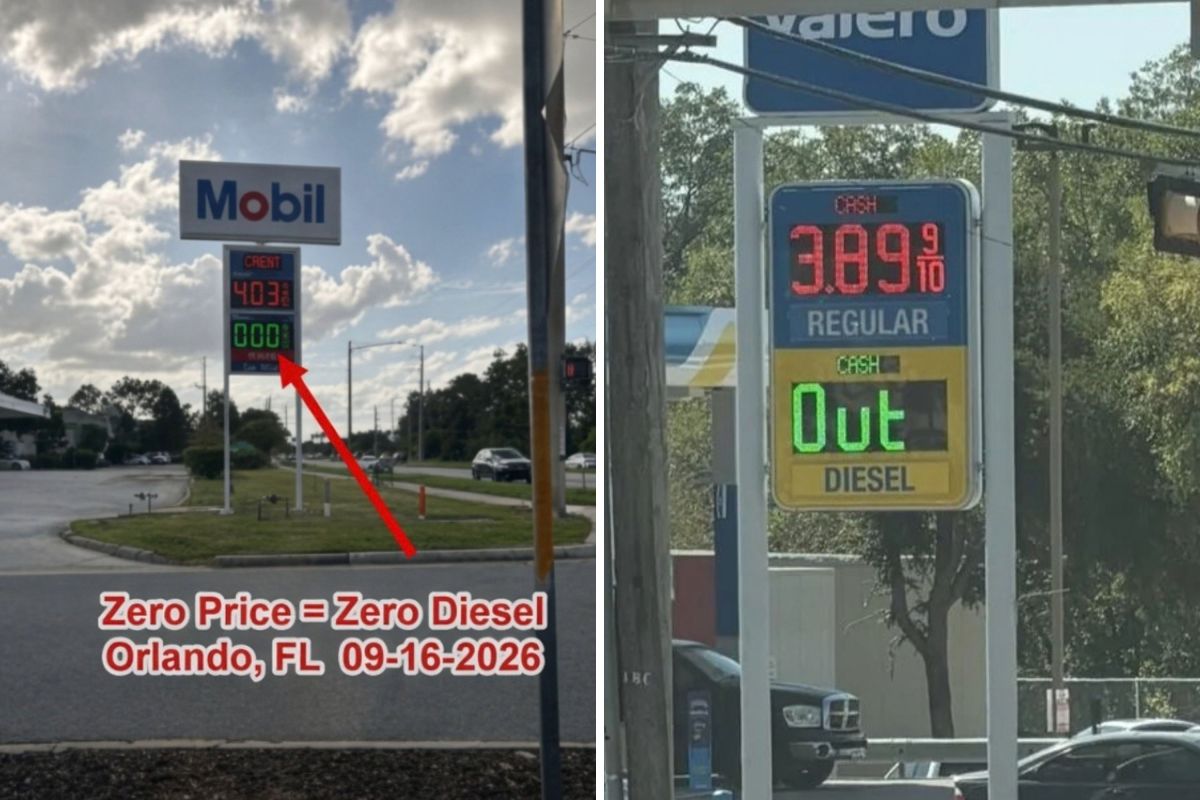
Photos appearing to show gas stations running out of diesel have spread across social media as U.S. fuel prices climb to record highs, but industry data does not currently show any widespread shortages.
One image posted on X showed a station in North Texas displaying an "out of diesel" notice. Another post on X said a station in Orlando, Florida, had also run out.
The images arrive as concerns grow over the availability and cost of diesel as global supplies tighten due to the ongoing U.S.-Israel war in Iran, which has disrupted shipping through the Strait of Hormuz, one of the world's most important shipping routes through which about one-fifth of global petroleum consumption normally passes. Vessel traffic has fallen sharply owing to the fighting and attacks on regional energy infrastructure since the war was launched on February 28.
However, Patrick De Haan, head of petroleum analysis at GasBuddy, cautioned against interpreting individual stations as evidence of national shortages.
"GasBuddy is not seeing any high level outages in our data, nor through our Pay with GasBuddy card," De Haan wrote on X, adding that current shortages remained within normal levels.
In a second post, De Haan warned of "false alarmists" spreading claims that stations are widely running out of diesel.
Individual stations can temporarily run short for a number of reasons, including high local demand or delays in fuel deliveries. GasBuddy's nationwide data indicates that, at least for now, the incidents being shared online remain isolated. For now, there is an increasingly tight and expensive diesel market, but not a nationwide wave of gas stations running out of fuel.
De Haan told Newsweek that reports of outages posted on social media should be taken with a "grain of salt" and that there is "lots of misinformation that is being misinterpreted or elevated."
Diesel is facing a severe squeeze because the Iran war is disrupting two parts of its supply chain at once: the movement of crude oil into refineries and shipments of finished diesel and other distillate fuels out of the Middle East.
The Strait of Hormuz is a critical route for gulf oil and refined petroleum products. Commercial traffic has fallen dramatically due to the fighting, with just three vessels having passed through the strait on Wednesday, compared with 12 the previous day, Reuters reported.
The independent U.S. Energy Information Administration (EIA) reported in its September outlook that "distillate fuel oil inventories will drop below 100 million barrels in September and will remain below the five-year (2021-2025) low through much of 2027." It also reported that prices remain high due to falling global inventories but expects crude prices to gradually drop to an average of around $74 per barrel in 2027, down from $91 currently.
War in the Middle East comes along with reduced Russian diesel production. Ukrainian drone attacks have damaged Russian refineries on several occasions, while Moscow has restricted fuel exports to protect its domestic market, with Reuters estimating that disruptions in Russia and the Gulf have removed roughly 1.6 million barrels per day of diesel exports from the global market since February.
While war continues to disrupt supply, there is still no shortage at pumps. De Haan said that it is also unlikely the U.S. will see shortages in the coming weeks, and that consumers should be wary of claims made online.
"Volatility may lead stations to wait a day or three before buying gasoline, but people misinterpret it immediately because we're in very sensitive times," he said. "This is a time to fact check everything to avoid runaway panic."
The EIA put the national average at $6.285 a gallon on September 14, compared with $3.739 a gallon in the corresponding week a year earlier, which is an increase of $2.55 per gallon, or 68 percent.
The rise has accelerated over the past two months, with diesel averaging $5.462 a gallon in August, before climbing to $5.967 in the first week of September and $6.285 a week later.
The surge in prices has led to discussion in Washington over keeping more U.S.-produced diesel at home.
Senate Majority Leader John Thune, a South Dakota Republican, has said he is open to exploring an export ban, but the Trump administration has expressed doubts about whether such a move would work.
“It is a commodity now that I think we’re exporting, and if we need more supplies in this country, and if that would take pressure off of prices, I’m open to exploring it,” Thune said.
Interior Secretary Doug Burgum said officials would consider restrictions if they believed they would reduce prices, but he warned that other countries could retaliate by restricting fuel supplies to U.S. markets that rely on imports.
"We would consider an export ban if we thought that actually might lower prices, but that's not the case," he said.
California is the most expensive state for diesel at $8.3496 per gallon as of September 17, according to the AAA, followed by Washington at $7.3640 and Hawaii at $7.0902.
Oklahoma has the lowest average at $5.9386, followed by Texas at $5.9604 and Louisiana at $5.9884.
Contact Newsweek editors on this story: Ben Kelly and Dave Siminoff.