Sonam Wangchuk fears encounter, seeks Amit Shah's resignation over Ladakh deaths
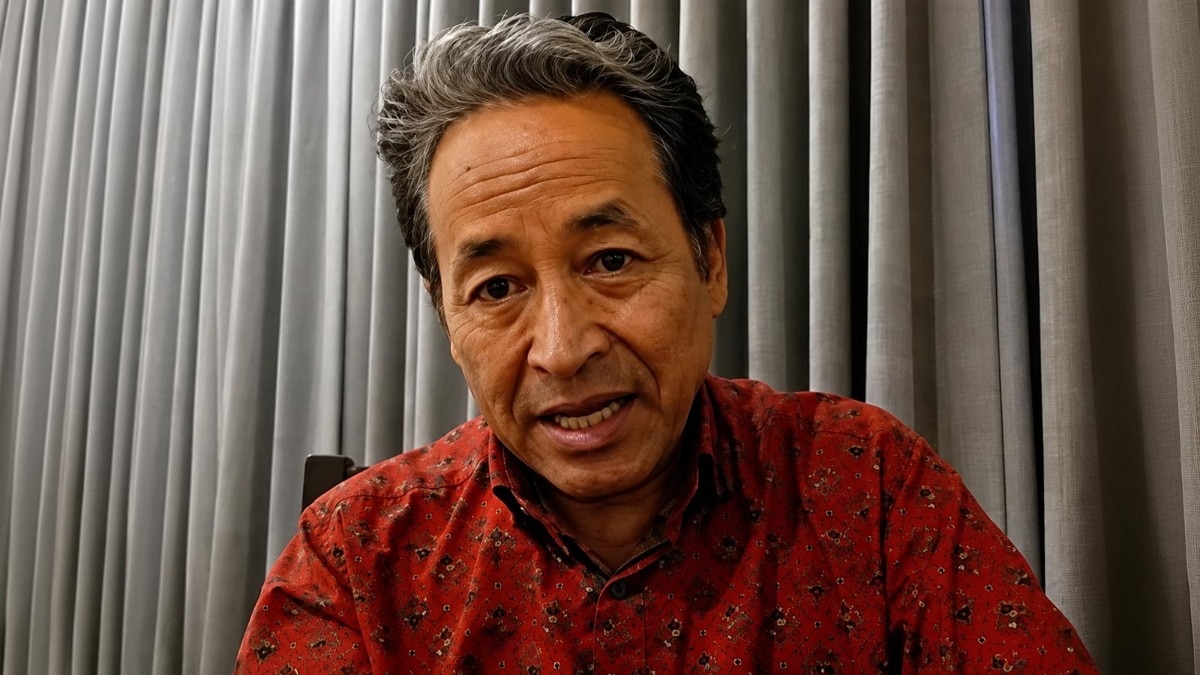
Climate activist Sonam Wangchuk on Thursday said he feared he could be killed in an "encounter" for speaking out against the government, as he demanded the resignation of Union Home Minister Amit Shah over last year's September 24 violence in Ladakh that left four people dead.
Speaking at a gathering to mark the first anniversary of the violence during protests over statehood and Sixth Schedule safeguards, Wangchuk also called for the judicial inquiry report to be made public. He said that if the report was not released, an independent "people's tribunal" would be set up to examine the police firing.
Wangchuk said he had been warned about threats to his life and that he was prepared for any outcome. "They have put me in jail. Now there is even a possibility that I could be encountered somewhere. People tell me, 'You will be encountered'. If that happens, let it happen - so that the country wakes up," he said.
Holding Shah politically responsible for the deaths during the agitation, Wangchuk said accountability had to be fixed. "Today, from Ladakh, I say - Amit Shah should resign. He has to take responsibility for what happened in Ladakh," he said, while alleging that security personnel used automatic weapons, including AK-47s, against local youth, who were later branded as "anti-national".
Referring to Congress leader Rahul Gandhi's demand that Shah resign over police action against students at Jantar Mantar in New Delhi, Wangchuk said he supported that call but questioned Gandhi's silence on Ladakh. "Rahul Gandhi stood up and asked how such weapons could be used against students, demanding Amit Shah's resignation. I support that," he said. "But if he demanded Amit Shah's resignation earlier, then what about what happened in Ladakh, where AK-47s were used and people were killed, with bullets hitting their heads and chests?"
He said the violence was linked to Ladakh's longstanding demands, including constitutional safeguards, and alleged that assurances given to the people had not been fulfilled. He also said justice for Ladakh was not only the responsibility of the Union Territory's people, but of the entire country.
A shutdown was observed in Leh and other parts of Ladakh on Wednesday to mark the anniversary of the violence, with shops and business establishments closed in Leh and Kargil and traffic thin on the roads. The day was observed by some in Ladakh as "Martyrs' Day". Wangchuk alleged that heavy security deployment and restrictions had led to low public participation in Thursday's commemoration. "People are afraid because there are barricades everywhere and armed personnel have been deployed in villages and at crossings," he said, adding that some village representatives and students were being discouraged from attending programmes for those killed. He said the limited turnout should not be seen as a defeat for the movement.
The Ladakh Police rejected the allegations, calling them "false, baseless, and misleading". In a statement, the police said no one was stopped from attending the prayer meet held to pay tribute to the victims of the 2025 violence and that security arrangements were routine. It said permission had been granted to the Ladakh Buddhist Association to hold the public meeting at the NDS ground in Leh, which can hold 10,000 people. "This event saw a limited turnout, with less than 800 people attending... The police did not stop any individual from proceeding to the venue or attending the event," the statement said, adding that barricades in the city area were only part of traffic and crowd-management measures after organisers had projected a large gathering.
Wangchuk said Ladakh had chosen to remain with India because people believed in democracy and the right to live with dignity. He alleged that the present situation had created fear and went against those democratic aspirations. He also criticised Shah, saying things were going well in the country between 2014 and 2019, but that since he became home minister there had been "riots and disturbances everywhere" and promises made to Ladakh had been broken. "Ladakh had China on one side and India on the other. Ladakh chose India because we believed that in India, there is democracy, we would be able to live with our heads held high," he said. "And today, such oppression is being inflicted on Ladakh that, in my view, even China is not doing this to Tibet," he added.
The commemoration in Ladakh thus centred on Wangchuk's demand for accountability for last year's violence, the release of the inquiry report, and his wider charge that the region's promises and democratic expectations had not been met, even as police denied any restrictions on the public gathering.- EndsWith PTI inputs