
South Africa 'may have to draw the line on undiplomatic Bozell' - IOL
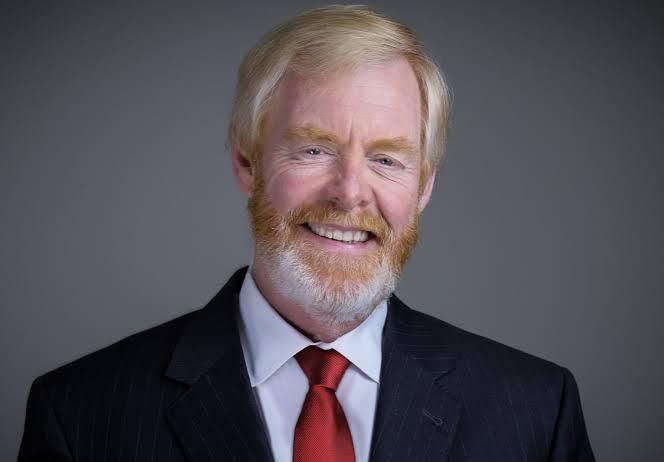
Pretoria has hauled US ambassador Leo Brent Bozell III over the coals again after he spent the past week publicly accusing the government of ignoring President Donald Trump's demands on land, race policy and farm safety.
International Relations expert Dr Oscar van Heerden said the South African government was reaping what it sowed by accepting Brent Bozell’s credentials as US Ambassador, despite his stated mission to South Africa, but it was about time the country drew the line on his “undiplomatic behaviour”.
Van Heerden believes that following Bozell’s third demarche this week, South Africa has no option but to 'kick him out of the country if he continues to speak out of turn'.
Dirco confirmed that it summoned Bozell for a reprimand on Tuesday over his “undiplomatic behaviour”.
The meeting appeared to be related to Bozell's recent media statements, which critical of the South African government’s response to President Trump’s message to Ramaphosa on 27 August, asking for an update on how SA was addressing US demands on five domestic policy issues.
A senior Dirco official said: “We can confirm that we demarched Ambassador Bozell. (It’s) the third demarche since he started his duties nine months ago. This is a record. He was called in to explain his undiplomatic conduct,” said the official.
“The issues related to the bilateral relations between the two countries are a subject of ongoing discussions. There is commitment from both sides to resolve the outstanding matters,” said the official.
Van Heerden said if Bozell was going to act with impunity and outside of the diplomatic rules, the South African government should 'politely ask him to leave'.
He said the department of international relations and cooperation (Dirco) should have known this was going to happen.
“When Ambassador Bozell went to the senate hearings in the Congress in the United States for his confirmation to be the ambassador to South Africa, he made it abundantly clear what his mission is going to be, coming to South Africa.
"He indicated to the senators that he is coming to South Africa to try and convince South Africa to readdress the domestic laws around B-BBEE, land expropriation and to also persuade South Africa from pursuing the case of genocide against the state of Israel,” said Van Heerden.
He said President Cyril Ramaphosa accepted Bozell’s credentials because South Africa wanted to show it was the bigger person, but now it is reaping the consequences of that decision.
“You have an ambassador who clearly does not think that he needs to subscribe to the diplomatic norms, who feels he is above the rest and he can write what he wants, can criticise where he wants, meet with whomever he wants and talk badly about the South African government. This is what is referred to as undiplomatic behaviour,” said Van Heerden.
Asked whether this was about South Africa preserving relations with the US, a major economic partner, Van Heerden said: “If that was uppermost in the South African government's mind, then they would have complied, and would have sacrificed their sovereignty and independence, but unfortunately, they cannot do that.”
Complying with the US’s “five asks” would not only undermine South Africa’s Parliament, which passed the contested laws through a democratic process, but would also undermine South Africa’s independent judiciary, as the courts ruled on these laws when they were tested.
“Given our recent history with apartheid and colonialism, no country in its right mind would agree to it. If it means the Trump administration is going to come with more punitive action, then so be it.”
Van Heerden said that while the US is the largest economy in the world, South Africa would have to redirect its trade and bilateral relations with the European Union, the United Kingdom, Germany, China, and other countries because it was being forced in that direction by the Trump administration.
Van Heerden suggested that the US’s decision to retain South Africa in the African Growth and Opportunity Act (AGOA) was an indication that as much as South Africa needs the US, the biggest economy in the world, the US also needed South Africa, which provides certain components to that country’s motor industry.
South Africa also possesses rare and strategic minerals that the US needs.
A US government official, in response to questions, said that Bozell was called in by Dirco to discuss the bilateral relationship.
“He stressed that the United States has been clear about the relationship we seek. We are not interested in diplomatic maneuvering, procedural delays, or dialogue for dialogue’s sake.
“The ball is now squarely in the government of South Africa’s court to outline the relationship it wants with the United States and respond accordingly to President Trump’s executive order.”

