South Africa's AGOA loss: Why the biggest economic risk may lie beyond exports - IOL
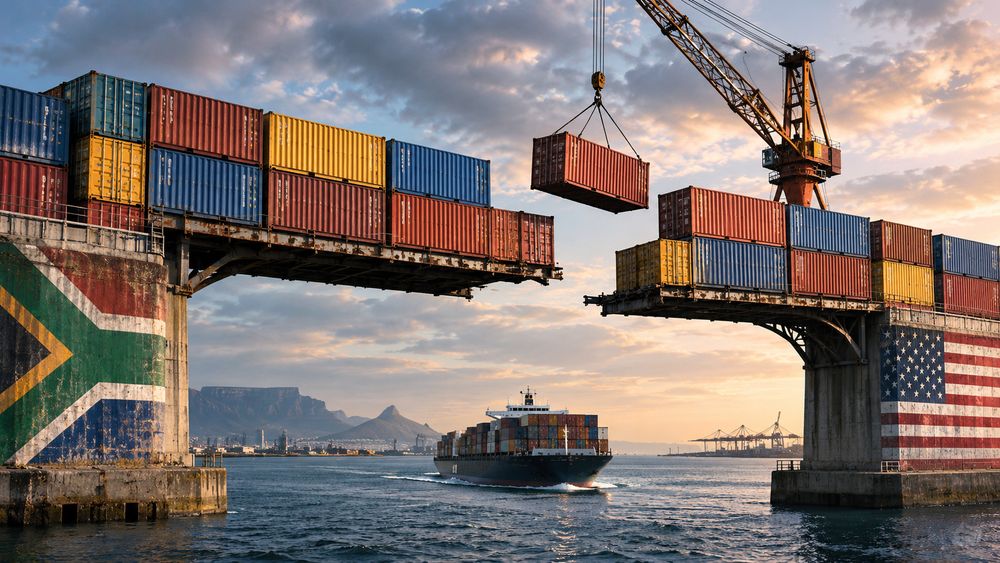
The wider implications of South Africa's AGOA exit for business confidence, investment and relations with the US deserve greater attention.
South Africa’s impending removal from the African Growth and Opportunity Act (AGOA) is unlikely to have a substantial direct impact on the country’s overall economy, economists say, but the decision raises broader concerns about investment confidence and its trading relationship with the US, according to Johann Els, senior economist at PSG.
The US on Monday notified Congress of its intention to terminate South Africa’s eligibility for the trade preference programme from 1 January 2027, ending duty-free access for qualifying South African exports.
However, the value of trade that actually benefits from AGOA is considerably smaller than South Africa’s overall exports to the US. The loss of preferential access does not mean that South African goods will no longer be able to enter the American market. Rather, qualifying products will lose their duty-free treatment and become subject to the applicable import tariffs.
Els said only about 7% of South Africa’s goods exports went to the US in 2025, amounting to approximately $16.5 billion. Of this, about $1.6 billion entered under AGOA preferences.
That represents roughly 10% of South Africa’s exports to the US, but just 0.7% of its total goods exports, Els said. “While the absolute numbers may look significant, the share of our overall exports directly affected is relatively small,” he said.
Els added that “this does not mean that all South African exports to the US will suddenly face new tariffs or disappear. Exports will continue, but some products will become less competitive.”
South Africa should not confuse its position as a major beneficiary of AGOA with the proportion of its own exports that depends on the programme, said Els.
Annabel Bishop, chief economist at Investec, also expects the national economic effect to be limited, but frames the exposure differently. She estimates that 7% of South Africa’s exports go to the US, with about half of those exports, mainly agricultural produce, tariff-free.
The direct effect of losing AGOA is relatively negligible, said Donald MacKay, founder and chief executive of XA Global Trade Advisors.
More than half of what South Africa sends to the US consists of precious metals and minerals, which are unaffected by AGOA and do not attract tariffs, MacKay said. The products affected by the loss of preferences therefore represent a relatively small subgroup of exports, he added.
MacKay said the country has already absorbed a significant trade shock through US national security duties imposed on certain products. “I don’t think we’re going to see anything looking like a jobs bloodbath,” he said.
“I obviously would prefer that AGOA still existed for South Africa. I don’t think losing AGOA is really going to make a difference to our economy,” MacKay added.
While the direct trade exposure is limited, Els said the broader consequences could be more significant. “The bigger concern is the signal it sends to investors and the potential impact on confidence, investment and our broader relationship with the US,” he said.
Els said the concern is the potential impact on business confidence, investment and diplomatic relations between the two countries.
The US administration has cited what it describes as South African practices inconsistent with AGOA’s eligibility criteria, including barriers to American trade and investment, corruption and threats to US national security and foreign policy interests.
The Department of Trade, Industry and Competition said in a statement on 2 November that government had tabled additional concessions to address US concerns, and that it was unfortunate the US was now raising new issues that had not been the basis for discussions since negotiations began in 2025.
Only about 7% of South Africa’s goods exports went to the US in 2025, amounting to approximately $16.5 billion. Of this, about $1.6 billion entered under AGOA preferences.
Bishop argues that the disruption caused by changing US trade policy and geopolitical tensions has already encouraged businesses to adjust their trading relationships.
Pointing to the growth of trade between developing economies, Bishop said South–South trade is expanding by about 8%, according to the United Nations Conference on Trade and Development.
Bishop said private-sector businesses have also responded to tariff uncertainty by recalibrating supply chains, finding alternative export destinations and bringing imports forward.
Dr Ernest van Biljon, Dean of Research at IMM Graduate School, said many exporters have spent the past year or two diversifying in anticipation of an AGOA exit and have already opened markets in other regions.
Bilateral trade with the US was $24.1 billion last year, compared with $55.6 billion with China, according to Van Biljon. The Department of Trade, Industry and Competition puts bilateral trade with the US at $28.8 billion in 2025.
The department said government would keep pursuing trade and investment with the US while accelerating the diversification of its export markets, including the African Continental Free Trade Area, India, the European Union and China.
Europe is the obvious first call for a new market, said Van Biljon, with total trade with the EU up 44% over five years, and that the African Continental Free Trade Area offers scale, provided corridors and borders work.
Van Biljon said AGOA was a useful advantage, not the foundation of South Africa’s trade. It is one of several disruptions arriving together, including tariff shifts, shipping route closures and geopolitical shocks, he said, and firms that know their exposure and have somewhere else to sell will manage best.
The direct effect on overall economic growth is likely to be small, Els said, but the wider implications for business confidence, investment and relations with the US deserve greater attention.