South Africa’s diplomatic balancing act: navigating relations with the US and beyond - IOL
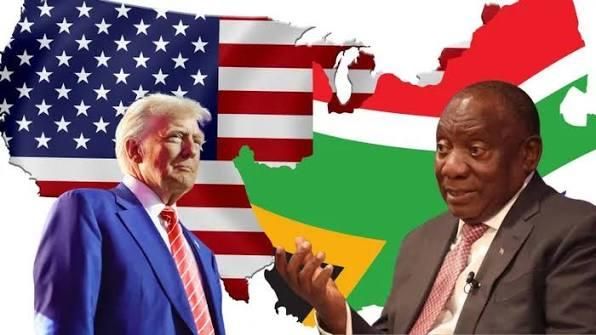
Can South Africa redefine its strengths in global diplomacy? As tensions with the US mount, it’s time to assert sovereignty and create a narrative that embraces both challenges and triumphs while confidently navigating the international landscape.
There comes a point in every difficult diplomatic relationship when a country must decide whether it will spend its energy answering every external charge, or whether it will speak plainly as a sovereign nation that understands both its weaknesses and its considerable strengths. South Africa has reached that point in its increasingly strained relationship with the United States.
The relationship matters. The United States remains an important economic, diplomatic and strategic partner, with longstanding links to South Africa in trade, investment, technology, education and diplomacy. No serious South African should want an unnecessary rupture with Washington, nor should we underestimate the cost of allowing a relationship built over decades in commerce and international cooperation to deteriorate. Partnership, however, is not subordination, and maintaining constructive relations with the United States cannot require South Africa to surrender its ability to determine its own laws, economic policies or international relations.
To disagree with Washington is not to become anti-American. That distinction needs to be made with more confidence than it has been.
Much of the recent debate has centred on the conduct of US Ambassador Leo Brent Bozell, particularly following his initial criticism of a Constitutional Court judgment concerning the "Kill the Boer" chant. Whatever view one takes of the underlying controversy, an ambassador accredited to South Africa should understand that the legitimacy of our courts derives from the Constitution and laws of the Republic, rather than from the approval of any foreign government. The ambassador subsequently clarified that the United States respects the independence and findings of South Africa's judiciary. That clarification was appropriate and should be accepted in good faith.
The larger issue goes well beyond the personality or communication style of an individual ambassador. It concerns the policy agenda that he represents, and how South Africa chooses to respond to it.
As publicly outlined in March 2026, Washington identified five priorities in its engagement with South Africa. These included protecting rural communities from violence, condemning rhetoric that incites hatred or glorifies violence, ensuring clear and fair compensation standards in expropriation policies, expanding cooperation in digital technology and critical minerals, and addressing concerns around mandatory ownership and control requirements under B-BBEE.
South Africa should have no difficulty engaging these issues seriously and on its own terms. Rural crime is a national concern, and the state has a responsibility to protect all communities and to deal decisively with criminality wherever it occurs. Political rhetoric that crosses into genuine incitement should be condemned regardless of who uses it. Government should be able to explain its economic and transformation policies to investors and citizens alike, address uncertainty where it exists, and acknowledge honestly where implementation has been poor. There is also considerable scope for South Africa and the United States to expand cooperation in technology, critical minerals, trade and investment.
None of this changes the fundamental principle that South Africans must determine the political, economic and constitutional direction of South Africa. That is not an emotional assertion of nationalism. It is the ordinary meaning of sovereignty in a constitutional democracy.
Much of the present debate rests on a simplistic assumption that South Africa must eventually choose between competing centres of global power — America or China, America or Russia, Washington or the Global South. That is an unnecessarily narrow way of understanding international relations, particularly for a country with South Africa's history and strategic position.
South Africa has its own foreign policy because it has its own national interests. We can disagree with Beijing while maintaining a significant economic relationship with China. We can maintain diplomatic relations with Moscow without subscribing to every position taken by the Russian government. We can have serious disagreements with Washington without defining America as an adversary. The purpose of an independent foreign policy is precisely to preserve the ability to engage different centres of power without becoming subordinate to any of them.
South Africa also has more strategic weight than our current public discourse sometimes suggests. We are an industrial economy, a major financial centre, an important trading nation and a significant source of minerals that matter to global supply chains. Our companies operate throughout the continent, our financial institutions have regional influence, and our ports form an important part of the logistics infrastructure through which South Africa and the wider region conduct trade.
Our ports require substantial improvement, while infrastructure constraints, crime and weaknesses in public administration continue to undermine our economic potential. Pretending otherwise would be counterproductive. Yet acknowledging these weaknesses should not lead us to underestimate the underlying sophistication of the South African economy, its constitutional resilience, its professional depth and the continental reach of its private sector. South Africa remains an important economic and diplomatic gateway into Africa, and we need to stop approaching the international conversation as though we are permanently seeking permission to participate in it.
We have interests too. Those interests are straightforward. We need American investment, just as we need investment from Europe, China, India, the Middle East and elsewhere. We need technology, access to markets, infrastructure investment and stronger industrial capacity. We need partnerships that expand manufacturing, improve logistics, strengthen energy security and create employment at scale.
Our strategic objective should therefore not be to choose one major power against another. It should be to build a South Africa sufficiently capable and strategically important that all of them have an interest in maintaining a constructive relationship with us. That requires confidence rather than confrontation.
This is where South Africa's political leadership, diplomats, journalists, academics and business community carry considerable responsibility. Too often we allow others to define the international narrative about South Africa and respond only after that narrative has taken hold.
A more confident country communicates differently. When concerns are raised about crime, it presents credible evidence, explains the measures being taken, and acknowledges where the state is failing. When economic policy is questioned, it explains its purpose, evolution and practical effects, rather than leaving others to define it. When B-BBEE is criticised, it explains why transformation remains necessary in a society shaped by generations of legislated racial exclusion, while engaging honestly with concerns about implementation, fronting and investment.
The same applies to property legislation and foreign policy. Rather than reacting defensively, government should explain what the law actually provides, what constitutional safeguards exist, and why South Africa believes that a non-aligned foreign policy remains in its national interest. South Africa has itself described non-alignment as the ability to engage different international partners according to the circumstances, guided by national interests, multilateralism and international law.
This requires more than press statements. It requires a sustained national communication strategy in which political leaders, diplomats, business leaders, academics and opinion-makers consistently articulate a credible South African narrative grounded in facts, evidence and performance.
The answer to hostile or distorted narratives is not counter-propaganda but a stronger account of the country — one that tells the world what is wrong with South Africa, what is right with South Africa, and, most importantly, what South Africa is doing to improve. That is the difference between defensiveness and confidence.
There is also a domestic dimension that deserves greater attention. A small but vocal section of the South African right has developed close relationships with elements of the American political right. In a democracy, citizens are entirely entitled to build political relationships internationally and to advance whatever lawful positions they support. The concern arises when a factional project begins to present itself internationally as though it represents South Africa as a whole. It does not.
South Africa belongs to all its citizens — to the farmer and farmworker, the businessman and unemployed graduate, the professional and informal trader, the Black majority and white minority, and to people who support the ANC, DA, IFP, EFF, MK, FF+ or no party at all. Our democracy is contested precisely because no formation owns the country.
For that reason, we should resist giving fringe political theatre more international oxygen than it deserves. The answer should not be another performance directed at an overseas audience. It should be the steady demonstration that South Africa remains a constitutional democracy capable of managing disagreement through institutions rather than intimidation. That is ultimately how the influence of extremes is reduced — not through censorship or outrage, but through a confident democratic centre capable of speaking for the country without pretending that disagreement does not exist.
South Africa's relationship with China and its continuing engagement with Russia should not automatically be interpreted as an anti-American project. Equally, stronger relations with Washington would not make South Africa a Western client. That binary belongs to an older conception of international politics.
South Africa should be able to tell Washington, clearly and without hostility, that we want American investment, expanded trade, technological cooperation and strong people-to-people relations, while retaining the right to determine our own foreign policy. The same principle should apply to every other major power.
This is not an unreasonable position. It is the position of a sovereign country pursuing its national interests, and its credibility will ultimately depend not on rhetoric but on competence. If we want to speak with authority about independence, we must build a state capable of delivering reliable public services, safe communities, efficient ports, functioning municipalities, quality education and an economy that creates opportunity.
There is no contradiction between acknowledging our weaknesses and defending our sovereignty. Mature patriotism requires both. South Africa should therefore be able to look Washington in the eye and say: we are willing to listen, negotiate, improve and cooperate, but we are not available for political management from abroad.
That should be the tone of our diplomacy now — neither belligerence nor servility, but confidence grounded in national interest and an honest understanding of who we are.
South Africa does not need to choose between East and West, nor does it need to apologise for maintaining relationships across competing centres of global power. What it needs is the confidence, competence and strategic clarity to engage all of them while remaining firmly in charge of its own national direction.
* Sithembiso Nzimande is a Human Resources and organisational development practitioner with more than 25 years' experience in HR, organisational design, labour relations and wage negotiations. He is the author of Human Resources as a Powerhouse.