
South Africa's Timeline of Shame: Photo Essay of seven years of protests against GBVF - IOL
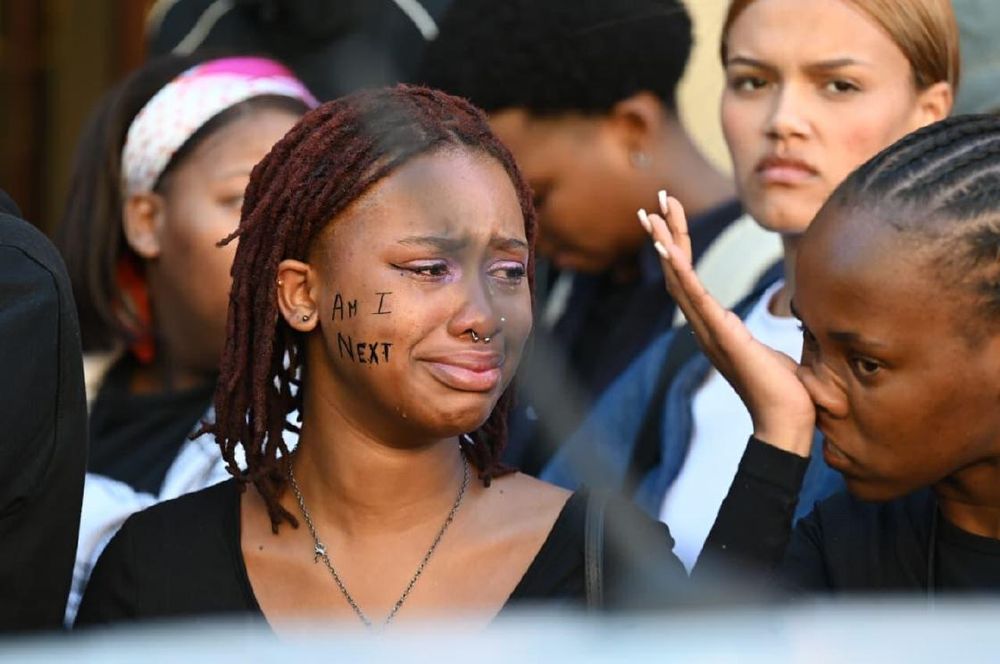
September 17, 2026. Driven by the urgent narrative that "enough is enough," South Africans women took to the streets in tribute to women killed in Ekurhuleni.
From the unkept presidential promises of 2019 to the tragic 2026 Ekurhuleni murders, South Africa’s fight against GBVF remains a live, unresolved crisis.
This photographic timeline showcases the decade of public outrage over GBV, connecting today’s demands for a safer South Africa to the historical protests that first forced the government’s hand.
With growing calls for action against GBV, protesters are still left asking one haunting question: #AmINext?
Nine women’s bodies had been found across Ekurhuleni communities, including Kempton Park, Pomona, Clayville, Olifantsfontein, Rhodesfield, KwaThema and Dawn Park. Police were still determining whether the cases were connected.
Cape Town, September 16. South Africans take to the streets in tribute to women whose bodies were found in Ekurhuleni, as protesters call for urgent action against gender-based violence.
The images show what the official language does not: families and protesters waiting for names, answers and visible protection.
A poster carrying a child's image and the words “#EndGBV” turns an unidentified case into a human claim.
A handwritten “How many more?” sign asks for a count. The image of a crying protester shows the cost of waiting.
September 16 2026. Black clothing marks mourning; the 30-minute silence records the loss of women whose cases remain part of a national crisis.
Cape Town, September 16, 2026. Participants stand in silence outside Cape Town Central Police Station during a 30-minute protest against violence against women.
Cape Town September 16 2026 A 30-minute silent protest against violence against women took place at the Castle of Good Hope and Infront of Cape Town central police Station. Dressed in black participants gathered in silence to remember women whose lives have been taken by violence and to stand in solidarity with women who continue to live in fear.
Cape Town -September 16 -2026 A 30-minute silent protest against violence against women took place at the Castle of Good Hope and Infront of Cape Town central police Station. Dressed in black participants gathered in silence to remember women whose lives have been taken by violence and to stand in solidarity with women who continue to live in fear.
In 2025, the government classified GBVF as a national disaster, according to the 2026 ministerial statement on the National Council.
That classification raised the level of state responsibility. It required more than public condemnation; it required coordinated resources, measurable action and reporting to the public.
The protests of 2026 reveal that the situation on the ground remains unchanged since 2019. The disaster declaration has failed to safeguard South Africa's women and children.
The 2025 South African Child Gauge.
The National Council on Gender-Based Violence and Femicide Act, 2024, created a permanent statutory mechanism to coordinate and monitor the national response. The Council held its inaugural meeting on August 31, 2026.
January 22, 2024. Community members march in Khayelitsha after a young woman was raped and killed.
Who responds when a docket is missing? Who checks a police station? Who publishes the safety audit? Who is held responsible when a survivor waits?
On December 7, members of the South African Women's Lawyers Association and emergency workers marched to the Union Buildings in Pretoria.
They took professional knowledge to the centre of executive power and asked the government to do more.
Pretoria - December 7, 2023. Members of the South African Women's Lawyers Association and emergency workers march to the Union Buildings in Pretoria, demanding stronger government action against gender-based violence.
On June 19, a GBV mural appeared at the corner of Sandile Thusi Road and Problem Mkhize Road in Durban.
South Africa - Durban - June 19 2023 , A gender-based violence mural stands at the corner of Sandile Thusi Road and Problem Mkhize Road in Durban.
On August 10, the Nokusa Foundation and people with disabilities marched from King Dinuzulu Park to Durban City Hall. The action placed disability, employment and GBV inside the same public demand. The caption must use person-first language: people with disabilities.
Durban- August 10 2023- Menzi Nxumalo, founder of the Nokusa Foundation, marches with people with disabilities from King Dinuzulu Park to Durban City Hall, calling for an end to GBV and greater employment opportunities.
On December 9, the Sydenham and Sherwood Community Policing Forum marched against GBV at Charles Hugo School. The event moved the story from national policy to neighbourhood policing. The question became local: can a community trust the structures closest to it
December 9, 2023. The Sydenham and Sherwood Community Policing Forum marches against GBV at Charles Hugo School in Durban.
On June 29, the LGBTQ+ community and supporters marched from Durban City Hall to the Durban Magistrates' Court. The march demanded justice for murdered queer people and for people affected by GBV. Its route linked civic authority to the court and made clear that a national GBV response must include LGBTQ+ people.
June 29 2022. Members of the LGBTQ+ community and supporters march from Durban City Hall to the Durban Magistrates' Court, demanding justice for murdered queer people and for those affected by GBV.
On March 8, Free Gender and civil society organisations marched to Khayelitsha's Site B Police Station after a murder case was struck off the court roll when police failed to provide a docket. The image does not show the missing docket. It shows the public response to its absence. The administrative failure becomes visible because the community carries it into the street.
March 8, 2022. Fee Gender and other civil society organisations march to Khayelitsha's Site B Police Station over police resourcing and a murder case that was struck off the court roll after police failed to provide a docket.
In 2022, women asked the same unanswered question of President Cyril Ramaphosa as in 2019.'How many more?'
On February 22, the KwaDabeka community protested after several incidents were reported in Clermont.
February 22, 2022. Residents of KwaDabeka protest against gender-based violence after several incidents are reported in the Clermont area.
The community action shows how national language becomes local organising: residents translate “GBV crisis” into a demand for safety in a named place.
On February 24, an anti-GBV protest took place outside Parliament in Cape Town.
February 24, 2021. Protesters gather outside Parliament in Cape Town during an anti-GBV demonstration.
On February 18, Ilitha Labantu, the police and civil society organisations held a motorcade in Gugulethu to break the silence around violence against women and children.
February 18 2021. Ilitha Labantu, police and civil society organisations hold a motorcade in Gugulethu to break the silence around violence against women and children.
Image: Leon Lestrade. African News Agency/ANA.
Together, the photographs show two levels of action. One asks the neighbourhood to respond. The other asks the Presidency and Parliament to account.
November 30 2020 - Victim of GBV, Lovisa Terling, joined the protest. Group of women protested outside the Cape Town magistrates court today over court delays in cases of domestic violence and sexual assault.
November 30 2020 - Victim of GBV, Anna Insam, joined the protest. Group of women protested outside the Cape Town magistrates court today over court delays in cases of domestic violence and sexual assault.
South Africa -Cape Town - August 29 2020 - Police used stun grenades and teargas as they clashed with protesters and bikers who took part in the Gender Based Violence march outside parliament.The march comes after a number of women were killed in South Africa during the Women's month.
On June 19, the South African Youth Council and gender activists picketed outside the SAPS Western Cape head office under the banner #WOMENLIVESMATTER. The protesters directed the message at law enforcement officials who handled GBV cases.
Cape Town- June 19, 2020. A picket against Gender-Based Violence was held at the Provincial Head Office of SAPS Western Cape, aligning with the Youth Day commemoration theme and efforts to mobilise young people against Gender-Based Violence
"Women can't breathe” describes an actual condition rather than a single case of injustice.
The 2019 images form the political starting point of the eight-calendar-year sequence.
During the Covid-19 pandemic, President Cyril Ramaphosa described GBVF as South Africa's “second pandemic”.
Cabinet adopted the National Strategic Plan on GBVF in 2020, with pillars covering accountability, prevention, justice, care, economic power and research. Six years later, have any resolutions been made?
On September 6, 2019, protesters marched to the Cape Town International Convention Centre and gathered outside the World Economic Forum on Africa, then occupied the N2 and returned to Parliament.
The route marched linked law-making, global reputation, public space and policing.
“She was going to the post office” remembers Uyinene Mrwetyana through the ordinary act that preceded her murder.
September 6, 2019. Protesters gather outside the CTICC in Cape Town as demonstrations against gender-based violence continue after the murder of UCT student Uyinene Mrwetyana.
“How many more?” asks for a count and a state response. Women again asked in 2022.Nine women we have lost; nine.
September 6, 2019. Protesters gather at Parliament, march to the Cape Town International Convention Centre, demonstrate outside the venue, occupy the N2 and return to Parliament during two days of protests against GBV.
“My body is not your crime scene” challenges the idea of treating a person solely as forensic material.
September 6, 2019. Protesters are continuing to voice their anger against gender based violence infront of Parliament on Friday morning. Thousands of people across the city have been taking part in wide spread demonstrations against gender based violence the last three days following the murder of first-year student Uyinene Mrwetyana.
On September 8, 2019, President Cyril Ramaphosa addressed the nation outside of Parliament in Cape Town.He promised a review of domestic violence and sexual offences laws, stronger coordination and urgent interventions through Parliament. Safe to say, little to nothing has changed since then.
September 8, 2019. President Cyril Ramaphosa addresses the national crisis of gender-based violence in a 2019,
September 8, 2019. The message is clear.
The 2019 address delivered by President Cyril Ramaphosa established the foundation for accountability. Which words have actually held significance since then, now that we are in 2026?
In August 2018, women marched to the Union Buildings under #TotalShutdown. The National Gender-Based Violence and Femicide Summit followed on November 1 and 2.
In 2017, UCT Survivors, the Sexual Assault Response Team and the Aids Healthcare Foundation held a day-long Silent Protest.
In 2016, UCT students used #EndRapeCulture and placards reading “UCT Fails Survivors.”
From 2019 to 2026, the Presidency has added laws and institutions to its response. The photographs ask whether those additions have changed what happens next. The signs and words in each image are part of our now-public language.
The Presidency must provide dates, budgets, case numbers, responsible officials, and outcomes.

