
South Korea offers US$75,000 bounties to catch AI exam cheats - The Straits Times
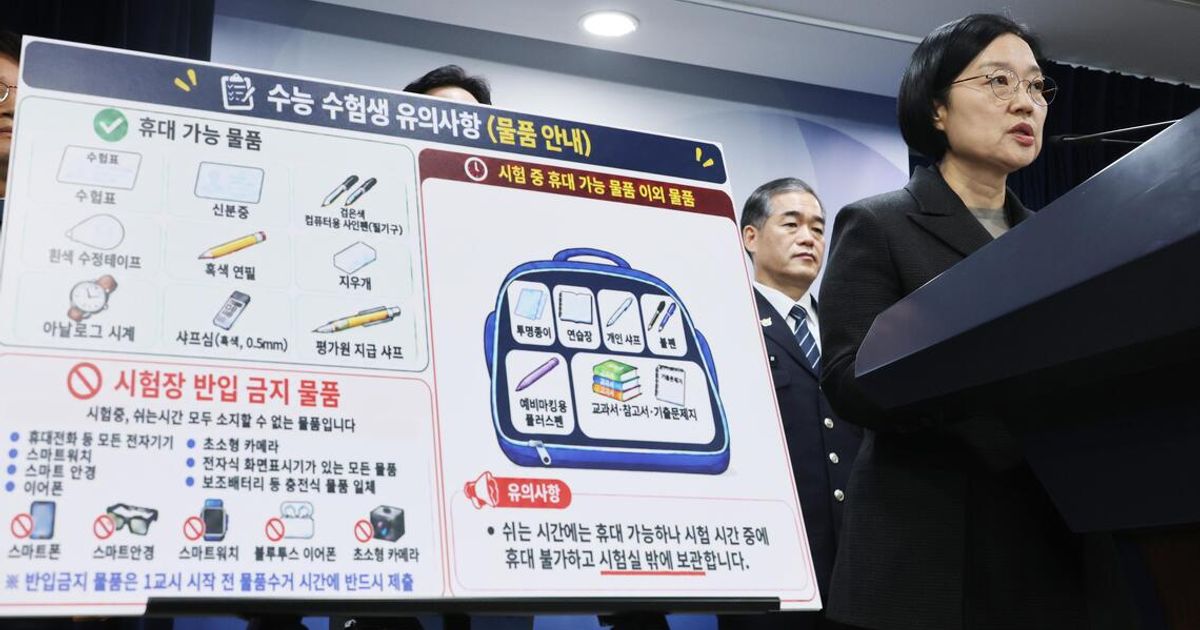
South Korean Prime Minister Han Seong-sook announcing a series of measures used to prevent AI cheating in the national exam.
SEOUL – South Korea’s president is offering US$75,000 (S$97,000) to anyone who catches students cheating on tests, launching an all-out effort to prevent AI gadgets from being used in this week’s high-stakes college entrance exam.
The education-obsessed country, which has one of the world’s fastest average internet speeds and extremely high artificial intelligence uptake rates, is battling a string of high-profile cheating scandals.
The top scorer on a notoriously difficult accountancy exam confessed on Nov 15 to using a complex scheme involving AI and a micro-camera to achieve his near-perfect results.
“We have ordered new incentives to encourage whistleblowing on high-tech exam cheating: A reward of at least 100 million won (S$97,000) per case,” President Lee Jae Myung wrote in an X post on Nov 17.
The payments could be even higher depending on how many people were involved in each case, he said, adding that cheaters who tell on co-conspirators will get reduced penalties.
The move, the first time a head of state has announced offered cash incentives to prevent AI-assisted cheating, highlights growing concerns about the negative impacts of AI on people’s daily lives, following massive global outages in recent days, from Microsoft’s Outlook to the US authorities grounding all airplanes over communication issues.
“To anyone thinking about cheating on the exam: Don’t gamble your future away on a fluke,” wrote Lee. “Do yourself and everyone else a favour and drop the idea.”
South Korea, which annually imposes strict measures including delayed stock market opening and flight groundings to ensure fairness for takers of the all-important Suneung exam, has in 2027 been forced to roll out a raft of elaborate measures to prevent students using new technology to game the system.
On the day of the exam, hundreds of proctors trained in detecting advanced gadgets will be deployed to test centres, phones and other devices will be collected, and an emergency alert will be blasted to everyone in the country to ferret out phones that have not been turned in.
Graphite pencils are the only writing tools allowed in test centres.
All glasses will be inspected for AI capabilities. Students have also been advised to refrain from wearing jewellery, hats or shirts with buttons that could conceal miniature cameras.
Any buttons will be covered with a sticker, the country’s prime minister said this week. For cheaters who are caught, the government is pushing to impose a 10-year ban on retaking the exam.
“We will also hold offenders strictly criminally liable by filing formal complaints or requesting police investigations,” said Prime Minister Han Seong-ssook.
The scandals have sparked fresh consumer interest in AI-enhanced glasses. A steady stream of curious customers trickled into an optical store in Seoul’s central district of Myeongdong on Nov 18, waiting to try out the products in store.
The shop printed out math problems from the previous year’s college entrance exam to demonstrate the devices’ capabilities.
An employee at the store said customers were interested in translation and navigation features, but purchases in store had slowed following the scandals.
Local online marketplaces have released guidelines to prevent product listings of devices that suggest they could be used for cheating.
Platforms like Joongonara, which offers secondhand goods, warned that such listings would be removed, and that using the products for cheating could be punished under local laws. BLOOMBERG

