S’porean woman, 33, fined S$24,000 after her firm's private investigators kept tabs on police officer - Mothership
Her fine was equivalent to the sum her firm was paid for the surveillance work.
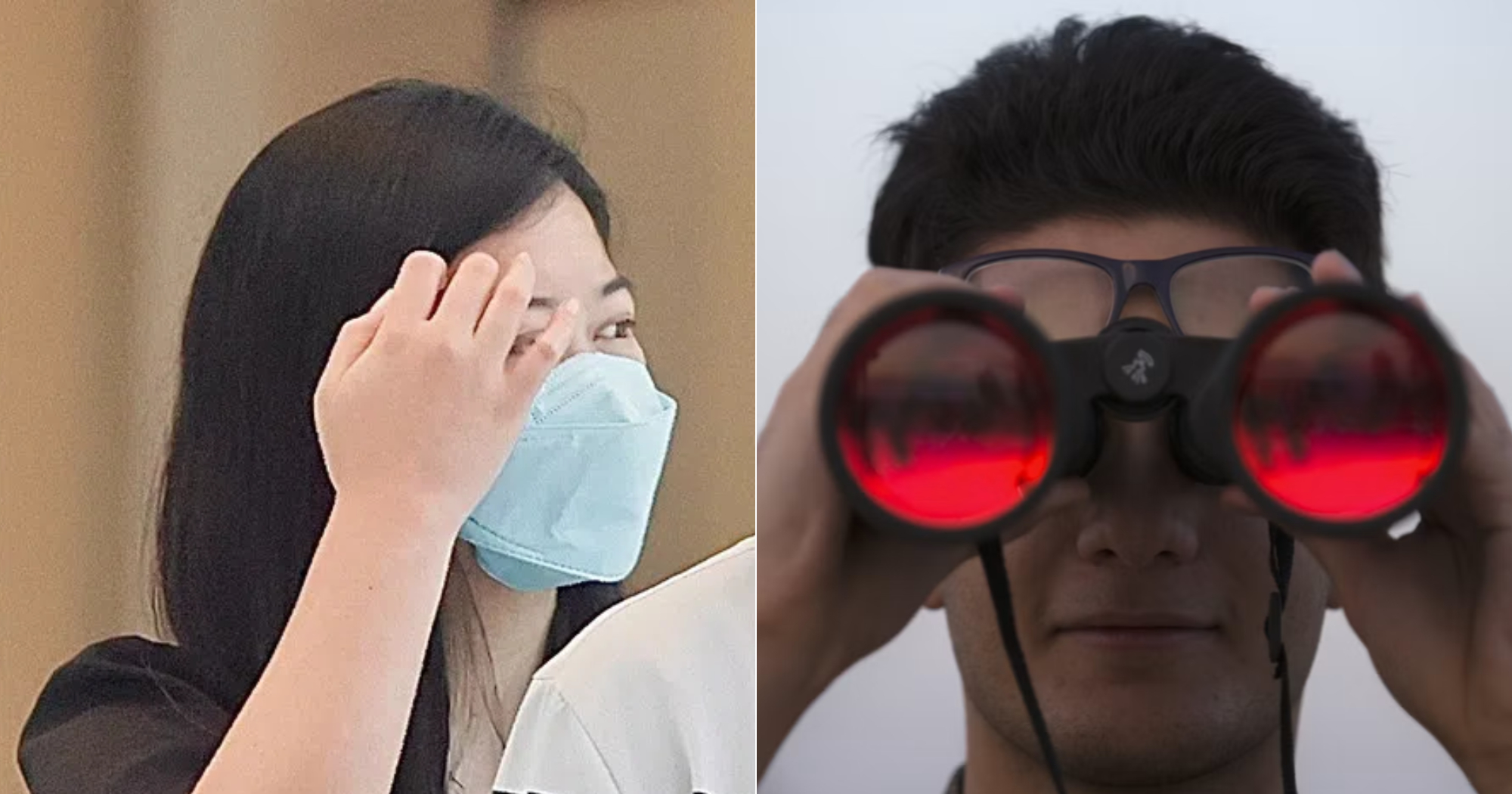
A 33-year-old Singaporean woman was fined S$24,000 after allowing private investigators from her firm to surveil a police officer.
Tan Hui Ting faced two charges of obstructing justice and a charge under the Private Security Industry Act.
She pleaded guilty to one charge and was sentenced on Sep. 15.
The other charge was taken into consideration during sentencing.
In court documents seen by Mothership, Tan was a partner of CDiC Consultants LLP, a private investigation firm.
In November 2021, an individual identified as “Pai Hong Yao” reached out to the firm through an alleged intermediary to hire a private investigator to look into a police officer.
At that time, the police officer was an investigation officer assigned to investigate a matter involving Pai’s father.
Pai wanted to look into the officer as he was dissatisfied with how the investigations were conducted against his father.
On the morning of Nov. 29, 2021, Pai, Tan, and another firm partner met to discuss the engagement.
At that meeting, Tan and the partner learned that Pai’s investigation subject was a police officer and that Pai wanted to know whether he was a “good or bad policeman”.
Tan and the partner agreed to engage the firm to provide a licensed private investigator to investigate the police officer.
Later that day, Tan sent Pai a formal letter of engagement issued by CDiC, which he signed and returned the same day.
On the evening of Nov. 29, 2021, Pai provided further details of the police officer, including his photograph, his mobile number, and that he worked at Police Cantonment Complex.
On or about Nov. 30, 2021, the firm began surveillance of the police officer.
On Dec. 30, 2021, Pai sent several messages to Tan and the partner identifying persons of interest the officer may have interacted with, or would be interacting with, in relation to the investigations against his father.
This included the name and photo of the lead deputy public prosecutor handling the prosecution of Pai’s father.
From about Dec. 16, 2021, to Jan. 9, 2022, the firm deployed its private investigators to surveil the police officer at his residence and his workplace.
This included tracing his whereabouts during the day, including when he left and returned to his residence, when he arrived at and left his workplace, where and when he went, who he met with, and what he did.
Photographs were taken of the officer moving about, including at the entrance of his workplace, and two photographs were taken when he was standing topless in his home by the kitchen window of his flat.
Surveillance of the officer lasted for long hours over multiple days.
Private investigators also called his workplace to divert calls to the officer to ascertain whether he was at work.
During the engagement, Tan provided Pai with regular updates on the surveillance conducted, including photographs of the officer, his vehicles, and his residence.
Tan also updated Pai on the various instances when surveillance was conducted at his workplace.
In total, CDiC received S$25,100 from Pai for the engagement.
The officer noticed he was being followed on Jan. 9, 2022 and the surveillance stopped.
The prosecution sought a S$25,000 fine for Tan.
They argued that the Police Cantonment Complex is “not merely a building”, but a protected area that is the “operational heart of the Singapore Police Force and other law enforcement departments”.
“It is a protected area for good reason: to shield the men and women who serve within it, and the sensitive work they carry out, from precisely the kind of intrusion that occurred in this case,” they said.
They also argued that Tan’s actions “threatened” the protection of public interest and national security.
The prosecution acknowledged the police officer's duties.
“They are entitled to carry out their duties without being subjected to unauthorised surveillance. The targeting of a police officer, especially one that is an investigation officer, elevates the seriousness of the offence above a case where the target might be an ordinary civilian working at government premises," they added.
"This is especially because of the officer’s sensitive work which has real and tangible implications for public safety and security," they said.