
Spotlight on Japans 1990s Speed Demons
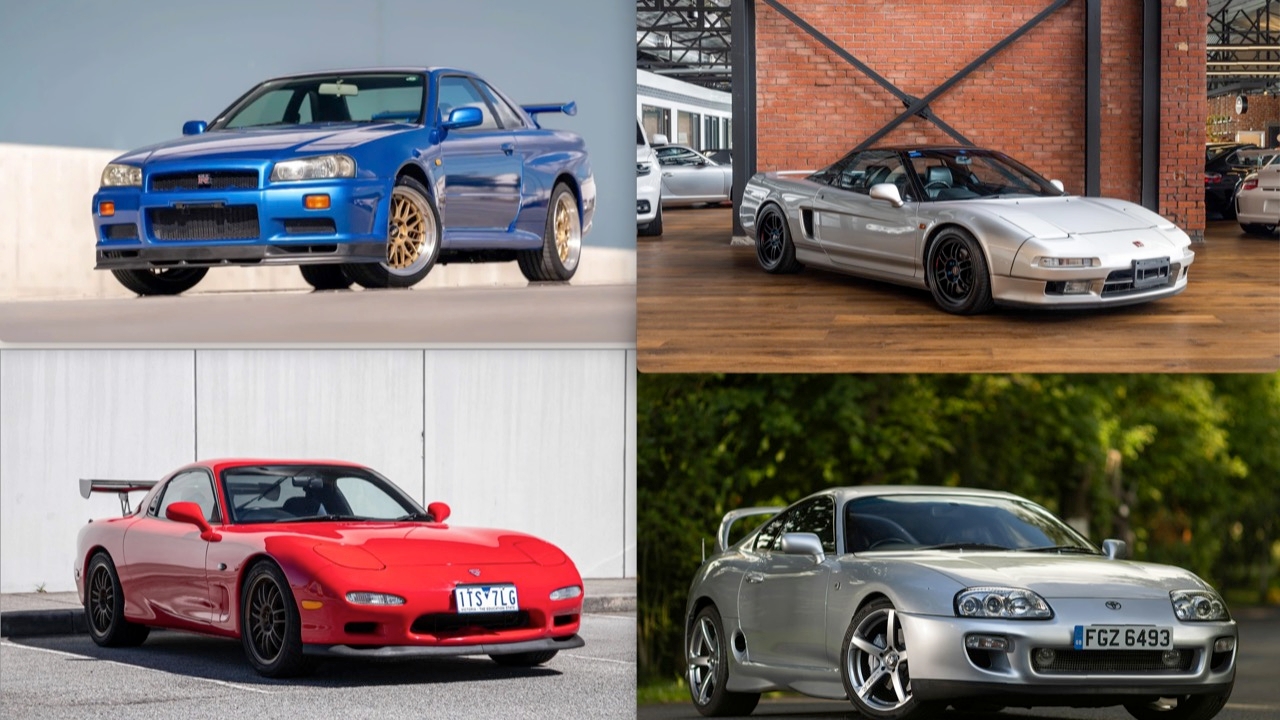
Let's explore several standout speed demons among sports cars popular with young drivers in the late 1990s. Among them, the long-favored Nissan Skyline GT-R R34 V-Spec (1999), Toyota Supra Turbo A80 (1998), Mazda RX-7 Type RS FD3S (1997), and Honda NSX NA1 (1991) stand out. These four represent distinct philosophies in crafting high-performance sports cars from the 1990s to 2000s—the golden age of Japanese sports cars offering a vast array of specialized choices for customers with varied budgets and personal tastes, allowing them to pick the car that truly speaks to their heart. During an era of fierce automotive engineering competition, Nissan focused on all-wheel-drive systems for superior grip, incorporating technology derived from racing. Toyota, in the late 90s, built powerful grand touring sports cars renowned for durability and engines highly receptive to modification, becoming legends that captivated youth. Mazda pursued perfect balance with a 50/50 weight distribution, lightweight body, twin-turbo rotary engine, and aerodynamically refined styling. Honda, deeply involved in motorsports including Formula 1, developed a supercar with an aluminum body, mid-mounted naturally aspirated V6 engine, and meticulous engineering. Over time, these four models became legendary icons of Japan’s exhilarating automotive era.
1999 Nissan Skyline GT-R R34 V-SpecThis car featured the most advanced technology, focusing intensely on grip. It housed a 2.6-liter inline-six twin-turbo engine, code RB26DETT, officially rated at 280 horsepower at 6,800 rpm and 392 Nm of torque at 4,400 rpm. Power was delivered through a rugged 6-speed manual gearbox from Getrag. The all-wheel-drive system was electronically controlled by Nissan’s ATTESA E-TS Pro.
The R34 V-Spec Skyline GT-R included an electronically controlled active limited-slip rear differential. Its suspension was firm and precise, bordering on stiff, with an aerodynamic underbody airflow panel. Brembo ventilated disc brakes with calipers, multi-link suspension on all four wheels, and a four-wheel steering system called Super-HICAS helped maintain stability and control through high-speed corners.
The R34’s advanced drivetrain gave it exceptional performance when accelerating out of corners or driving on uneven surfaces. Its aggressive stance featured wide wheel arches, iconic round rear lights of the modern GT-R era, a large rear spoiler, and a highly advanced multifunction display for 1999. Altogether, these elements crafted a complete identity that inspired sports car enthusiasts. The R34 V-Spec wasn’t just a powerful coupe but a sophisticated high-performance machine directly evolved from Nissan’s motorsport experience.
1998 Toyota Supra Turbo A80Designed with an emphasis on straight-line acceleration, high-speed stability, and engine durability, it featured a 3.0-liter inline-six twin-turbo engine, code 2JZ-GTE, widely sought after and now rare. The 2JZ is among Japan's most famous high-performance engines, with specifications varying by market.
The Japanese VVT-i version was legally rated at 280 horsepower with about 451 Nm torque, while the North American export version produced up to 320 horsepower and 427 Nm torque. The engine used sequential twin-turbocharging, an aluminum cylinder head, and a robust cast-iron block.
A 6-speed manual gearbox from Getrag was the most desired option among enthusiasts, with an automatic transmission available for comfort-seeking buyers. The Supra was rear-wheel drive, unlike Nissan’s all-wheel-drive system, and included a Torsen limited-slip differential. Suspension was an independent double-wishbone setup on all four wheels, with high-performance ventilated disc brakes and wide low-profile tires. Its long hood, sleek curved body, high rear spoiler, broad rear stance, and distinctive elongated taillights with circular elements gave it a unique appearance. Its durable engine architecture and capacity for high-power modifications made the Supra Turbo one of the most influential Japanese sports cars for youth of that era.
1997 Mazda RX-7 Type RS FD3SThis compact rotary-engine coupe was highly distinctive. The RX-7 Type RS FD3S embodied the philosophy of being as light and unique as possible. Instead of a conventional piston engine, Mazda used a 1.3-liter twin-rotor rotary engine, code 13B-REW (654 cc per rotor). It was compact and paired with a sequential twin-turbo system. The Japanese 1997 model was considered a strong performer for the FD body, producing 265 horsepower before the 1999 Type RS version boosted output to 280 horsepower.
The rotary engine’s smooth high-revving character and compact size allowed Mazda to achieve excellent 50/50 weight distribution. Power was sent to the rear wheels via a 5-speed manual transmission. The Type RS came with factory-tuned suspension, lightweight sport accessories, independent double-wishbone suspension on all wheels, limited-slip differential, and 4-wheel disc brakes. Its excellent driving dynamics offered precise handling and exhilarating acceleration, making it highly controllable and engaging.
The low sloping hood, curved roofline, rounded rear, and pop-up headlights made the RX-7 Type RS FD3S an iconic 90s sports car. Compared to the heavier GT-R and Supra, Mazda's model was more agile and balanced in corners, creating a strong driver-car connection rather than relying solely on brute acceleration. The rotary engine required meticulous maintenance and careful cooling management, distinguishing the RX-7 Type RS FD3S as a very special Japanese high-performance sports car.
1991 Honda NSX NA1The NSX NA1 was the most refined and intricate true sports car design of its time. It featured a mid-mounted 3.0-liter V6 naturally aspirated engine, code C30A, with DOHC and 4 valves per cylinder. Honda’s VTEC variable valve timing was included in the 5-speed manual model, producing 280 horsepower at 7,300 rpm and approximately 294 Nm torque at 5,400 rpm. The 4-speed automatic version had slightly reduced power to preserve transmission longevity.
The NSX’s mid-engine, rear-wheel-drive layout differed from the other three cars. Placing the engine behind the cabin but ahead of the rear axle enabled flawless tight cornering. Its all-aluminum monocoque chassis provided exceptional torsional rigidity. The suspension used independent double-wishbones, ventilated disc brakes, and finely honed aerodynamics, delivering exceptional handling precision.
Every development stage of the NSX prioritized long-distance comfort and everyday usability. The interior was finely crafted with excellent all-around visibility. The naturally aspirated V6 delivered smooth, responsive power without turbo lag, rewarding precise gear shifts with engine revs. The NSX demonstrated that Japanese automakers could build supercars with superb engineering, balanced handling, and high reliability without relying on forced induction.
The Nissan Skyline GT-R R34 V-Spec is the most complete high-performance car for all-weather driving, featuring all-wheel drive, an active limited-slip differential, and race-derived chassis technology.The Toyota Supra Turbo A80 offers the strongest combination of turbo engine potential, straight-line acceleration, and modifiability.The Mazda RX-7 Type RS delivers the lightest, most agile feel, with its unique rotary engine and excellent cornering balance.The Honda NSX NA1 is the most refined and elegant sports car, combining a mid-engine layout, lightweight aluminum structure, and naturally aspirated VTEC performance.
Comparing factory engine characters, the 2JZ-GTE in the Supra and 13B-REW in the Mazda give completely different sensations. However, for grip and acceleration on poor roads and in variable weather, the R34 GT-R holds the advantage. In terms of steering precision and driver engagement, the NSX and RX-7 excel. The Supra provides the strongest base for high-horsepower modifications, while the R34 was the most technologically advanced car of its time.The R34 GT-R V-Spec suits those seeking all-around performance. The Supra Turbo appeals to those prioritizing power and tuning potential. The NSX attracts enthusiasts valuing refined, smooth engineering. And the RX-7’s lightweight, unique rotary character remains unmatched among sports cars.
Arkom RumsuwanE-Mailchang.arcom@thairath.co.th Facebookhttps://www.facebook.com/chang.arcom https://www.facebook.com/ARCOM-CHANG-Thairath-Online-525369247505358/


