Spy or Broker? Even the U.S. Ministry of Justice Still Doesn't Know Who Alice Huang Really Is - 경향신문

This article was translated by an AI tool. Feedback Here.
U.S. Ministry of Justice Minister “Unable to conclude she is a spy”
A photo previously posted on Alice Huang's social media account showing Nvidia CEO Jensen Huang and Alice Huang at a restaurant in Shanghai. /Xiaohongshu
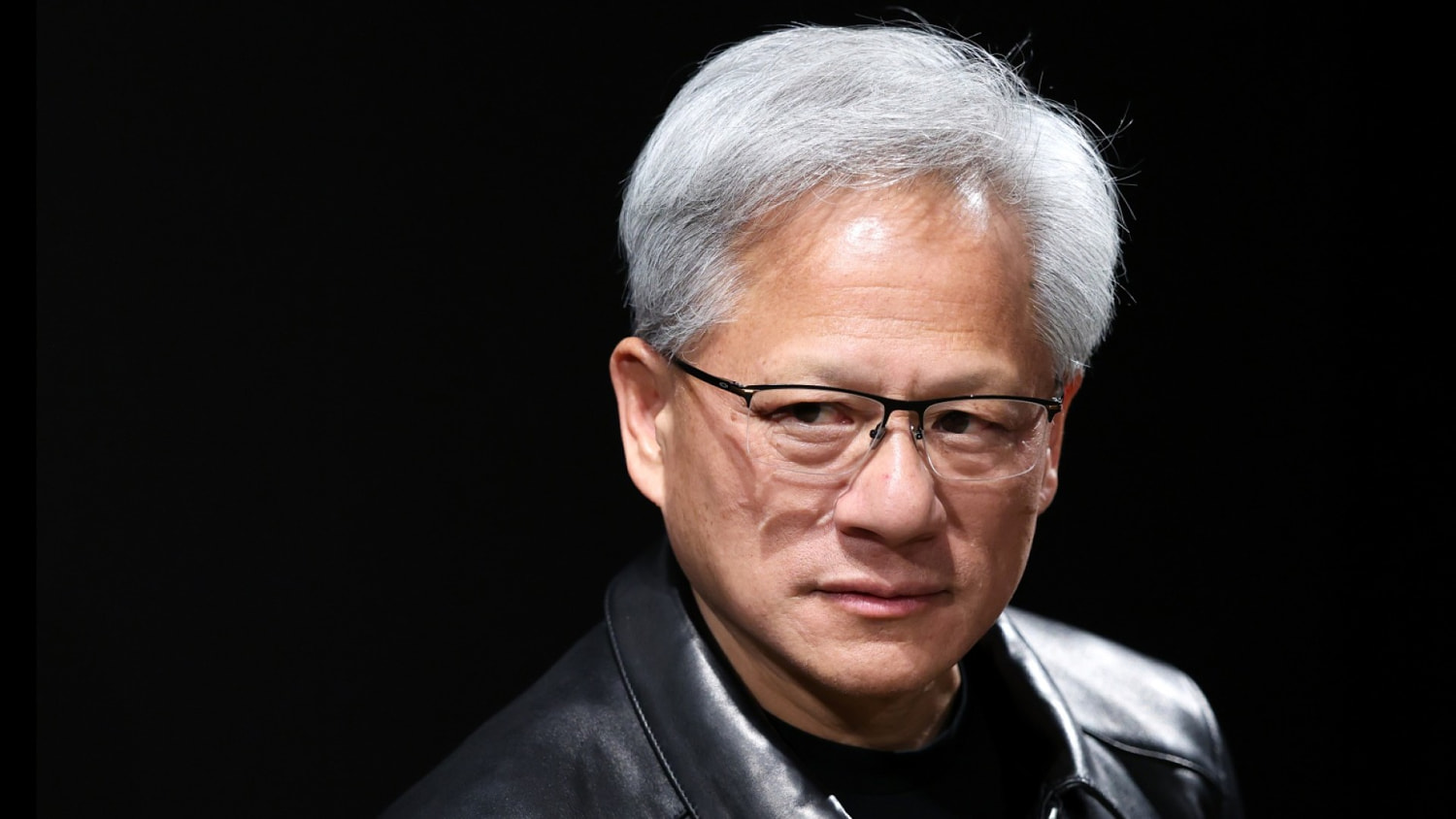
Jensen Huang has resigned as Nvidia's chief executive officer (CEO) and as a director. It came four days after he acknowledged an extramarital relationship with Alice Huang (legal name Huang Le).
The indications that she was involved in smuggling Nvidia chips that are banned from export to China while running a company in Singapore are becoming relatively clearer. By contrast, whether Alice Huang is truly a Chinese spy remains uncertain.
According to Reuters, U.S. Ministry of Justice Minister Todd Blanche held a press conference on the 12th (local time) and said, “The Ministry of Justice has not yet concluded that Alice Huang is a Chinese spy,” adding that the Federal Bureau of Investigation (FBI) is investigating the matter.
Earlier, Chinese Ministry of Foreign Affairs spokesperson Guo Jia-kun commented on the Chinese spy allegations, calling them “baseless, fanciful talk and slander.”
Who is Alice Huang, really? First, let's retrace her background.
When Alice Huang first came to public attention, many wondered how an unknown in the information technology (IT) sector had become close to a heavyweight like former CEO Huang. Some parts of her early career that she herself disclosed, such as being a reporter for Hunan Satellite TV, could not be verified. That is why the ‘spy allegations’ gained momentum.
What is confirmed is that since 2015, Alice Huang served as an executive at Heshi Capital (Heshi), a private equity firm in Shanghai. Heshi's founder, Kang Wei, is a well-known fund manager specializing in leveraged buyouts and control transactions. After founding Heshi, he drew attention in China's financial circles by earning an eightfold return from an investment in the game company ‘Zhejiang Century Huatong’.
Caixin, the Chinese business outlet that first reported Kang Wei's connection to the Jensen Huang scandal, said the two were “very close,” and the Financial Times (FT) reported that “some acquaintances of the pair understand them to be married.” The Wall Street Journal, interviewing people who know Kang Wei and Alice Huang, reported that “the two are married, and it was Kang Wei who introduced Alice Huang to the former CEO Huang.”
Desmond Shum, a former Hong Kong businessman, has focused on Kang Wei and said on his Substack channel that he and Alice Huang are likely not spies affiliated with China's state security apparatus but rather ‘commercial intermediaries’ or ‘white gloves’. Born in 1968, Shum is the author who <Red Roulette> published, a memoir drawing on more than 20 years of doing business in China to reveal the inner workings of Chinese business circles and how elites accumulate wealth.
A commercial intermediary is someone who uses networks to resolve issues of deals, supply, and permits. White gloves refers to people who manage a power holder's assets, income, and transactions on their behalf, concealing the real owner. While commercial intermediaries operate on the boundary between illegality and legality, white gloves are clearly subject to anti-corruption punishment.
However, Shum says commercial intermediaries and white gloves are pervasive in China's business world. Let's take another look at what they do through Kang Wei's business.
Having mainly invested in game companies, Kang Wei is said to have recognized early the importance of data centers. In March 2023, he acquired the Singapore subsidiary ‘Seven Road’ of a Hong Kong-listed game company through a company named ‘Huang Le,’ after Alice Huang's legal name, and renamed it Megaspeed International. He then converted Megaspeed into an AI cloud center company.
Huang Le is a company created in 2023 through a British Virgin Islands paper company. On paper, Alice Huang, the representative of Huang Le, becomes an executive of ‘Megaspeed.’ When the Singapore company ‘SwiftData,’ established in 2024, bought back shares of Megaspeed, Megaspeed transformed into a ‘Singapore company.’ At that point, Alice Huang stepped down from her executive role at Megaspeed, that is, she disappeared from the paperwork. However, she is said to have acted as the beneficial owner.
Megaspeed set up a subsidiary, ‘SpeedMatrix,’ in Malaysia. This company is presumed to have received funding by pledging its servers and intellectual property as collateral to Apex, a subsidiary of China's Alibaba.
Meanwhile, in June 2023 a company called ‘Shanghai Century Litong’ was established. Its founder of record is Alice Huang's younger sister, Huang Yu. Century Litong secured preferred-partner status with Nvidia in October 2023, before the Trump administration took office, and supplied Nvidia chips to China.
After the Trump administration took office and export controls on Nvidia chips began, the ‘Singapore data center firm’ Megaspeed (the company where Alice Huang had served as an executive) was identified as having purchased large quantities of Nvidia's high-performance AI chips such as the H100, H200, and A100 and passed them on to Chinese companies in the form of leases.
Shum explains a commercial intermediary as “someone who identifies a scarce resource (chips), secures access to those who control it (Nvidia), and then connects them to those willing to buy it (such as Alibaba).” He adds, “A broker with commercial motives can achieve what Beijing wants without receiving instructions from the Ministry of State Security.”
In other words, the view is that Kang Wei and Alice Huang entered the Nvidia chip smuggling business to make money.
In 2012, when China imposed export controls on rare earths to Japan amid the Senkaku Islands sovereignty dispute, such intermediaries rushed into rare-earth smuggling and failed. China first revamped its own laws related to domestic rare-earth smuggling and then imposed export controls last year.
When Alice Huang first came to light, speculation arose that China's intelligence services had set up shell companies to launder spies' identities in order to secure U.S. AI chips. However, creating multiple companies through complex equity transactions is not a simple task.
Companies such as Megaspeed were established by mobilizing Kang Wei's business network, and Kang Wei had previously been caught multiple times by Chinese authorities and fined for filing false disclosures to conceal a company's beneficial owner. This is why he faces suspicions of being a professional ‘intermediary’ or ‘white glove.’
In China, which has adopted a socialist market economy, the authorities exert enormous influence not only over corporate licensing and establishment but across overall management. At the same time, companies can amass vast wealth if they succeed in the market. The Chinese government has at times turned a blind eye to corruption for the sake of economic growth, only to crack down when needed.
As a result, collusion between politics and business has been a constant problem. At the same time, ‘specialists’ such as commercial intermediaries and white gloves have proliferated. Intelligence agencies also reportedly approach them to leverage the information and connections of commercial intermediaries. Each side seeks the other's networks.
Several experts familiar with China said Shum's analysis is quite plausible. They also said it is possible that Alice Huang, while engaged in business activities, was recruited by an intelligence agency.
A source well-versed in China's business community told the Kyunghyang Shinmun, “I think the most likely explanation is that Alice Huang was ‘a businessperson who was later recruited by an intelligence agency.’ Commercial motives and intelligence activities can coexist,” adding, “At first she approached (the Nvidia side) to make money, and then, because the relationship had already been formed, she likely drew the interest of an intelligence agency.”
Shum likewise said he does not rule out the possibility that Alice Huang is a spy, because U.S. authorities have not fully disclosed the evidence. However, he expressed concern that, as opinions declaring Alice Huang a spy dominate on social media and elsewhere, attention is fading from the even more important ‘underground business networks’ built on commercial motives, which matter for U.S. security.
There are also concerns about a ‘anti-China public-opinion campaign’ as the investigation proceeds into whether Alice Huang is in fact a spy. In that case, discrimination against Chinese Americans is a concern. If excessively hardline measures are adopted on the back of public anger, U.S.-China conflict could deepen further and destabilize the world order.