Starbucks Won the Battle of Seattle. Did the Protesters Win the War? - Newsweek
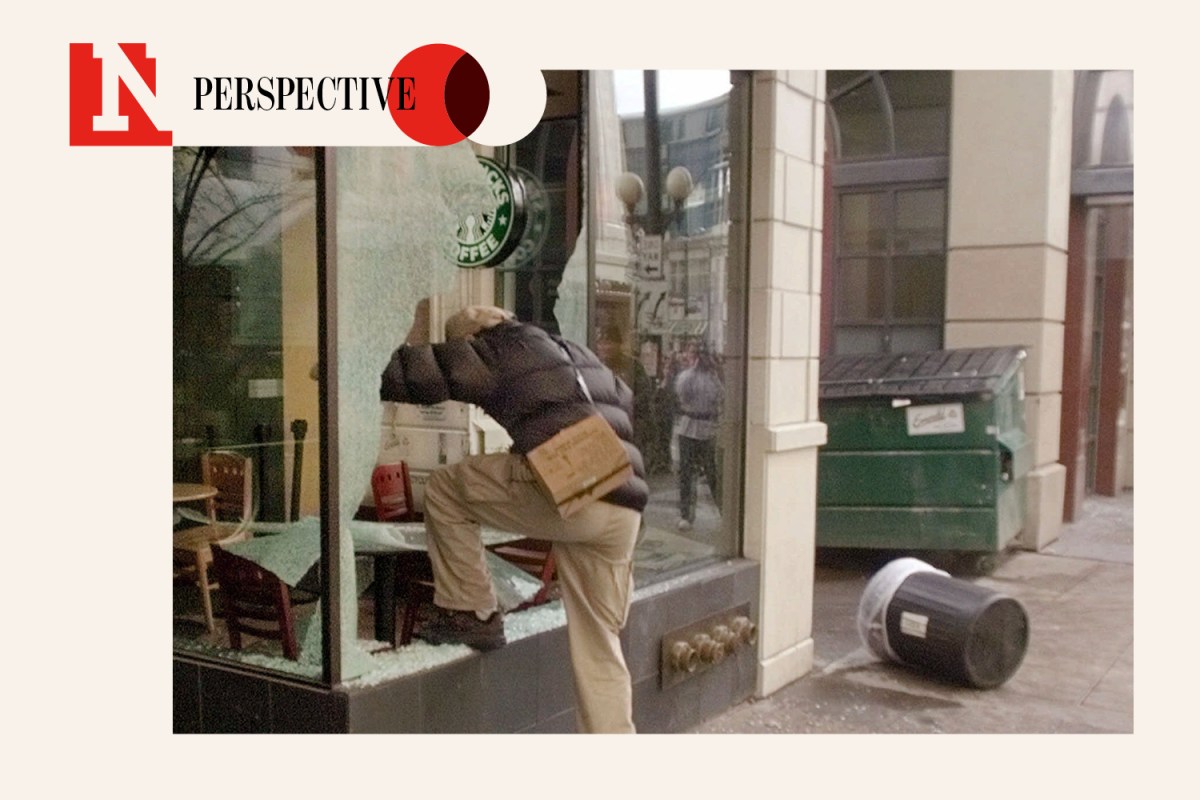
Starbucks became one of the most recognizable corporate targets of the 1999 Battle of Seattle. Twenty-seven years later, as the coffee giant prepares to close about 250 North American stores, one former Wall Street skeptic of those protesters is wondering whether they understood something he did not.
Anthony Scaramucci, the financier and former Trump White House communications director, wrote in a Fortune book excerpt published Tuesday that he had watched the demonstrations against the World Trade Organization from Manhattan with "disdain," regarding protesters as naive opponents of the economic future. His assessment today is considerably different: "In 1999, I was wrong. The Seattle protesters were right."
Two days after the excerpt appeared, Starbucks said it would close approximately 250 North American coffeehouses where the company said it could no longer provide its desired customer experience or see "a path to acceptable financial performance."
Since Seattle, Starbucks has expanded dramatically. But 27 years later, the company is closing hundreds of locations while trying to make its remaining stores feel more like neighborhood coffeehouses. That makes Scaramucci’s change of heart especially striking: some of the qualities that helped make Starbucks a symbol of globalization in 1999—standardization, enormous scale and relentless expansion, among others—are now the very qualities the company is trying to soften as it seeks to recover a more local, intimate feel.
Starbucks became a target in Seattle because it represented the kind of fast-expanding multinational brand many protesters associated with globalization. The demonstrations were overwhelmingly broader than the vandalism that dominated some coverage: as many as 20,000 people joined protests involving labor unions, environmentalists and students, while a much smaller group smashed windows and damaged corporate storefronts.
Even among the demonstrators, opposition to globalization did not necessarily mean opposition to business itself. One activist told Democracy Now! that campaigners wanted Starbucks to sell fair-trade coffee and Gap to stop relying on sweatshop labor, for example. Their argument, in that case, was that global corporations should operate differently.
Starbucks’ subsequent success did not settle that argument. The company became far larger, but many of the protesters’ concerns were about how globalization distributed its gains and costs, not whether companies such as Starbucks could grow. That is the part of the argument Scaramucci now says he got wrong: he saw the protesters as enemies of economic progress, while he now believes they were warning about consequences Wall Street was too quick to dismiss.
Scaramucci’s change of heart is surprising because the view he held in 1999 was hardly unusual on Wall Street or in Washington. At the Seattle summit, President Bill Clinton defended open trade as a way to expand markets and benefit ordinary workers, even as he acknowledged concerns about labor standards and the environment.
Scaramucci says he bought into that same optimism. On Newsweek's The 1600 podcast, he recalled Wall Street’s assumption that bringing China further into the global trading system would create an enormous new market for American companies. "We all thought on Wall Street that that market was going to be open to all of us," he said. "We just found a 1.3 billion-person market for us to sell our goods and services."
That confidence shaped how he viewed the protesters. Scaramucci described himself at the time as a "smug, self-absorbed 35-year-old Wall Street hedge funder" who was "sneering and laughing" at them.
Looking back now, though, he argues that policymakers underestimated what freer trade, particularly with China, would do to American workers and communities. "I was wrong. They got it right," Scaramucci said. "They saw something that was about to happen that I didn’t predict."
He pointed to outcomes he believes vindicated part of their warning: "The market didn’t open. There was predatory pricing. Lots of companies dislodged their labor, moved them into Mexico or parts of Asia. And we saw middle-class wages stagnating."
He goes further, arguing that the resulting economic dislocation helped create the political conditions for Donald Trump’s rise.
That remains Scaramucci’s interpretation of the past three decades, rather than a settled account of globalization or Trump’s ascent. But his reversal shows how dramatically the argument has moved. In 1999, he regarded the Seattle protesters as naive opponents of progress. In 2026, he sees them as people who recognized costs that he and others in finance failed to take seriously.
The 250 closures are not evidence that Starbucks (or globalization, for that matter) has failed. To put things in perspective: the shuttering stores amount to about 1 percent of the company’s more than 18,000 North American locations, and Starbucks still expects to add stores globally this year.
The more interesting part of the conversation, though, is about what the company says it wants from the stores that remain. Its "Back to Starbucks" strategy calls for warmer, more welcoming coffeehouses and is closing locations where the company says it cannot deliver that experience.
There is an irony in that: the consistency Starbucks could reproduce from one city to another helped make it an obvious symbol of globalization in 1999. Now the company is trying to make that vast corporate network feel less standardized and more local.
Does that prove that Seattle protesters were right? Maybe yes, maybe no. What's for sure, though, is that the development sharpens Scaramucci's reversal: Starbucks won the commercial argument, while some of the concerns attached to what it represented proved harder to dismiss.