Strait of Hormuz Crude Oil Flows Return to Prewar Levels, Fuel Shipments Lag - Tempo.co English
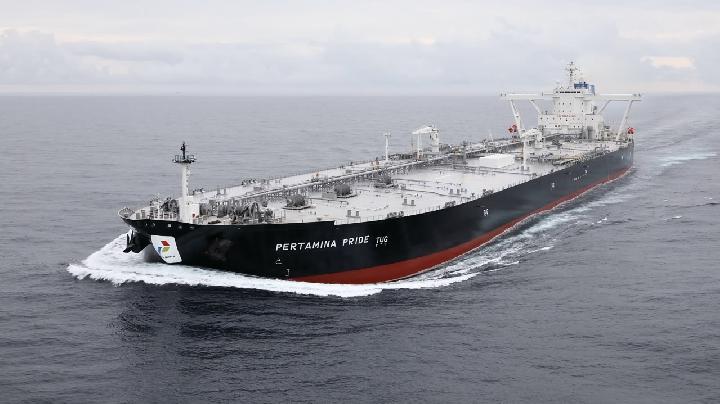
TEMPO.CO, Jakarta - Crude oil exports through the Strait of Hormuz have returned to levels seen before the Iran war, but refined fuel shipments remain severely constrained, raising concerns over a global fuel supply shortage.
CNBC reported that Crude shipments through the strategic waterway reached a seven-day average of 13.5 million barrels per day as of Monday, matching the prewar baseline, according to data from Kpler, a firm that tracks tanker movements and global trade flows.
The recovery has been supported by US military escorts for tankers and the increased use of pipelines that allow Gulf producers to bypass the strait.
Matt Smith, director of commodity research at Kpler, said Iran's influence over the waterway was weakening as substantial volumes of crude continued to pass through Hormuz, despite Tehran's repeated declarations that it had closed the strait during the conflict.
Across the Middle East, including the Persian Gulf and Red Sea, crude shipments averaged 19.5 million barrels per day over seven days as of Monday, above the prewar baseline of about 17 million barrels per day, Kpler data showed.
However, the recovery has not been uniform.
“The crude market has largely normalized even as refined product supplies remain constrained,” Natasha Kaneva, head of global commodities strategy at JPMorgan, said.
Refined petroleum products shipped through the Strait of Hormuz averaged just 677,000 barrels per day over seven days as of Monday, compared with 3.6 million barrels per day before the war, according to Kpler.
Combined crude and refined product shipments through Hormuz stood at 14.2 million barrels per day, or about 80% of the prewar baseline of 17 million barrels per day.
The supply shortfall has contributed to a global fuel crisis, with diesel prices in the United States reaching record or near-record levels and raising concerns about the broader economic impact.
“The biggest source of pain is the diesel market,” Francisco Blanch, head of global commodities at Bank of America.
US President Donald Trump is also considering an export ban as his administration faces pressure from Republican lawmakers ahead of the midterm elections.
Iran's own crude exports have fallen sharply amid the US naval blockade and an expanded sanctions campaign, according to Kpler data.
The Trump administration has sought to pressure Tehran by targeting its oil revenues. US Treasury Secretary Scott Bessent said Iran could make its final crude deliveries to China within about two weeks.
“There are some in Washington who say, let the blockade do its work — we can wait out Iran,” Helima Croft, head of global commodity strategy at RBC Capital Markets, told CNBC.
However, Scott Modell, CEO of Rapidan Energy and a former CIA officer, said there was no clear evidence that US economic pressure would fundamentally change Iran's position.
Iran recently offered to reopen the Strait of Hormuz for seven days if the United States returned to a memorandum of understanding reached in June. The agreement had included US concessions on the blockade and provisions for Iran to negotiate with Oman over a future system for administering the waterway.
The memorandum later collapsed as fighting resumed. Trump has rejected Iran's latest proposal, according to reports cited by CNBC.
Although crude exports have recovered, security conditions in the Strait of Hormuz remain far from normal, with tankers still facing attacks.
More than 70% of crude that crossed Hormuz in August was transferred between tankers off the coasts of the United Arab Emirates or Oman, according to Kpler.
Under the arrangement, shuttle tankers transport crude through the strait to the Gulf of Oman, where the cargo is transferred to another tanker for onward shipment to Asia.
The system is protected by the US military and reduces the risk of tankers being attacked while passing through the strait. However, its long-term viability remains uncertain because of the military resources required to maintain it.
“It’s very expensive, and it’s a huge US military commitment,” Croft said.
Gulf states also do not regard the combination of ship-to-ship transfers and military escorts as an adequate substitute for a fully open Strait of Hormuz, she added.
Pipelines operated by Saudi Arabia and the United Arab Emirates are also carrying more crude around the waterway. About 40% of Gulf crude now bypasses Hormuz through these pipelines, compared with 17% before the war, according to Kpler.
But the pipelines are also vulnerable to attacks.
Saudi Arabia temporarily shut its East-West pipeline earlier this month after it was damaged in a drone strike launched from Iraq. Crude loadings have since increased at the Saudi Red Sea port of Yanbu, indicating that the pipeline may have resumed operations.
Gulf crude flows remained resilient during the disruption because Saudi Arabia was able to redirect exports through the Strait of Hormuz using the US-protected shuttle system.
However, continued diplomatic deadlock could increase the risk of renewed fighting and further disruptions to regional oil supplies.
“The direction of travel is toward escalation,” said Modell.