Supreme Court asks CBSE to exempt Class 6 students from mandatory third language
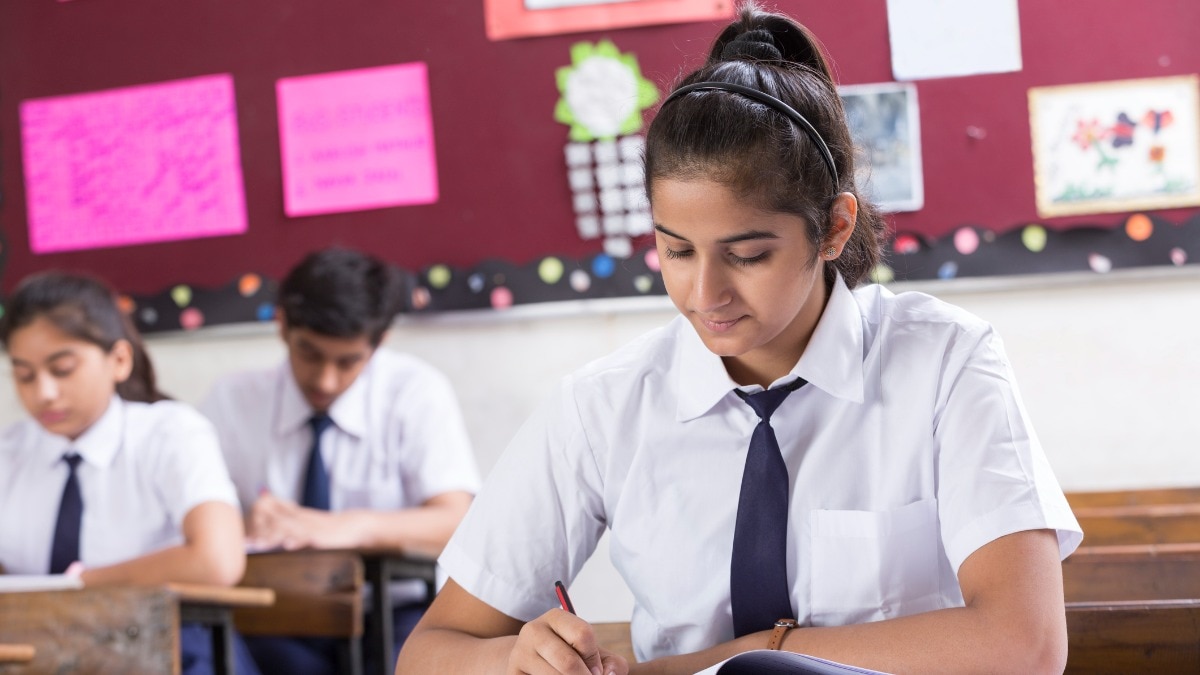
The Supreme Court has directed that students currently studying in Class 6 under the CBSE board be granted the same exemption from the mandatory three-language policy as students of Classes 7, 8 and 9.
The direction came after the Centre told the court that it was not inclined to exempt Class 6 students from the policy this year. The Centre also submitted that nearly 99 per cent of CBSE schools had adopted the third-language policy and had the necessary facilities, with only around 1.2 per cent of schools affected.
The court, however, said Class 6 students should have the same “comfort” that had been extended to students of Class 7 and directed that the policy be implemented for them from April 1, 2027.SC ASKS CLASS 6 STUDENTS TO BE GIVEN SAME EXEMPTION
The Supreme Court said the present Class 6 batch should be given the same exemption as students of Class 7. It also said the larger issue concerning the mandatory language requirement would be considered by the court.
The Solicitor General, Tushar Mehta, told the court that the government was not inclined to exempt Class 6 students from the policy from this year.
“We had detailed discussions. We are not inclined to exempt Class 6 from this year onwards. They should pursue it from this year itself,” he said.
The Centre also told the court that out of around 2,800 schools, the latest Class 6 data showed that only 1.2 per cent of schools were affected. The Supreme Court, however, directed that the students currently in Class 6 be given the same exemption as Class 7 students.
“The Solicitor General of India has submitted that about 99% of the schools have adopted the third-language policy and have been provided the necessary facilities, and only about 1.2% of the schools have not.
“In light of this, we direct that students of Class 6, like the students of Class 7, may be granted the same exemption as has been granted to students of Class 7,” the order stated.COURT FLAGS CONCERNS OVER SUDDEN LANGUAGE CHANGE
During the hearing, the court raised concerns about introducing the new language framework midway for students who had already chosen their languages.
CJI Surya Kant suggested that a committee of senior officers could reach out to petitioner schools and understand the difficulties they were facing.
“Why don't you do one thing? Appoint a committee of very responsible senior officers. Let the committee reach out to these petitioner schools, or the petitioners, and find out the issues,” he said.
Senior Advocate Gopal Sankaranarayanan, appearing for the parents, opposed the suggestion for another committee and said the issue needed a decision.
“We don't think we should have any more committees because that does not help. A committee does not help at all. Let there be a decision one way or the other,” he said.
He told the court that students who had been studying particular subjects and languages from Class 4 were now being asked to switch languages.PARENTS FLAG LACK OF PHYSICAL TEXTBOOKS
The lawyers appearing for the parents told the Supreme Court that the sudden change in the mandatory language requirement was affecting students' education.
They also raised concerns over the availability of textbooks, saying that despite the Centre's affidavit, the books were not available online earlier and that the textbooks were still not physically available to students.
Sankaranarayanan said students at the petitioner's school, DPS, had been studying Spanish since Class 4. He said there were six sections for Spanish, with around 50 students in each section, and that these students had now been moved to Sanskrit.
“We are not going into the merits of Sanskrit versus Spanish or German. The point is that even the NEP says that a language will not be imposed. It has to be consistent with the constitutional provisions,” he said.
He also questioned the classification of English as a non-native language under the new framework.
“English is the language in which the Constitution is written, proceedings in courts take place in English, and these are English-medium schools. How does English suddenly go into the bracket of an optional or foreign language?” he said.COURT SAYS STUDENTS SHOULD HAVE COMFORT
Justice Joymalya Bagchi said the court did not want students to face additional difficulty because of the change.
“I do not doubt the intelligence of Class 6 students. There are a limited number of students. They will adapt,” the Solicitor General said.
Justice Bagchi responded, “That is what we don't want. We want comfort, not difficulty. We do not want to keep challenging them.”
The Solicitor General agreed, saying, “Comfort is the right word.”
Justice Bagchi then said the court was not putting an interdict on CBSE, subject to examination of the larger issue.
“The students who are presently in Class 6, let them have the same comfort that has been given to the students of Class 7. Implement it from April 1, 2027. That is all that we are saying,” he said.
The Solicitor General maintained that the books were available, while the parents' lawyer said they were available only online and that students did not have physical copies.
The Supreme Court has posted the matter after six weeks. It directed that the counter-affidavit be filed within four weeks, followed by the rejoinder within two weeks.- EndsREAD | CBSE 3-language policy for Class 9: Centre seeks a week to work on SC suggestions
Aneesha Mathur is a Special Correspondent for India Today where she puts her LLB degree to use covering Legal issues and cases in the Supreme Court of India, Delhi High court and other courts/tribunals.
Aneesha joined India Today in October 2018. After graduating from St Stephen's College and Faculty of law,Delhi University, she spent the formative years of her career in print Media.
Her interest in journalism stems from experience while interning with Legal services and Juvenile justice board as a law student, where she learnt the importance of ensuring that accurate information reaches the world, and that stories about individual experiences and statistics that show a "bigger picture" must supplement each other so other people can see what the large impact of a small thing can be. When not working or thinking about the law and it's state, Aneesha hides from reality in fantasy novels, rom-coms and food.