Supreme Court restores Trump administration’s mass voter verification database
Want to bookmark your favourite articles and stories to read or reference later? Start your Independent Membership today.
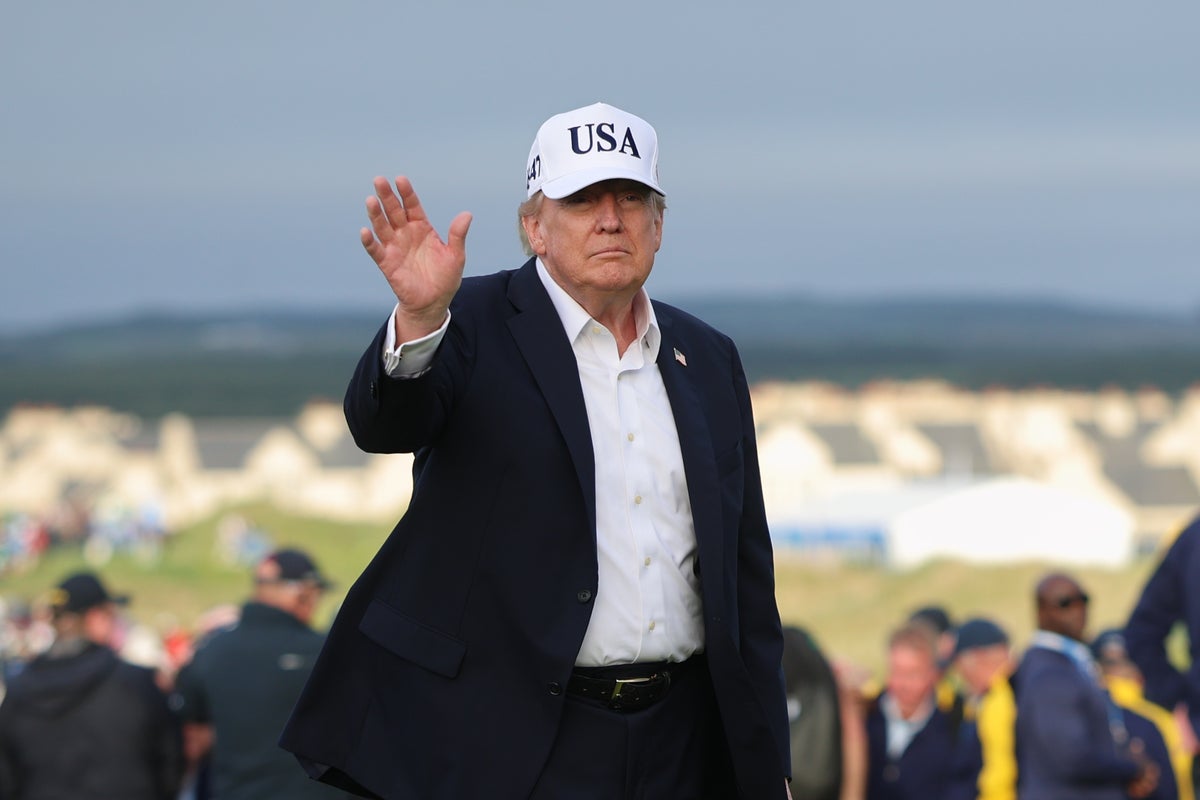
The Supreme Court has temporarily unblocked a controversial federal voter database ahead of November's midterms, granting President Donald Trump a temporary legal victory in his push against noncitizen voting.
The court’s three liberal justices issued a public dissent against the decision.
The emergency order permits state officials, for the time being, to access the Department of Homeland Security’s Systematic Alien Verification for Entitlements program, known as SAVE, to check the eligibility of individuals on their voter rolls.
Participation in the SAVE initiative remains voluntary for states.
Its immediate effect on the coming midterms is likely limited because federal law prohibits states from conducting systematic purges of voter rolls within 90 days of an election, according to David Becker, an election law expert who leads the Center for Election Innovation and Research.
Becker noted that since participation is optional and DHS acknowledges its data is imperfect, "states may find this to be a useful tool used along with other tools to keep their lists up-to-date."
Friday's directive puts on hold a June decision by U.S. District Court Judge Sparkle L. Sooknanan, who had declared the Republican administration’s expanded version of SAVE illegal.
She had suspended access to the database, ruling that it infringed on privacy rights and presented a substantial risk of incorrectly disenfranchising eligible voters.
A federal appeals court had allowed her ruling to stand.
However, the Supreme Court majority concluded that a 1996 statute explicitly authorizes DHS to collect immigration and citizenship records from federal agencies, adding that the federal government is under "an obligation to respond" when states request citizenship verification.
"The order below prevents the Federal Government from using the program it believes is best suited to the task," the majority stated in an unsigned order.
Justice Ketanji Brown Jackson authored the dissent, joined by Justices Elena Kagan and Sonia Sotomayor.
She highlighted that the database has long been understood to fall under federal privacy laws and warned of significant risks that valid voter registrations could be improperly revoked.
"The harm caused by burdening or disenfranchising even a few lawful voters outweighs the nonexistent harm that the Government experiences when it is prevented from taking an action that it likely lacks the authority to take," Jackson wrote.
Legal representatives for the plaintiffs characterized the decision as "profoundly disappointing," warning that it leaves "millions of Americans at risk of being unlawfully targeted by the administration’s unreliable voter purge database" ahead of the midterms.
"However, this case is not over," the group declared in a statement. "The D.C. district court ruled that the expanded SAVE program violated multiple laws. We will be doing everything in our power to protect Americans’ voting and privacy rights by ensuring that the district court decision stands."
The White House did not immediately reply to a request for comment.
Created under immigration law to help state and local entities restrict government benefits to noncitizens, the SAVE program's search capabilities were broadened by the Trump administration last year.
Since that expansion, at least 67 million voter records have been scanned, raising concerns among critics about accidental purges of legal voters.
Errors have already been documented. Officials in Travis County, Texas, reported reviewing 97 voters flagged as noncitizens by SAVE, discovering that between 10% and 21% were actually U.S. citizens.
The county asked the Supreme Court to reject the administration's appeal, whereas the state of Texas submitted a brief supporting the database.
Despite the injunction against SAVE over recent months, court filings reveal the administration continued utilizing Social Security Administration records "in certain cases to verify information and help determine whether illegal voting may have occurred."
In August, DHS launched its own inquiry to identify noncitizens on state voter lists.
A federal whistleblower statement alleged the initiative was hurried, prone to errors, and potentially unlawful, though DHS defended its actions as being conducted "diligently and professionally."
The effort to establish a centralized voter database forms part of broader measures taken during Trump's second term to reshape federal election administration.
Most attempts have been blocked by lower courts, as the Constitution delegates election regulation to the states and Congress rather than the president.
In mid-September, the Supreme Court turned down a separate attempt by Trump to restrict mail-in voting procedures prior to the midterms.
Research shows that noncitizen voting, which is already illegal and carries felony penalties including deportation, is exceptionally rare. Nevertheless, Trump has remained fixated on the claim that large numbers of noncitizens are casting ballots in American elections.