Supreme Court Ruling on Mail Ballot Changes: What To Know - Newsweek
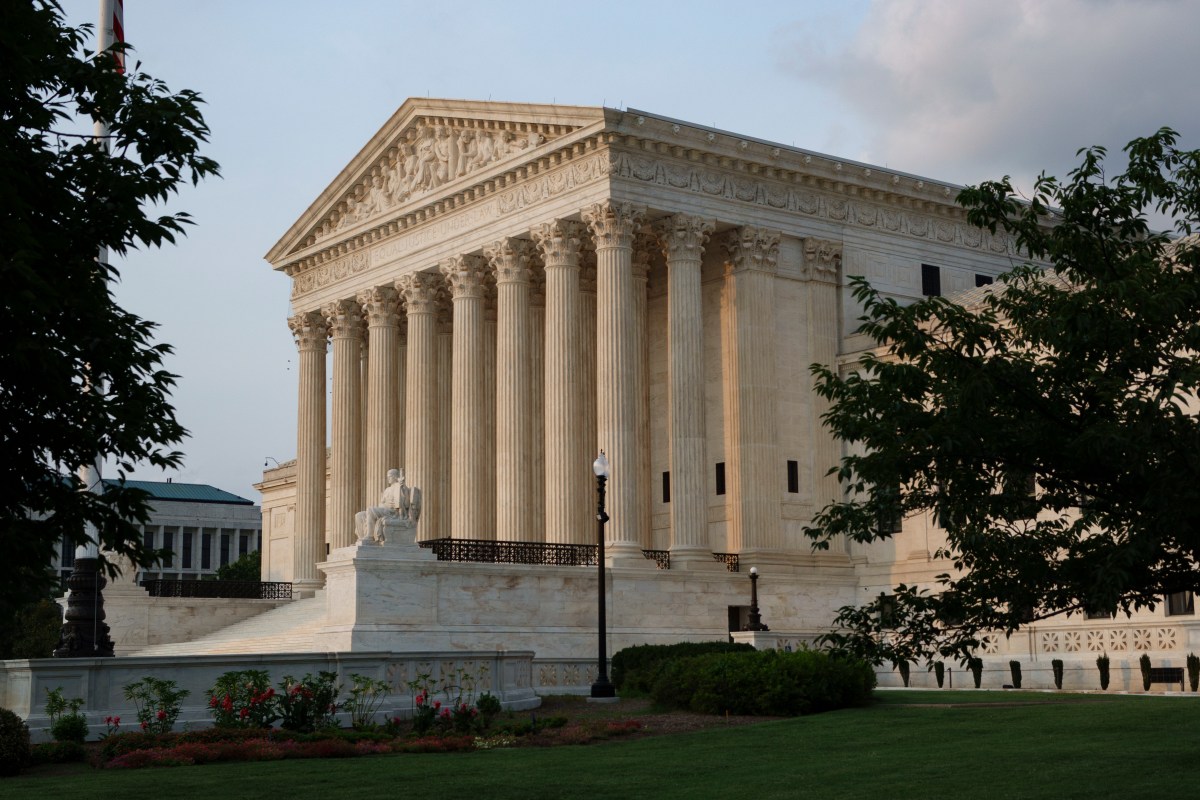
The U.S. Supreme Court is set to weigh in on whether President Donald Trump's administration can implement new mail ballot requirements ahead of November's midterm elections.
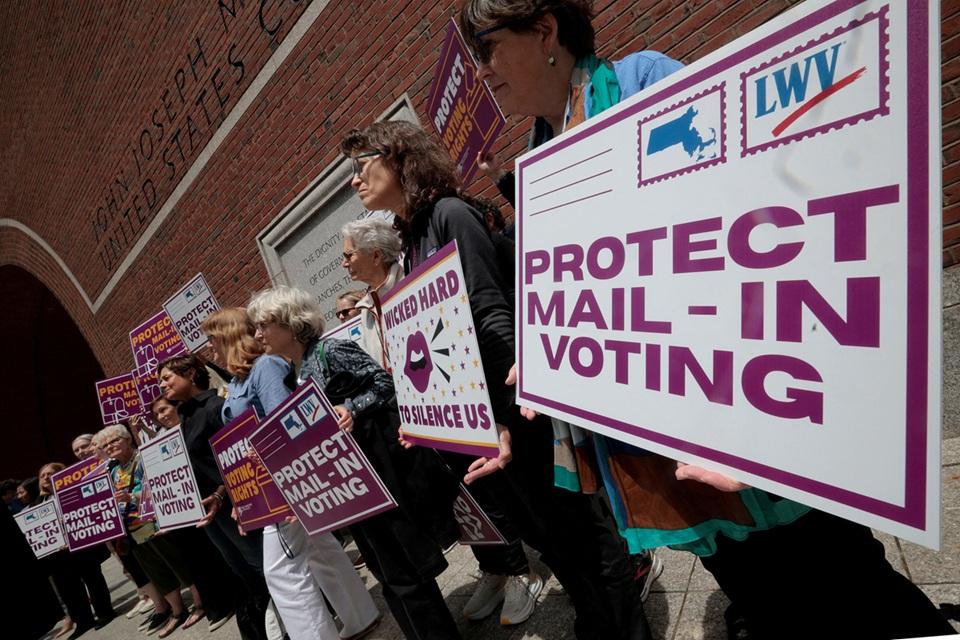
The High Court is considering the Trump administration's appeal of an order by U.S. District Court Judge Indira Talwani in Boston that prohibits the U.S. Postal Service from enforcing its new rule on mail voting before the midterms. After the USPS finalized the rule, states and voting-rights groups sued to challenge the new requirements.
On Sunday, a federal judge appointed by Trump also ordered that the USPS not implement the president's executive order. The High Court faces pressure to act quickly as ballots continue to reach voters nationwide and the justices' decision will determine not only how mail ballots are handled as voting in the midterms gets underway but whether one of the administration's signature election-security initiatives survives.
The USPS rule outlines how the agency will support the executive order that Trump signed in March, which directs federal agencies to create lists of eligible voters and orders the USPS to deliver mail ballots only to people on the lists. The rule requires all ballot envelope designs to be preapproved by the USPS and that states submit a list of voters to an online portal that has yet to be activated.
Experts have told Newsweek that it is likely already too late for the changes to be implemented in time for November's elections. Mail ballots are already being sent out in some states, and others are preparing to distribute them in the coming days.
Newsweek has contacted the plaintiffs, White House and USPS for further comment via email.
Almost a third of voters cast mail ballots, so the outcome of the legal fight could have a significant impact on voting practices, particularly in the states where mail voting is universal and popular.
Supporters of the Trump administration's approach argue that stronger safeguards are needed to maintain confidence in elections, raising concerns about voter-roll accuracy, ballot verification procedures and the possibility that ballots could be issued to ineligible voters.
Critics, however, argue that the approach risks confusion among the electorate and may disenfranchise eligible voters ahead of the midterms, with control of Congress at stake and Republicans fighting to preserve their slim majorities in the House and Senate.
The fate of the USPS rule is set to be decided soon by the Supreme Court, which has a 6-3 conservative majority.
The High Court is not being asked to decide the legality of Trump's executive order, but to lift Talwani's injunction blocking the USPS's plan while the case proceeds through the courts.
In an application to Supreme Court Justice Ketanji Brown Jackson on September 6, U.S. Solicitor General D. John Sauer wrote that Talwani's order nullifies the USPS's efforts to "address the risk that the federal mails will be used to perpetrate voter fraud … a particularly pernicious species of fraud that dilutes the votes of lawful voters, prevents election results from reflecting the will of the American people, and undermines 'public confidence in the integrity of the electoral process.'"
In a response filed on September 9, attorneys for California and other states who sued over the USPS rule argued that the agency's "unprecedented experiment with our Nation's most cherished franchise—the right to vote—is unlawful."
"Given the new rule's serious legal defects and threatened interference with the ability of millions of people to vote, the request for a stay should be denied," it said.
In August, the High Court lifted an earlier injunction that Talwani had issued, which had blocked the USPS from moving forward with the rule before it was finalized. The court did not decide the legality of Trump's order, only that the lawsuits against it had been filed prematurely as the USPS had not yet issued the rule on how it would implement Trump's executive order.
"The Court's disposition of this application does not mean that any measure taken by the Government to implement the Order will necessarily be lawful," the majority wrote in an unsigned opinion. "On that score, time will tell."
The court's three liberal justices dissented, with Jackson saying the ruling "needlessly injects chaos and uncertainty into the upcoming midterm elections."
White House spokesperson Lauren Bis previously told Newsweek that the USPS's proposals were "commonsense measures that protect the security of mail-in ballots," and that the administration would continue to work to implement them to boost "the safety and security of our elections."
While the president has long criticized mail voting, saying it leads to fraud despite evidence to the contrary, it has not stopped his own repeated use of the voting method.
The Trump administration had asked the Supreme Court to weigh in before the Boston-based 1st U.S. Circuit Court of Appeals issued a decision in the administration's appeal of Talwani's injunction.
On Thursday, the panel of three judges nominated by former President Joe Biden, a Democrat, refused to lift the injunction. The panel agreed with plaintiffs that the president does not have the power to regulate states' election policy.
In its order, the panel wrote that the Trump administration had done little to dispel arguments by many election officials that the changes would bring "chaos and widespread disenfranchisement."
On September 4, Talwani, who was nominated by former President Barack Obama, also a Democrat, issued a preliminary injunction against the USPS rule, replacing a temporary restraining order she had issued earlier. Election officials are "unable to pivot this late in the election cycle," nearly guaranteeing "significant disenfranchisement for eligible voters," she wrote.
The Trump administration appealed that decision to the Supreme Court.
On Sunday, a second federal judge, one appointed by Trump, issued a similar hold on the USPS rule in a separate case brought by civil rights groups.
"Plaintiffs have demonstrated that, absent an injunction, there is an increased risk that a significant number of otherwise appropriate absentee or mail-in ballots will ultimately not be counted in the upcoming elections," U.S. District Judge Carl J. Nichols in Washington, D.C., wrote in an order issuing a preliminary injunction. "The public has a strong interest in ensuring that doesn't happen."
The judge wrote that key portions of the USPS rule "exceed any conception of the outer bounds" of the agency's authority.
"Nothing in the Postal Reorganization Act authorizes the Postal Service to impose new election procedures on state election officials, to create a data collection system for mail-in and absentee voters, or to refuse the transmission of lawful mail because it fails to meet these data collection requirements," Nichols wrote.
He added that the government has not cited any evidence that there "will be significant fraud in the upcoming elections in the event the Court enters preliminary injunctive relief."
Michael Morley, a professor of law and the faculty director of the Election Law Center at Florida State University, told Newsweek on Monday that regardless of the outcome in the courts, it appears unlikely that the USPS will be able to implement any changes before November's elections.
"Regardless of what federal courts, and particularly the Supreme Court, ultimately conclude concerning the validity of the executive order and new Postal Service rules, it is probably too late to implement them on a mandatory, national basis this election cycle," he said.
The USPS's new portal "to which states must upload lists of voters receiving mail ballots is not yet fully functional," he said.
"And attempting to require election officials to change their procedures for printing ballot envelopes and distributing absentee ballots in the middle of an ongoing election poses substantial risks of creating new mistakes or irregularities and delaying ballot distribution," Morley continued.
David Schultz, a professor of political science at Hamline University who has written extensively on election law, told Newsweek that with each passing day, it "should be less and less likely" that the Supreme Court will lift the injunction.
"The reason for that is that we are literally starting early voting in many places across the country, and lifting the ban to allow for the executive order to go into effect would cause significant confusion and be nearly impossible to implement," he said.
"The fact that the court has not acted so far suggests it will not," Schultz added. "Also, all prevailing law and the Constitution indicates that the president will lose."
Still, he said it is unclear how the High Court will rule, given its conservative majority.
"Current law and readings of the Constitution suggest the president should lose," Schultz said, "but this is a 6-3 or 5-4 court favoring the president."
Contact Newsweek editors on this story: Matthew Cannon and Shakeema Edwards.