
Supreme Court Takes Up Major Challenge to Veterans’ Benefits Laws - Newsweek
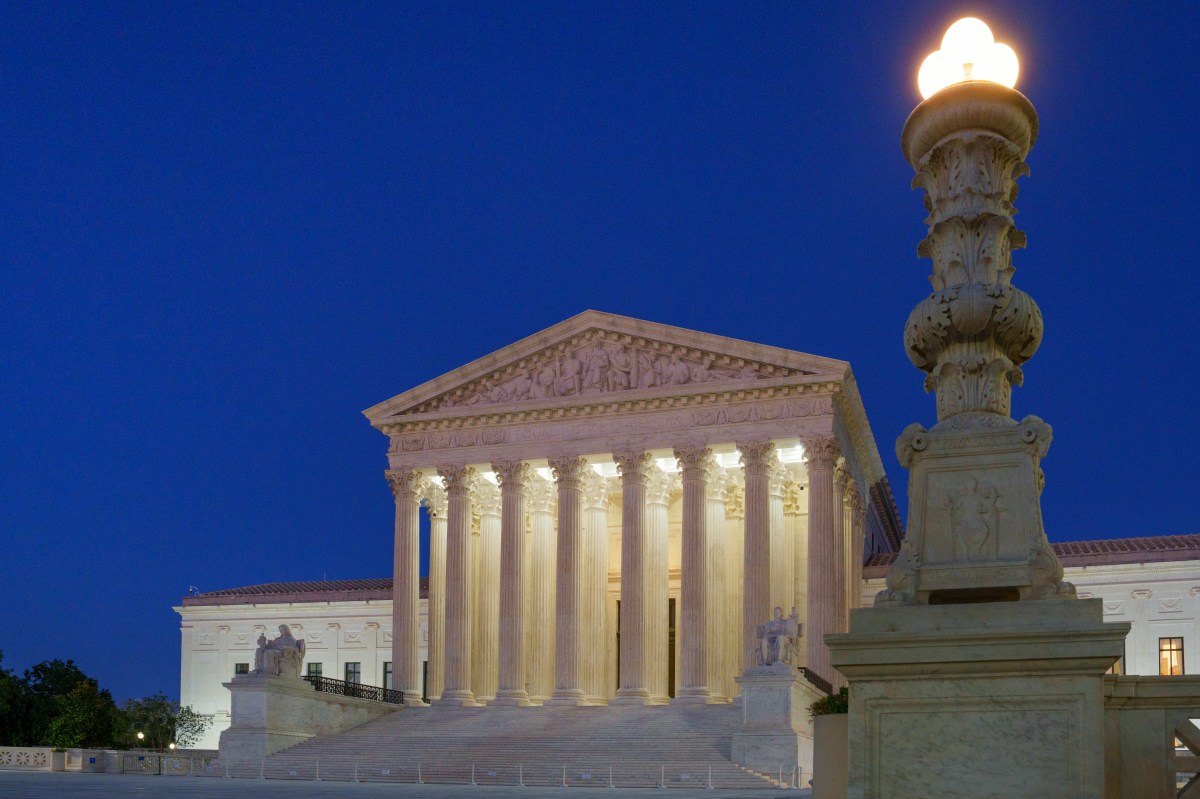
The United States Supreme Court is set to hear a case that could determine whether veterans who believe federal benefits laws are unconstitutional can sue directly in federal district court or have to go through the Veterans Affairs specialized review system.
The case, Johnson v. United States Congress, stems from a Florida veteran's challenge to a federal law that reduces disability benefits for incarcerated veterans.
At stake is a broader question with implications far beyond one veteran's benefits claim, with a ruling potentially affecting all veterans with similar challenges to their payment reductions. The government has maintained that there is a system already in place to challenge decisions, which the plaintiff did not use.
"Although this case seems very technical and a little wonky, it is important because it speaks to veterans' fundamental right to challenge the constitutionality of the law—a process that can only happen through the federal courts," Alison Weir, executive director of Connecticut Veterans Legal Center and U.S. Air Force Veteran, told Newsweek.
"We do not believe that Congress intended to strip this right from veterans when they passed the Veterans’ Judicial Review Act {VJRA] in 1988 and hope that SCOTUS rules appropriately and affirm their holding in Johnson v. Robison [in 1974]."
Newsweek reached out to Johnson's attorney and the U.S. Department of Justice for comment Friday morning and is awaiting responses.
Floyd D. Johnson served in the U.S. Army as an infantryman between 1983 and 1985. Nearly 30 years later, in 2013, he was convicted of several state felonies in Florida and sentenced to 40 years in prison.
While in prison, Johnson was diagnosed with post-traumatic stress disorder linked to his military service and applied for disability benefits through the Department of Veterans Affairs. Initially he received a 70 percent rate, which was then upped to 80 percent before the VA cut his payments down to 10 percent because of a benefits cap that limits payments to veterans incarcerated for more than 60 days.
Johnson filed a lawsuit himself, arguing the benefits cap violates the Constitution, but a magistrate said the District Court should dismiss the claim, which it did in 2022. In August 2025, the 11th Circuit Court of Appeals also turned down his arguments, in part because he had filed the claim against Congress and not the VA.
The court also noted that the way to challenge benefits decisions was through the VA's own system, then the Court of Appeals for Veterans Claims, and then the federal Court of Appeals circuit, as laid out in the VJRA.
Part of Johnson's argument comes from a 1974 Supreme Court ruling, Johnson v. Robison, in which the justices voted 8-1 to say that process did not apply to constitutional challenges to laws around veteran's benefits.
"Some people read Johnson v. Robison as reflecting a more general reluctance on the part of the Supreme Court to allow Congress to preclude judicial review of constitutional questions," Kristin E. Hickman, McKnight Presidential Professor in Law at the University of Minnesota Law School, told Newsweek.
"To offer another case illustrating this last point, in Webster v. Doe, 1988, which concerned a different statute (concerning employment decisions at the CIA), the Court interpreted the relevant statute as cutting off judicial review of statutory claims raised by Doe but held similarly that there was no evidence Congress intended the statute to preclude Doe's constitutional claims."
Johnson asked the Supreme Court to intervene in December 2025, using the Robison case as a core argument. The justices agreed to hear the case in April.
The court simply granted the appeal in April without a reason given, but the conflict around what the VJRA says and the previous Supreme Court case over 50 years ago are likely playing a role, Hickman said.
"So the lower federal courts have divided over whether or to what extent the Veterans' Judicial Review Act precludes aspiring litigants from going straight to federal district court with their challenges to the statute's constitutionality, and correspondingly, whether or to what extent Johnson v. Robison controls the case at bar or remains good law," she said. "1974 was a long time ago."
Johnson's argument is that the 1974 decision recognized that the district courts have authority to hear constitutional challenges, and that Congress never clearly eliminated that power when it enacted the VJRA.
For the government's part, it has argued that the VJRA created an exclusive review system, meaning veterans challenging benefits-related laws should use that process and then pursue claims through specialized courts.
The Supreme Court's decision could determine whether veterans have a direct path to federal courthouse doors when challenging the constitutionality of federal benefits laws.
If Johnson wins the case, veterans may be able to file certain constitutional challenges directly in federal district court.
Advocacy groups have said this would provide an important safeguard when veterans believe Congress itself enacted an unconstitutional law. Briefs filed by groups in support of Johnson include the argument that the VJRA was not created to prevent longstanding abilities to challenge laws in court.
Military-Veterans Advocacy said in its amicus briefL "The purpose of the VJRA was to expand, not constrict, avenues for judicial review."
If the government wins the case, it could mean constitutional challenges continue to be funneled through the VA's review system, meaning veterans have to wait for administrative appeals to be processed before they can head to the courts.
The Supreme Court is scheduled to hear oral arguments on the case Monday, with a decision expected later in the court's current 2026/2027 term.
