Supreme Court to hear pleas to suspend Gyanesh Kumar over unilateral decisions
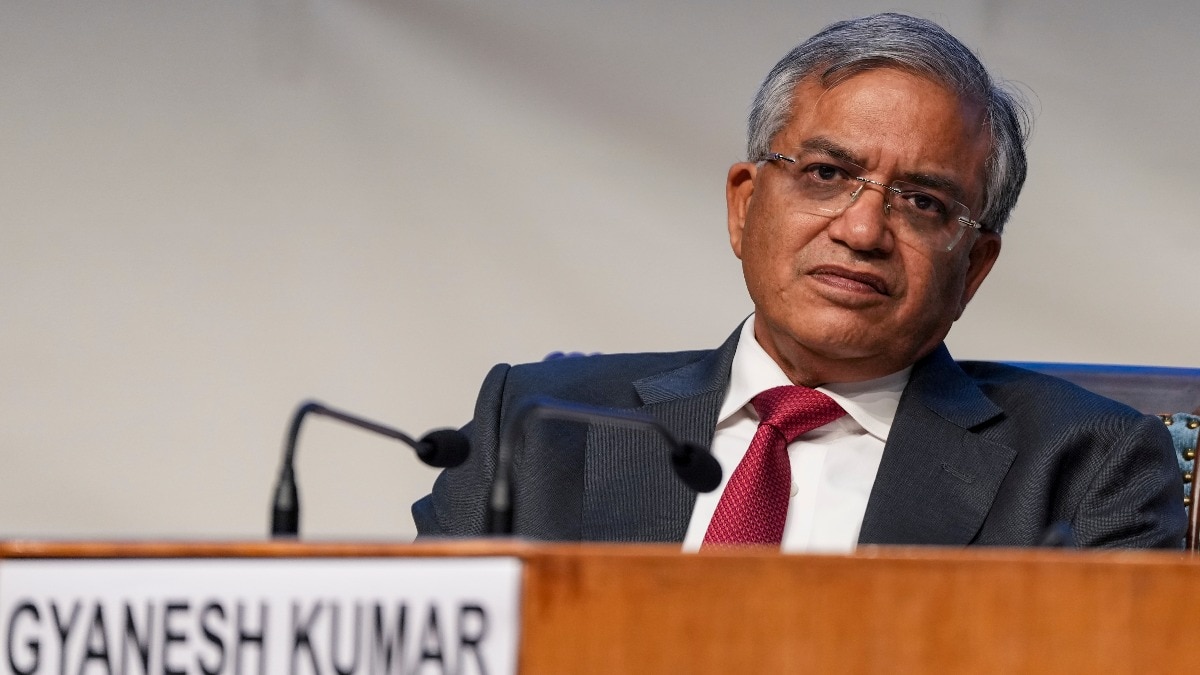
The Supreme Court is scheduled to hear today a batch of pleas seeking the suspension of Chief Election Commissioner (CEC) Gyanesh Kumar, with the hearing coming amid intensified protests demanding his resignation over irregularities in the electoral process.
The petitions question decisions taken by the Election Commission under the CEC's leadership, alleging that a series of decisions, guidelines and software changes were made without the approval of the two other Election Commissioners.
The pleas also ask the court to examine whether Kumar exercised powers that belong to the Election Commission as a whole, allegedly in violation of the requirement of collective decision-making.
One petition has sought criminal proceedings against the CEC and other officials, while another has asked that decisions taken without the concurrence of the full commission be declared invalid.
A bench of Chief Justice Surya Kant and Justices Joymala Bagchi and V Mohana is scheduled to hear the pleas filed by Rakesh Kumar Singh and advocate Shailendra Mani Tripathi.
Singh, a resident of Patna, has asked the court to determine whether Kumar has been individually exercising powers that legally belong to the full Election Commission and, if so, declare those actions unauthorised and take appropriate legal action.
The petition says Kumar should be suspended until the case is finally heard to preserve the "multi-member character of the Election Commission".
The plea comes against the backdrop of an Indian Express report which claimed that election commissioners Sandhu and Joshi had, on record, objected at least 14 times in the last 10 months to decisions and orders on the Special Intensive Revision (SIR) of electoral rolls that were issued without their knowledge or recommendation.
Responding to the criticism, the Election Commission said differing views and observations are a normal part of deliberations in any institution, and that all its orders carry full legal sanction and follow established statutory procedures.
The petition has made the Union Law Ministry, the Election Commission, Kumar, Sandhu, Joshi and senior poll panel official Maneesh Garg parties to the case.
Tripathi's plea, filed through advocate Chand Qureshi, alleges that the CEC's actions violate the statutory requirement of collective decision-making. It also seeks criminal proceedings against the CEC and other officials for alleged breach of official duty.
One of the main issues raised in the plea is the change to Form 6, used by people to register as voters. The petition alleges that details related to ancestry and a link with the previous Special Intensive Revision were introduced through the Election Commission's software without the statutory amendment required under the electoral rules.
According to the plea, the two election commissioners other than Kumar objected to the changes, saying the prescribed form could not be altered without following the statutory procedure.
The petition further seeks that all decisions, guidelines, directives and software modifications "initiated, approved, or implemented under Gyanesh Kumar without full commission concurrence or contrary to the majority opinion of the Election Commissioners" be declared unconstitutional, ultra vires and void ab initio.
It also raises concerns over the handling of electoral roll revisions in Goa and West Bengal.
In Goa, the plea alleges that the software did not have the feature to restore 97 eligible electors despite directions for their verification.
In West Bengal, the petitioner has claimed that more than 16.10 lakh appeals were filed in the Election Commission's name against voters whose names had been restored by judicial officers.
The plea says the other two election commissioners and the West Bengal chief electoral officer were unaware of these appeals and had not authorised them.- Ends