Supreme Court Update: 3 Major Cases Justices to Decide in New Term - Newsweek
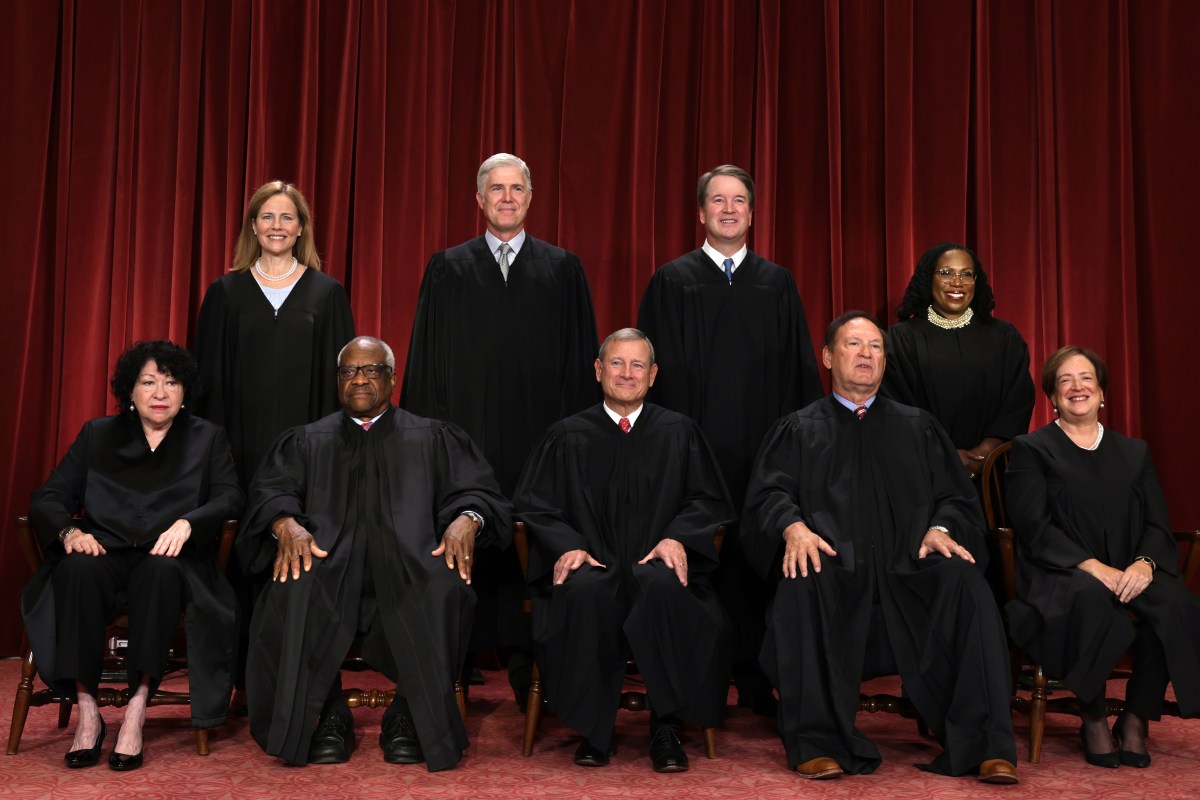
The U.S. Supreme Court will begin its new term this week, and the justices are going to be deciding cases with critical implications for the Second Amendment, voting rights and climate change lawsuits.
These rulings are likely to shape key legal questions and touch on some of the most contentious political battles over the coming year. The term comes as the justices confront dwindling trust in the court, as some polls suggest Americans find it to be increasingly political.
In the most recent term, the Supreme Court dealt with important legal questions related to President Donald Trump’s agenda including his tariffs and birthright citizenship, while also deciding on issues including voting rights and transgender athletes.
The court has already decided to hear about 29 cases in its upcoming term, but additional cases are expected to be added in the coming weeks and months, so the docket is far from finished.
Here is a look at three of the most important cases the court will decide. Newsweek reached out to petitioners and respondents in each case for comment via email.
The court is taking on a major voting rights case in Republican National Committee v. Mi Familia Vota.
The case focuses on a challenge to Arizona election laws that require anyone registering to vote to provide “satisfactory evidence of citizenship.” It also requires election officials to remove anyone from the voter rolls if they obtain information that person is not a citizen.
The Ninth Circuit Court of Appeals previously held that the federal law preempts those state laws, and petitioners from the Republican National Committee (RNC) are seeking relief from the Supreme Court, arguing the Ninth Circuit erred in its previous ruling.
The court was asked to address two issues—whether the National Voter Registration Act or a federal consent decree “prohibit Arizona from requiring voter-registration applicants to produce” such evidence, and whether the act prohibits Arizona “from implementing a program within 90 days of a federal election to cancel the registrations of voters who are not U.S. citizens.”
The court’s conservative majority is likely to “continue to support policies that make it harder to vote and will rule in favor of the RNC,” Paul Collins, professor of legal studies and political science at the University of Massachusetts Amherst, told Newsweek.
“The court’s conservatives have decided a slew of cases that allow governments to create obstacles to voting," he added. "This decision will likely continue on that path, undermining the American democratic experiment.”
The court will also address a major Second Amendment issue in Viramontes v. Cook County. In this case, it will decide whether the 2nd and 14th Amendments guarantee the right of an individual to possess AR-15s and other similar semiautomatic rifles.
The case was brought by Cutberto Viramontes, Christopher Khaya, the Firearms Policy Coalition, Inc., and the Second Amendment Foundation, challenging the Cook County, Illinois, government over a ban on AR-15s.
The petitioners pointed to a quote by conservative Justice Brett Kavanaugh, who in a prior opinion wrote that there is a “strong argument that AR-15s are in ‘common use’ by law-abiding citizens and therefore are protected by the Second Amendment.”
“The AR-15 platform rifle is the modern descendant of the rifles that were borne by the militiamen of the Revolution and the pioneers who struck out West in search of a better life. The question can be fairly asked, if the Second Amendment does not protect it, what could it possibly protect?” the petitioners wrote in a filing.
The Cook County State’s Attorney’s Office wrote in a statement to Newsweek that they “look forward to vigorously defending this lawful ordinance before this nation's highest court.”
“Assault weapons are instruments of war, designed to inflict the maximum amount of carnage and destruction, and they have no place in our communities. Countless victims have already endured the devastating impact of gun violence,” the statement reads.
Collins said he believes the court appears poised to strike down the ban on AR-15s.
“The court’s conservative majority has developed a confusing approach to the Second Amendment that is notoriously difficult to apply legally, yet consistently favors gun-rights advocates,” he said.
Another high-impact case is Suncor Energy v. Boulder County.
The case centers around a lawsuit from Boulder, Colorado, against energy companies, including Suncor Energy (U.S.A.) Inc., alleging that fossil-fuel production contributing to climate change caused harm to their local community. This includes infrastructure damage and higher costs caused by extreme weather including floods, droughts and wildfires.
They argue that these energy companies knew about the risks associated with their products but misled the public about those dangers.
The court will be deciding whether federal law precludes state-law claims seeking relief for injuries allegedly caused by the impact of greenhouse-gas emissions on the climate, as well as whether the court has jurisdiction to hear the case.
Arguments in this case are scheduled for October 5. Conservative Justice Samuel Alito has recused himself from the case.
Alito's recusal follows months of criticism from ethics watchdogs and climate advocacy groups.
According to Reuters, Alito recused himself from an earlier stage of the same litigation because one of the companies involved, ConocoPhillips, was among the individual parties before the court and he owned stock in the company.
A key question in this case is whether Alito’s recusal will impact the outcome, according to Collins.
“I’m skeptical that it will as I see the court’s five remaining conservatives supporting the energy companies. If there is a tie, however, the energy companies will lose,” he said, adding that the stakes in this case are “enormous.”
“If the court rules in favor of the energy companies as expected, it will shield them from accountability for the local costs of climate change,” Collins said.
The ruling could impact dozens of other cases against energy companies from other municipalities seeking compensation for the costs of addressing climate change. Oil companies have argued these claims are preempted by federal law. The justices, however, will not be asked to decide whether energy companies or fossil fuel emissions are contributing to climate change.
A Gallup poll last week showed low trust in the Supreme Court. Only 34 percent of Americans said they approve, while 61 percent disapprove, of the High Court, according to the poll.
Views of the court fall largely on partisan lines. While 65 percent of Republicans approve of the court, only 12 percent of Democrats and 31 percent of independents approve, according to the poll. It surveyed 1,000 adults from September 1 to 17, 2026 and had a margin of error of plus or minus 4 percentage points.
Collins said these cases give the conservative justices “the opportunity to course-correct.”
“The Supreme Court is a historically unpopular institution and is increasingly viewed by Americans as overly partisan. It is dealing with some meaty issues this term, including gun violence, voting rights, and climate change,” he said.
Some justices have acknowledged declining trust.
Supreme Court Justice Ketanji Brown Jackson, a liberal, questioned its use of the emergency docket, during recent remarks at the University of the District of Columbia’s law school, The Hill reported.
Unlike in routine cases, which can take months to be looked at by the justices, the court does not hear oral arguments in emergency-docket cases and renders quick decisions, often without opinions.
Jackson has been critical of the court’s use of what critics call the “shadow docket.”
“Why is it that one party should get a fast pass to the Supreme Court of the United States, when so many other parties are queued up, waiting patiently for the court’s attention?” she said, according to The Hill.
In May, Supreme Court Justice John Roberts, a conservative, said during an event that the court should be careful in how it overrules precedent.
“If you do it cavalierly, overrule precedent just because you think it’s wrong, then the whole system begins to suffer,” he said.
The Trump administration has used the court’s emergency docket to seek quick intervention from the justices in cases still playing out in lower courts. The High Court sided with the Trump administration in key decisions last year, often lifting orders issued by lower-court judges.
Last week, Trump criticized the Supreme Court over its ruling that Missouri cannot use a Republican-backed congressional map for the November midterms and instead must use the map drawn in 2022.
“The Supreme Court of the United States will just not let Missouri have an Election Victory. They continuously, three times now, overrule Judges who came to the correct decisions,” he wrote.
Earlier in September, he wrote on Truth Social that the court “has lacked the Courage to MAKE AMERICA GREAT AGAIN.”
“Over the last 6 months, with their faulty, political, and ridiculous decisions on TARIFFS and Birthright Citizenship, they have cost the United States of America Trillions of Dollars, and forever damaged the way people become Citizens of our great Country,” he wrote.
Newsweek’s reporters and editors used Martyn, our AI assistant, to produce this story. Learn more about Martyn here. Contact Newsweek editors for this story: Kate Nalepinski and Anthony Murray.