Surendra Koli spent 19 years in jail, escaped gallows. Now, found dead - The Indian Express
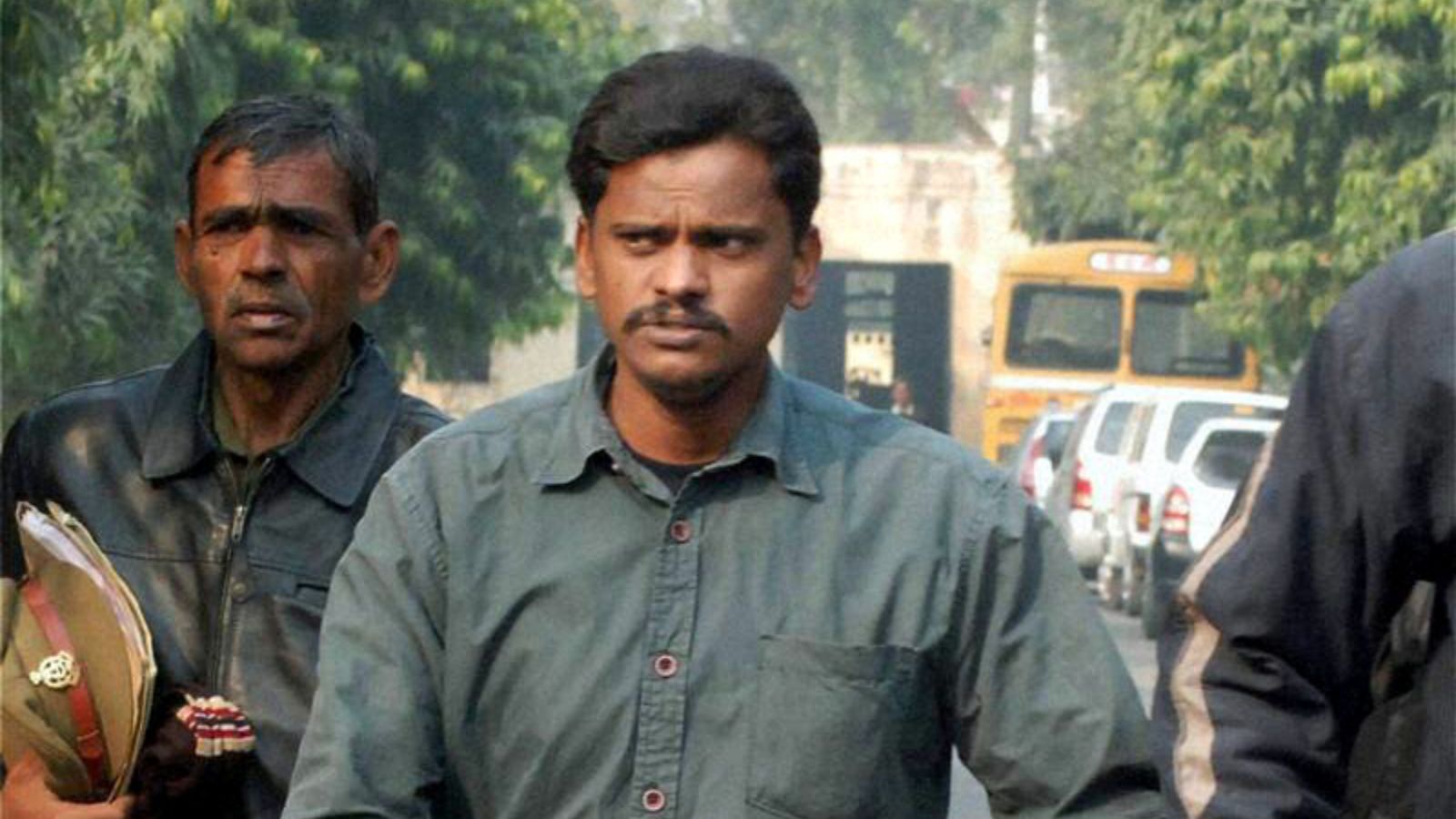
For a full two decades, Surendra Koli was a branded man. Then, on November 13, 2025, he walked to freedom – after the Supreme Court passed an order of acquittal in the last of the 13 cases against him.
The main accused in the gruesome Nithari killings of 2006 had defied 13 death sentences and escaped a near-certain date with the gallows.
On Friday (September 18), he was found hanging in the small tea stall that he ran outside Lal Mata temple in Haridwar, police said.
Koli was accused of being a “cannibal” who would allegedly lure children to his employer’s house in Nithari village in Noida, murder them, and “eat their flesh”. His actions were cited as evidence of the worst kind of human depravity during the trial.
But the allegations could never be proved. In one case after another, Koli was acquitted. And then, on November 11, 2025, the Supreme Court acquitted him in the thirteenth case, the last remaining case against him.
The court said the investigation had been “botched”, and represented a “manifest miscarriage of justice”. At 7.30 pm on November 13, 2025, Koli walked out of Kasna Jail in Greater Noida, clad in a blue shirt, black trousers, and a navy blue jacket.
His acquittal and freedom was the culmination of a decades-long legal battle that Koli’s defence team fought against considerable odds. This is the story of how he had finally walked free. The Indian Express had reported the major elements of this story last year.
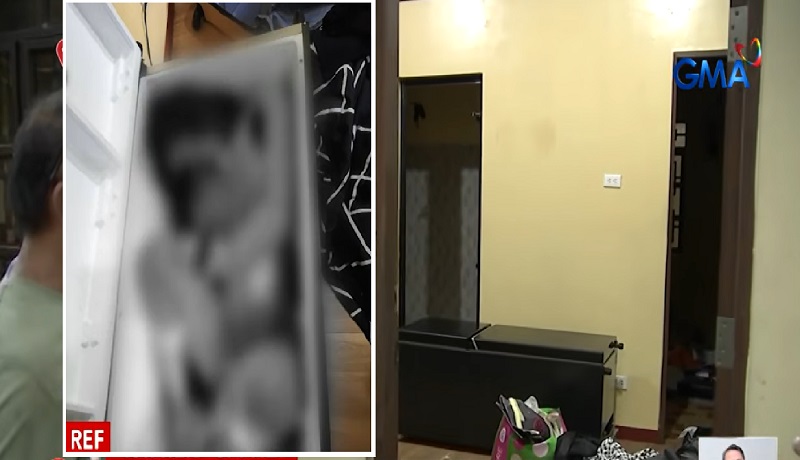
In December 2006, the skeletal remains of some children were fished out of a drain behind house number D-5 in Noida’s Sector 31, the home of a businessman named Moninder Singh Pandher.
As the authorities dredged through the drain, the horrors intensified – more and more remains were dug up. Ultimately, the remains of 19 bodies were recovered.
The bodies were identified as having belonged mostly to poor children who had gone missing from Nithari village nearby. Stories of necrophilia and cannibalism followed, and the media fed the frenzy of both horror and excitement among the public.
On December 29, 2006, Pandher and his domestic help, Koli, were arrested for the crime.
Koli was a Dalit from Mangru Khal village in Almora district of Uttarakhand, and had been working for Pandher since July 2004. He was not educated – he had dropped out of school due to poverty, and had come to Delhi to work as a labourer, leaving behind an ailing mother, a pregnant wife, and an infant daughter.
Police built their case against Koli on two main pillars: his detailed confession before a magistrate and the recovery of the bodies, allegedly on the basis of the disclosures that he made.
In his confession, which was leaked to the media even before his trial began, Koli provided a chillingly detailed account of his macabre crimes.
He said he had lured the girls into the bungalow, often with promises of work or of chocolates. Once they were inside, he would strangle them, sometimes using their own dupattas, until they were unconscious or dead. He would then dismember their bodies with a knife or axe, and cook and eat their flesh and parts of their bodies, according to the confession.
Whatever remained, he would dump in the gully behind the house and in the drain in front, he confessed.
In 2009, Koli was sentenced to death in the first of the 13 cases against him – the alleged murder of a 14-year-old girl, referred to as “Victim XYZ” in court records.
The Allahabad High Court upheld the sentence given by the trial court. In 2011, the Supreme Court dismissed Koli’s appeal, calling him a “serial killer” and deeming the case one of the “rarest of rare”.
The Uttar Pradesh Governor dismissed Koli’s mercy petitions in 2013, and the President rejected them in 2014. He filed a review petition against the Supreme Court’s 2011 decision, which the court dismissed in 2014.
It seemed that all doors were shut on Koli. The alleged murderer and cannibal was destined to hang from the neck till was dead.
In 2014, eight years after Koli’s arrest, Yug Chaudhry, a Mumbai-based senior advocate who specialises in death penalty litigation, came into the picture.
Along with his team of advocates Payoshi Roy and Siddhartha, and an Allahabad-based nun, Sister Sheeba Jose, Chaudhry took on a case that seemed legally hopeless.
Chaudhry told The Indian Express last year that he has a “visceral loathing for the death penalty”. But that was not the only reason he took up the case.
“I was interested in this case because it was based on utterly flimsy and fabricated evidence… A crime of gigantic proportions was being pinned on a domestic servant only because he would not have been able to defend himself,” Chaudhry said. His students, he said, were “always shocked that the courts could convict him on such flimsy evidence”.
When Chaudhry’s team first met him, Koli had become deeply distrustful of the legal aid system. The lawyer who had been assigned to him had joined with some other lawyers in beating him up when he was first presented in court in January 2007.
Since his arrest, Koli had been kept in solitary confinement. “This was wholly unconstitutional. Solitary confinement can only be levied through a judicial order or when the execution is absolutely imminent and the convict has no remedies left,” advocate Payoshi Roy, who now practises independently in Mumbai, said.
Isolated and facing certain death, Koli started learning the law inside his cell. “He didn’t have faith in the legal aid lawyers and understandably so,” Chaudhry said. “He started learning how to cross-examine witnesses on his own. He showed exceptional courage.”
On September 2, 2014, a Ghaziabad court issued Koli’s execution warrant. He was moved to Meerut jail, where he would be hanged. Koli, suspicious at the suddenness of the move, managed to contact Chaudhry.
What followed was a dramatic midnight intervention that saved Koli’s life with hours to spare.
On September 7, senior advocate Indira Jaising, who was helping out Chaudhry, got calls that Koli would be executed at 5.30 am the following morning. “The DG (Prisons) confirmed that the execution had been planned for 5-5.30 am the following morning, the hangman had been called and preparations were underway,” she recalled.
Jaising rushed to the residence of Supreme Court Justice H L Dattu and, waiting on the pavement outside, coordinated with the court registry. Soon, Justice Dattu sent for Justice Anil R Dave, and a two-judge bench was constituted at the judge’s residence.
At 1 am on September 8, just four hours before the scheduled hanging, the execution was temporarily stayed.
Jaising’s intervention was based on a Supreme Court judgment of September 2, 2014, which had held that all review petitions in death penalty cases must be heard in open court by a three-judge bench.
Koli had not been given this opportunity, Jaising argued. His review petition had been heard earlier that year by the judges in their chambers.
The court subsequently re-heard the review petition in open court. Till that time, the execution of the death warrant remained suspended.
The Supreme Court dismissed Koli’s review petition in an open hearing in October 2014. But a ray of hope came again in January 2015.
A bench of the Allahabad High Court, headed by then Chief Justice D Y Chandrachud (who would become Chief Justice of India in 2022), commuted Koli’s death sentence in the case of Victim XYZ to life imprisonment.
The court did not acquit him, but it found that an “inordinate and unexplained delay” of 2.6 years in the disposal of his mercy petitions by the state and central governments infringed upon his right to life under Article 21.
The court also held that Koli had been kept in unconstitutional solitary confinement since his conviction by the trial court in 2009. The judgment highlighted serious procedural lapses, including that the Governor’s office acted on the “manifestly erroneous” belief that it was bound by judicial findings.
“The 2015 judgment was very vital for our case,” Chaudhry told The Indian Express. “Had the death sentence not been commuted, Koli would have been executed and the truth would have remained buried forever.”
This victory, however, only applied to one case. Between 2010 and 2021, Koli was sentenced to death in 12 other Nithari cases as well.
The 2011 Supreme Court judgment had a devastating impact on all these trials. By branding him a “serial killer” and describing House D-5 as a “virtual slaughter house”, the apex court had cast a long shadow over the lower courts, effectively prejudicing his right to a fair trial in the remaining cases.
Advocate Siddhartha of Koli’s legal team said: “When the Supreme Court described Koli as a ‘serial killer’ even when trials in other cases were going on, how could one expect a fair trial in the other cases?”
Indeed, trial court records from the subsequent convictions show a clear pattern.
In at least six of the 12 conviction orders reviewed by The Indian Express, the Ghaziabad trial courts cited the 2011 Supreme Court judgment as binding precedent. They noted that since the apex court had already upheld the legality and voluntariness of Koli’s confession, there was “no question of this court reaching a different finding”.
In 2017, Chaudhry’s team filed appeals against the conviction orders in the Allahabad High Court. The breakthrough came six years later, on October 16, 2023.
A High Court bench of Justices Ashwani Kumar Mishra and SAH Rizvi, which was hearing all the appeals against the previous conviction orders, acquitted Koli in the 12 cases, systematically dismantling the prosecution’s case.
The CBI’s appeals against these acquittals were dismissed by the Supreme Court in July 2025. The Supreme Court commended the High Court for “withstanding” media pressure to deliver the judgment and said that the trial court’s orders had been delivered “on the basis of media trial”.
This created a peculiar situation: Koli stood acquitted in 12 cases based on a complete discrediting of the evidence, yet he remained convicted in the first case based on the very same material.
To correct this “manifest injustice”, the Supreme Court took up Koli’s curative petition in the original case – that of Victim XYZ.
On November 11, 2025, a bench of then Chief Justice of India B R Gavai and Justices Surya Kant (the current Chief Justice) and Vikram Nath applied the same reasoning from the 12 acquittals, overturned the court’s own 2011 judgment and ordered Koli’s immediate release.
Koli’s co-accused, Moninder Singh Pandher, had already been acquitted in all cases against him by the Allahabad High Court in 2023.
The case against Koli, once seemingly iron-clad, crumbled under scrutiny because its two foundational pillars were found to be vitiated.
The first pillar was the confession, which the High Court found was recorded after Koli had been in uninterrupted police custody for about 60 days, without meaningful legal aid.
Under the Criminal Procedure Code, the maximum period of permissible police custody is 15 days. Through these 60 days, he was not allowed to meet his family or any lawyers.
In subsequent letters to the court and in his statements to court during trial, Koli had alleged systematic torture: he claimed he was subjected to electric shocks and had water poured into his mouth, had his nails pulled out with pliers, petrol had been injected into his anus, his genitals had been burnt, and he had been hung upside down.
He also alleged psychological torture, stating that the police forced him to memorise names and facts and threatened to “leave (his) family to the mercy of the frenzied mob who were baying for his blood”.
The High Court, in its 2023 judgment, accepted these allegations, noting that the confession itself contained references to tutoring and torture, rendering it involuntary and inadmissible.
The failure to conduct proper medical examinations, despite Koli’s offers to show his scars, further weakened the prosecution’s case.
The second pillar – the recovery of the bodies – was equally flawed.
The defence argued that the police and public already knew about the remains. “Even before Koli pointed out the location, digging had started in the area,” Chaudhry said. “In fact, body parts were being found in that area months before Koli’s arrest.”
The recovery site – an open strip of land – was not under Koli’s exclusive control, a key requirement for evidence to be admissible under the Indian Evidence Act.
Even the forensic evidence presented at the initial trial was problematic.
Dr T D Dogra, then head of Forensic Medicine at AIIMS, recalled a “chalk-marking exercise” in which Koli, in police custody, was asked to demonstrate on a cadaver how he cut the bodies.
The Allahabad High Court later ruled this demonstration inadmissible, deeming it an extra-judicial confession made while in police custody.
The court also criticised the investigation for its glaring omissions.
The theory of cannibalism was never substantiated with forensic evidence. No bloodstains or human remains were found inside Pandher’s house. The police’s claim that Koli hacked the bodies with a crude axe was contradicted by forensic opinion that suggested the bodies were severed with “surgical precision”.
Most damningly, the investigation never pursued the organ trade angle, which had been flagged by a committee of the Union Ministry of Women and Child Development in a 2007 report.
The Chief Medical Superintendent of Noida had deposed to the committee that the torsos of all the bodies were missing and the remains were dismembered with “surgical precision”, leading him to suggest that the cannibalism narrative could have been a “ruse to divert attention”.
The report also flagged that the resident of the adjoining house, D-6, near which many of the skeletal remains were found, was a doctor previously arrested in a kidney scam.
Despite the committee recommending an investigation, the CBI and police failed to probe this lead or even interrogate the doctor.
“There is not a single organ that has been found; only heads and legs,” Chaudhry pointed out. “The bones have been acid-washed. This was a very organised crime of organ trade.”
For Koli, the acquittal came after 19 lost years. He was, in Chaudhry’s words, a “totally broken person who was psychologically deeply scarred”.
His family was destroyed. “His brothers were called siblings of the cannibal,” said Roy. “They lost their jobs. They were harassed so much by the media and by the CBI that they had to change their names and distance themselves from him just to survive.”
Roy and Siddhartha recalled that in 2014, Koli’s mother had travelled to jail to see him after she got word that he would be executed. She passed away a few years later. Koli never got furlough or parole through his 19 years in prison.
His wife married again. His daughter was in her early 20s and his son was 19 when he walked out of jail. He had been arrested when his wife was pregnant with his son, and Koli had never met him.
Throughout the ordeal, Koli’s resilience had kept his legal team going. Chaudhry recalled that he said, “Do whatever you have to do… I’ll manage in jail from my side. Don’t worry.”
His lawyers said that while Koli was happy to be free, he was also afraid of being hounded by the media or people who still believed he was guilty.
“Whenever there is a media trial, justice is the biggest casualty. Evidence which would have been rejected by a law student was accepted by judge after judge, including by judges of the Supreme Court,” Chaudhry said.