Survey reveals 6.9 million miss work or studies over transport costs - IOL
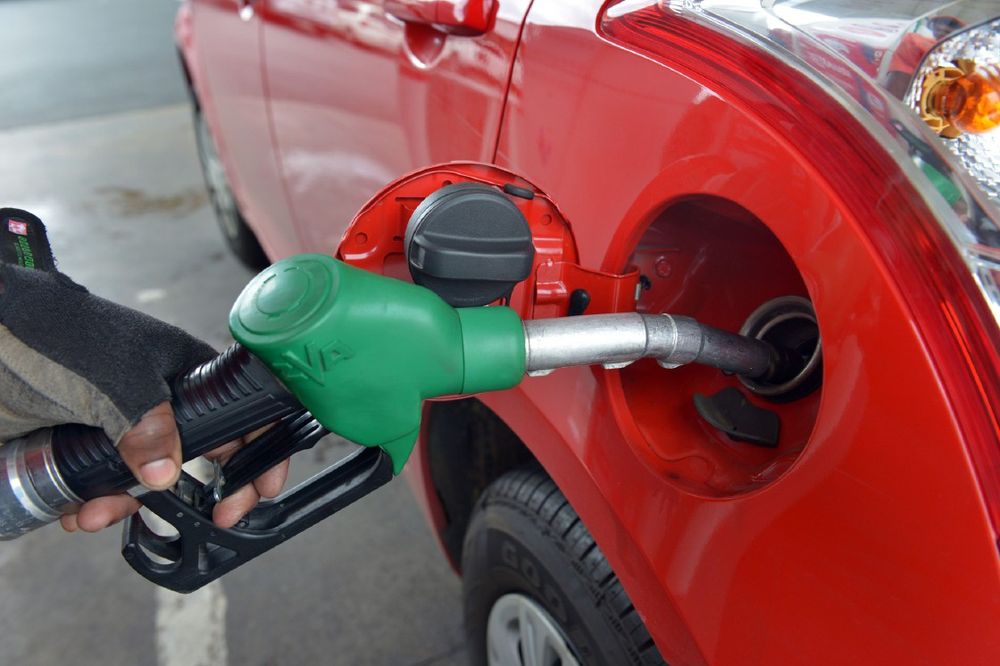
Following the recent steep fuel price hikes, the latest Ipsos study revealed that high travel costs are already stopping many South Africans from getting to their jobs and schools.
A recent study shows that transport costs are keeping millions of South Africans away from their work and education.
This was revealed by the latest Ipsos survey, which shows transport costs are preventing some people from accessing opportunities to improve their lives.
This comes as South African motorists pay significantly more at the pumps following sharp fuel hikes earlier this month, with further record increases expected in October.
Inland 95 unleaded petrol increased from R25.58 per litre in August to R26.92 per litre in September, while inland 93 unleaded petrol increased from R25.42 to R26.76 per litre.
Coastal 95 unleaded increased from R24.71 to R26.05 per litre.
According to the research, transport affordability is already affecting access to work and education, with 15% saying they had missed work, school, college or university at some point because they could not afford transport costs.
The report stated that while 15% may appear to be a relatively small proportion, it represents approximately 6,9 million people.
“Transport connects people to opportunity,” said Natalie Otte, country manager at Ipsos in South Africa.
“When people cannot afford to travel, they may be missing job opportunities, losing income, falling behind their studies, and becoming further disconnected from economic participation,” Otte said, adding that these findings highlight how transport affordability has become a significant social and economic issue.
The Ipsos findings indicate that transport affordability issues existed prior to the current hike, despite the research being conducted before the September fuel-price adjustment.
Younger South Africans bear the heaviest burden of unaffordable transit. A notable 20% of 25-to-34-year-olds, who comprise 23% of the population, have skipped work or education because they could not afford the commute. This is the highest rate of any age group, outstripping the 16% reported by 35-to-49-year-olds and the 11% reported by those 50 and older.
“The transition from education into employment is already a challenging period for many young South Africans. When transport costs become a barrier, individuals can find themselves trapped in a cycle where the inability to reach opportunities limits their ability to improve their circumstances,” said Otte.
Data reveals an inverse relationship between household income and absenteeism due to transport costs. Over a quarter (27%) of respondents with zero household income report missing work or educational activities. This rate declines to 19% for incomes between R2,500 and R4,999, stabilises at 16% for middle-income brackets up to R11,999, and decreases to 12% for households exceeding R12,000 monthly.
“Transportation is often one of the first unavoidable monthly expenses after food and housing. When fuel prices, taxi fares, bus fares and other transport costs rise, households have very limited room to adjust their spending. For households with very limited or no income, transport costs can become a barrier to accessing exactly the opportunities that could improve their circumstances. It creates a difficult cycle that many South Africans are trying to navigate,” said Otte.
Asked what the organisation is doing about the situation, South African National Taxi Council (Santaco) spokesperson Rebecca Phala said discussions between the taxi body and the government regarding longer-term interventions to support the sustainability of the taxi industry and provide relief from rising operating costs are ongoing.
Phala said individual taxi associations have also entered arrangements with certain fuel retailers that provide rebates or other forms of cushioning against the cost of fuel.
She said these arrangements are intended to assist associations in managing the impact of fuel price increases.
“However, Santaco believes that a sustainable, long-term approach requires broader policy intervention and continues to engage the government on the need for appropriate support mechanisms for the taxi industry and its commuters,” said Phala.
The National Taxi Alliance (NTA) has blamed Transport Minister Barbara Creecy, saying she has failed to deliver meaningful relief and address financial distress in the taxi industry.
NTA spokesperson Theo Malele said Creecy entered the office amid considerable expectation that she would address the long-standing exclusion, financial distress and unequal treatment of the industry.
“Instead, operators have received more promises, more processes and more speeches-while the economic foundations of the industry continue to collapse. The verdict on the Minister's performance is now unavoidable: she has failed to match her words with action,” said Malele.
Department of Transport spokesperson Collen Msibi on Wednesday said they would respond to enquiries in due course.
Questions were also sent to the Department of Mineral and Petroleum Resources (DMPR) and its spokesperson Johannes Mokobane. Both departments were yet to respond at the time of publication.
Meanwhile, governance expert Sandile Swana said the cost of fuel and energy in South Africa are a huge problem, adding that the government has not had a policy and practice of lowering the costs.
“Unfortunately, fuel and energy costs determine the cost of everything. It should be a belief and a practice of every single political party, especially those that have power in the GNU and the cabinet, as well as the budgeting system, to say all energy costs must be driven down and concrete steps must be taken to provide low costs of energy and fuel across the board,” he said.
According to the Ipsos study, the Free State has the highest rate of people missing work or school due to travel costs at 20%, followed by the Northern Cape at 18% and Gauteng at 17%.