Susan Collins Faces New Headwind as Maine Heating Costs Hit Record High - Newsweek
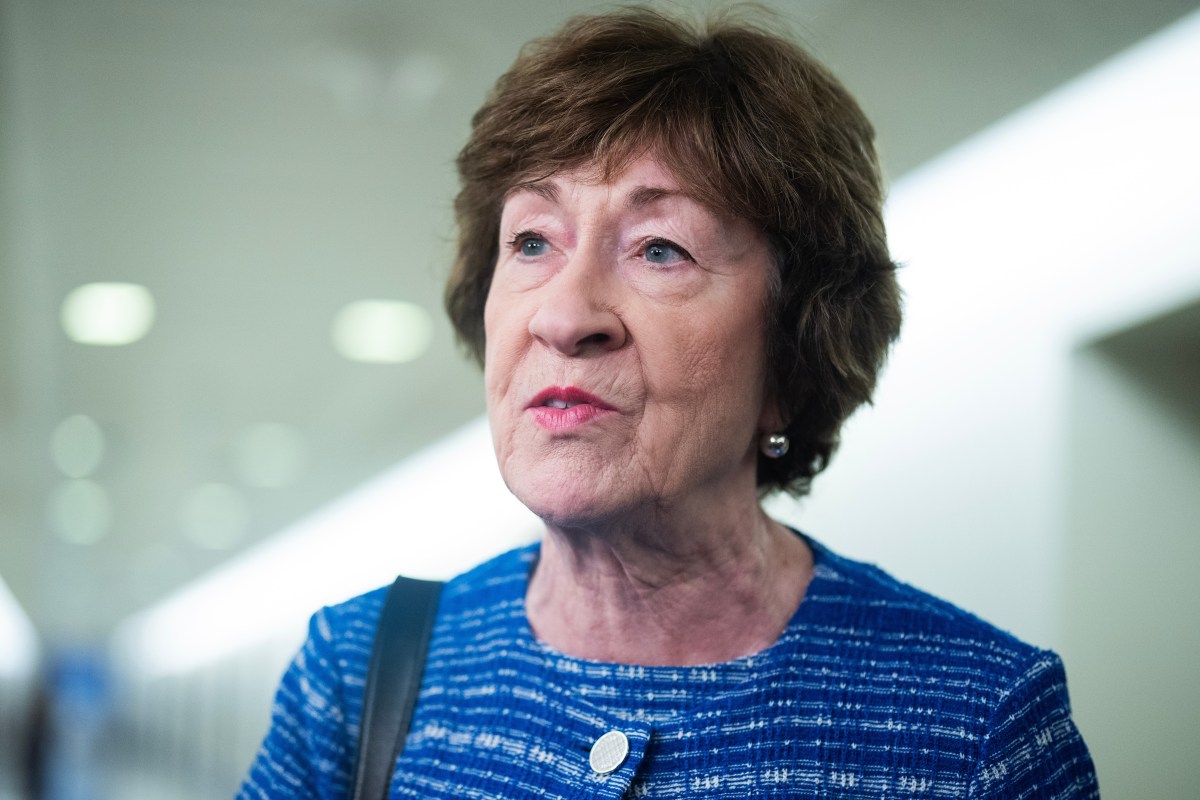
Maine Republican U.S. Senator Susan Collins is facing a new economic headwind in her reelection bid as home heating oil prices surge to more than $6 per gallon, the highest level on record, just weeks out from the 2026 midterm elections.
Rising fuel prices have emerged as a key vulnerability for Republicans nationwide as they defend their majorities in both the House of Representatives and Senate, with only about 5 weeks until the midterms. Rising costs are attributed to disruptions in the Strait of Hormuz, a key passageway for global oil, amid the Iran war.
Collins faces a unique challenge in Maine, the state most reliant on home heating oil.
More than 50 percent of Maine residents use oil as their primary heat source, according to the Northeast Gas Association, and prices have steadily increased as winter approaches, adding pressure to Mainers’ finances as they weigh whether to elect Collins to another term.
Home heating prices averaged $6.02 per gallon statewide last week, according to the Maine Department of Energy Resources (DOER). That marks an increase from $3.33 per gallon one year earlier, and more conservative, rural parts of the state are facing especially high costs.
The previous high was recorded in May 2022, when prices hit $5.92 per gallon as the nation grappled with a post-pandemic inflation wave.
Heating costs are “always front of mind in Maine,” even in the “middle of the summer,” Mark Brewer, a professor of political science at the University of Maine in Orono, told Newsweek.
“It’s cold here. Winter is long. It’s definitely a huge concern, even in years where fuel costs aren’t high. When they reach the point where they are right now, and they’re projected to go even higher, it’s definitely going to be a big issue,” he said. “No doubt about it.”
Newsweek reached out to the Collins campaign for comment via email.
Rising home heating prices threaten to complicate Collins’ reelection. She already faces a toss-up race against Democrat Troy Jackson, the former Maine Senate president, and affordability remains a central concern for voters both in Maine and across the country.
The Iran war has not been popular in the polls. Trump’s approval rating has fallen after launching strikes against Tehran in February, as voters blame him for rising costs caused by the war. If voters blame Trump for rising home heating prices, Collins “is going to get some of that” heat, Brewer said.
“She’s not Trump, obviously, but Trump is the president of her party, and Troy Jackson and his supporters are already making the argument that Collins is a Trump enabler, so this could definitely come back and bite her,” he said.
Costs in Northern and Central Maine, which are the state’s more conservative regions, are even higher, averaging $6.05 and $6.09 per gallon, respectively.
Jackson is not going to win those regions, but he could chip away at Collins’ margins there by focusing on heating prices, Brewer said.
“If Troy Jackson can whittle away there, and he can do it using high heating costs as a chisel, that’s certainly going to help him,” he said.
Meanwhile, Collins is likely to highlight her efforts to ensure federal support for the Low-Income Home Energy Assistance Program (LIHEAP), which provides funding for low-income households’ energy costs in Maine, he said.
In a statement to Newsweek, Jackson spokesperson Cheyenne Gallivan said that Collins has “spent decades selling out Mainers by supporting an agenda that raises their energy costs, dismantling programs aimed at lowering prices, signing off on Trump’s war that’s jacking up the cost of heating oil as Mainers schedule their tank fill-ups for winter.”
“While she has voted with Trump 96% of the time at Mainers’ expense, Troy Jackson has a record of working to lower energy costs and will always stand up to put Mainers first – not billionaires, corporations, or a reckless president,” she said.
Maine Democratic Party spokesperson Misha Linnehan also released a statement on Monday criticizing Collins’ position on the war.
Collins initially voted against War Powers Resolutions that would have restricted Trump’s ability to wage war but started voting in support of those resolutions in April, citing its “clear 60-day deadline for Congress to either authorize or end U.S. involvement in foreign hostilities.”
Linnehan wrote that the risks were “clear” the moment Trump began the “reckless war.”
“Now, as the weather gets colder, Maine families are paying more than ever before to heat their homes, and there’s no end to the war in sight,” Linnehan wrote.
Collins and Senator Angus King, a Maine independent, sent Trump a letter last week urging him to release supply from the Northeast Home Heating Oil Reserve to lower costs for Mainers.
“Maine is particularly vulnerable to global supply shocks because our state imports much of our home heating oil. With both domestic and international supplies running low, a release from the Northeast Home Heating Oil Reserve would help ease these prices,” the letter reads.
In April, Collins announced that $421 million in LIHEAP funding was released for the program, which she said provides “vital relief to thousands of Mainers” that helps them “avoid the constant worry of choosing between heating their homes and covering other basic necessities.”
Collins has also urged an early release of LIHEAP this year, joining 30 other senators in a letter to Health and Human Services Secretary Robert F. Kennedy Jr. that this funding should be released, “given the extraordinary pressure consumers will face this winter.”
Mainers often spend hundreds, if not a few thousand dollars on heating oil each year. How much oil a family goes through can depend on a number of factors including the size of their household, age of their home and efficiency of their furnace.
A report from the Natural Resources Council of Maine released earlier in September found that Mainers could pay up to $1,260 more per heating this winter.
"High heating oil prices are looming over Maine families as heating season approaches. Prices have spiked since the War in Iran began in late February 2026," the analysis reads. "Heating oil prices have soared since last winter due to global events, particularly the war in Iran, and hardworking Maine families will be stuck with the high cost of depending on expensive and polluting imported fuels."
Polls have shown a close race between Collins and Jackson.
A recent poll from The New York Times, The Portland Press Herald and Siena University released on Thursday showed Collins up 3 points, 49 percent to 46 percent. It surveyed 619 likely voters from September 15 to 22.
But other polls released last week showed Jackson leading Collins.
Jackson led by 4 points in a University of New Hampshire poll, with 51 percent support to Collins’ 47 percent, up from July, when he led by 3 points. It surveyed 1,312 likely voters from September 17 to 21 and had a margin of error of plus or minus 2.7 percentage points.
Another poll from the University of Massachusetts Lowell gave Jackson a 5-point lead, 48 percent to 43 percent. Among independent voters, a critical voting bloc in the Pine Tree State, he led by 8 points, 40 percent to 32 percent, with 22 percent still undecided, the poll found.
Collins and Jackson were tied in an InsiderAdvantage poll, which showed them both at around 46 percent. It surveyed 1,200 likely voters from September 22 to 23, with a margin of error of plus or minus 2.83 percentage points.
Notably, the 2020 race between Collins and Democrat Sara Gideon saw a polling error in Collins’ favor, though polling errors don't always repeat from cycle to cycle.
Collins trailed Gideon in nearly every poll but ultimately outperformed the polls to hold onto the seat, even as former President Joe Biden won the state by 9 points that year.
Democrats note that 2026 is likely to be a stronger national environment. Still, Maine is a difficult state to poll due to its older, rural population.
Former Vice President Kamala Harris won Maine by about 7 points in 2024, but Collins has won in the past because of her personal popularity and bipartisan image. Democrats believe that a strong national environment this year could give them their best chance yet at unseating the longtime incumbent.
Still, Republicans view the race as competitive and have hoped to cast Jackson as too progressive for the state.
Democrats have also had a tumultuous election season in the state.
Graham Platner, a progressive political newcomer whose campaign garnered national attention, was hit with sexual abuse allegations just weeks after clinching the nomination. He has denied the allegations but ultimately withdrew from the race.
Jackson, who initially ran for governor but lost the primary, emerged as the new nominee during a convention in July, easily securing the required delegates to find his place on the ballot.
Prediction markets favor Jackson to flip Maine. As of Monday, he had a 61 percent chance on both Kalshi and Polymarket of winning against Collins.
Prediction markets let traders buy and sell contracts tied to political outcomes and current events, aggregating real-money wagers into probability estimates. Prices fluctuate as traders react to polling, fundraising, candidate developments and broader political trends. They measure trader sentiment at a given moment but do not always predict the future accurately.
Democrats’ path to a Senate majority runs through Maine.
Democrats are increasingly hopeful about winning the Senate despite a difficult map. Republicans hold a 53-47 Senate majority, so Democrats must flip four seats to win control if they win every race in a seat they currently hold. Vance serves as the tiebreaker in a split Senate.
To flip the Senate majority, Democrats must win every seat they currently hold, flip GOP-held seats in competitive states, and win some seats in more traditionally conservative territory.
Democrats are defending seats in Trump-won states Georgia and Michigan. In addition to Maine, they view a GOP-held seat in North Carolina as a top flip opportunity. The race in New Hampshire, which backed Harris by about 3 points, is also competitive.
No other Senate races are in Harris-won or single-digit Trump states, meaning Democrats must expand the Senate battleground and compete in more conservative areas if they want to win the majority. They are targeting GOP-held seats in Alaska, Iowa, Ohio and Texas as potential states to flip. The Cook Political Report classifies those four races as tossups.
The Maine Senate race is expected to remain one of the most competitive battlegrounds of this year’s midterms, with forecasters like the Cook Political Report and Sabato’s Crystal Ball classifying it as a pure toss-up.
Contact Newsweek editors on this story: Jason Lemon and Sam Wilson.