Tata Sons board backs five-year extension for Chandrasekaran; Noel Tata opposes - The Indian Express
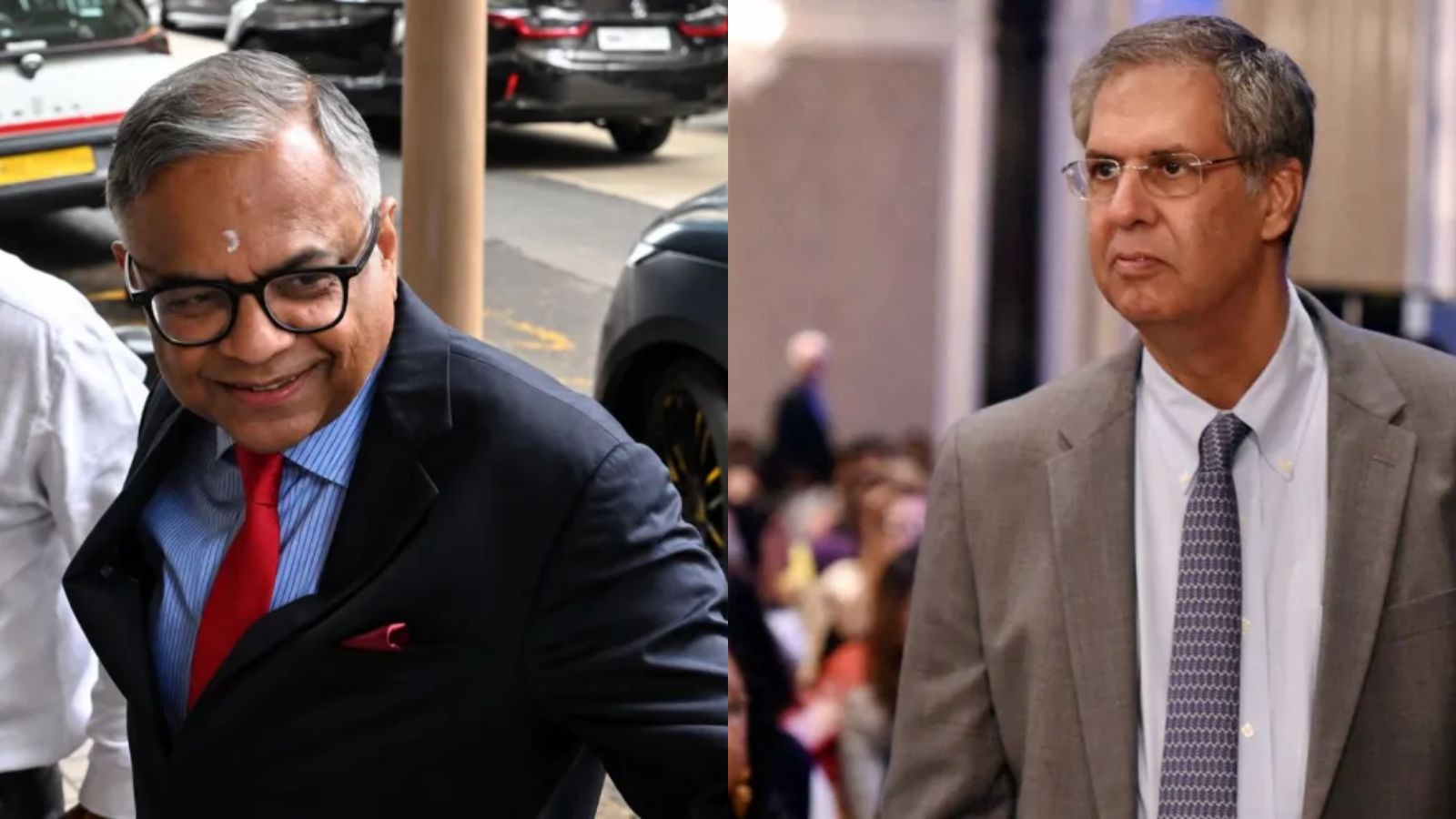
The Tata Sons board on Thursday approved a fresh five-year term for N Chandrasekaran as chairman of the holding company, despite opposition from Tata Trusts Chairman Noel Tata, setting the stage for another potentially contentious battle at the shareholders’ meeting. The board also decided to go for a listing of the company as mandated by the Reserve Bank of India (RBI).
However, these decisions will have to be ratified by the annual general meeting (AGM) of Tata Sons where Tata Trusts hold 66% stake. Venu Srinivasan and Noel Tata are the nominees of Tata Trusts on the board of Tata Sons. Interestingly, Srinivasan supported the reappointment of Chandrasekaran and Tata Sons listing.
If the AGM vetoes the proposals, these decisions will not be approved under the Companies Act.
The decision, taken at the Tata Sons board meeting on Thursday, comes barely five months after the board had deferred a proposal to extend Chandrasekaran’s tenure after it failed to secure unanimous support. Subsequently, Chandrasekaran had announced in August that he would not seek another term when his current tenure ends on February 20, 2027.
The latest board decision reverses that trajectory and places the question of Chandrasekaran’s continuation squarely before the shareholders. Noel Tata, who is also a director of Tata Sons, opposed the reappointment at Thursday’s board meeting, according to sources.
The issue is particularly significant because Tata Trusts collectively hold about 66% of Tata Sons and have historically exercised considerable influence over the holding company’s composition. The differences over Chandrasekaran’s continuation have been part of a broader governance tussle within the Tata Group.
The earlier disagreement had involved concerns over capital allocation, losses in some of the group’s unlisted businesses and the future structure of Tata Sons. Eight major unlisted Tata companies together incurred losses of about Rs 33,538 crore in FY26, with Air India accounting for Rs 22,238 crore and Tata Digital reporting a loss of Rs 4,974 crore.
The board’s decision also comes against the backdrop of the RBI’s directive that has pushed Tata Sons towards a public listing. On September 11, the RBI rejected Tata Sons’ application to surrender its registration and remain an unregistered Core Investment Company, directing it instead to take necessary steps to comply with the applicable regulatory requirements.
At Thursday’s meeting, the board also decided to take all necessary steps to comply with the RBI’s directive and proceed with the process required for listing Tata Sons, sources said.
The listing issue has divided Tata Trusts. While Noel Tata and some former Tata Sons directors have opposed taking the holding company public, other trustees — Srinivasan and Vijay Singh — have supported the move. The Shapoorji Pallonji Group, which holds about 18.37% in Tata Sons, is also in favour of a listing.
The immediate hurdle, however, is the Tata Sons AGM. The annual general meeting scheduled for August 18 was adjourned because of a lack of quorum after the regulatory restrictions on the Sir Ratan Tata Trust (SRTT), which holds 23.56% of Tata Sons, prevented the trust from completing the process required to nominate its representative for the meeting. Under the Articles of Association, the quorum requires an authorised representative jointly nominated by the Sir Dorabji Tata Trust and SRTT.
Chandrasekaran’s reappointment as a director will have to be approved at the AGM. This is crucial because his continuation as chairman requires him to remain a director of Tata Sons. The resolution could therefore become the next major flashpoint between the Tata Sons board and Tata Trusts.
Noel Tata and the Trusts could oppose the resolution at the AGM, potentially turning the shareholder meeting into a decisive test of the balance of power within Tata Sons.
The developments leave Tata Sons facing three interconnected challenges — Chandrasekaran’s leadership, the RBI-mandated listing of the holding company and the unresolved Tata Trusts governance dispute. With the AGM itself still caught in a procedural impasse, the board’s latest decisions have ensured that the battle over the future direction of Tata Sons is far from over.
Chandrasekaran’s continuation is likely to trigger a fresh round of intense discussions within the Tata Group. The issue, however, goes beyond the boardroom. Tata Trusts, which collectively hold a controlling stake in Tata Sons, have the power to veto the decision at the AGM. But the Trusts themselves are facing divisions over several issues, making a consensus on Chandrasekaran’s future far from straightforward.
The result is a potentially delicate balancing act for Noel Tata, chairman of Tata Trusts. He will have to navigate differences within the Tata Sons board as well as among the trustees, while dealing with unresolved issues surrounding the company’s AGM and the RBI’s decision on Tata Sons’ regulatory status and listing.
“It will be a tough time for Noel Tata to sort out the differences and find a way forward,” sources said.
The central bank has rejected Tata Sons’ request to surrender its Core Investment Company (CIC) registration, bringing the long-pending question of its stock-market listing back into focus. Tata Sons had sought deregistration from the regulatory framework. The RBI has also filed a caveat in the Bombay High Court concerning the potential mandatory listing, indicating that it wants to be heard before any order is passed.
The AGM itself has become a major procedural hurdle. The August 18 meeting was adjourned for lack of quorum after the Sir Ratan Tata Trust (SRTT), which holds 23.56% of Tata Sons, could not provide the required shareholder representation because of a restraining order issued by the Maharashtra Charity Commissioner.
Under Tata Sons’ Articles of Association, at least five members must be personally present for a quorum, including an authorised representative jointly nominated by the Sir Dorabji Tata Trust and SRTT. The restriction on SRTT’s board proceedings has prevented such a joint nomination.
George Mathew is an Associate Editor with The Indian Express, based in Mumbai. A veteran of financial journalism with nearly three decades of experience, he is one of the country’s most authoritative voices on banking, regulation, and the corporate sector. Expertise & Focus Areas Mathew’s reporting covers the nerve center of India’s economy. His specialized beats include: The Reserve Bank of India (RBI): He has tracked the central bank's policy evolution through the tenures of multiple Governors, offering deep insights into monetary policy, repo rates, and banking regulation. Banking & Insurance: Extensive coverage of public and private sector banks, non-performing assets (NPAs), and key legislative reforms like the Insurance Amendment Bills. Corporate Affairs: Mathew frequently breaks major stories related to India's largest conglomerates, with a specific focus on the Tata Group, documenting boardroom shifts and strategic decisions. Financial Markets: Reporting on the complexities of Foreign Portfolio Investors (FPIs), IPOs, and currency fluctuations. Authoritativeness & Insight With a career dating back to the late 1990s, Mathew possesses a rare institutional memory of India’s financial liberalization and market crises. His work is not limited to daily news; he frequently contributes to the "Explained" section, where he decodes complex financial legislations and market trends for a broader audience. His rigorous reporting has also been featured in scholarly platforms like the Economic and Political Weekly (EPW). Find all stories by George Mathew here ... Read More