TATAS: THE BATTLE FOR CONTROL
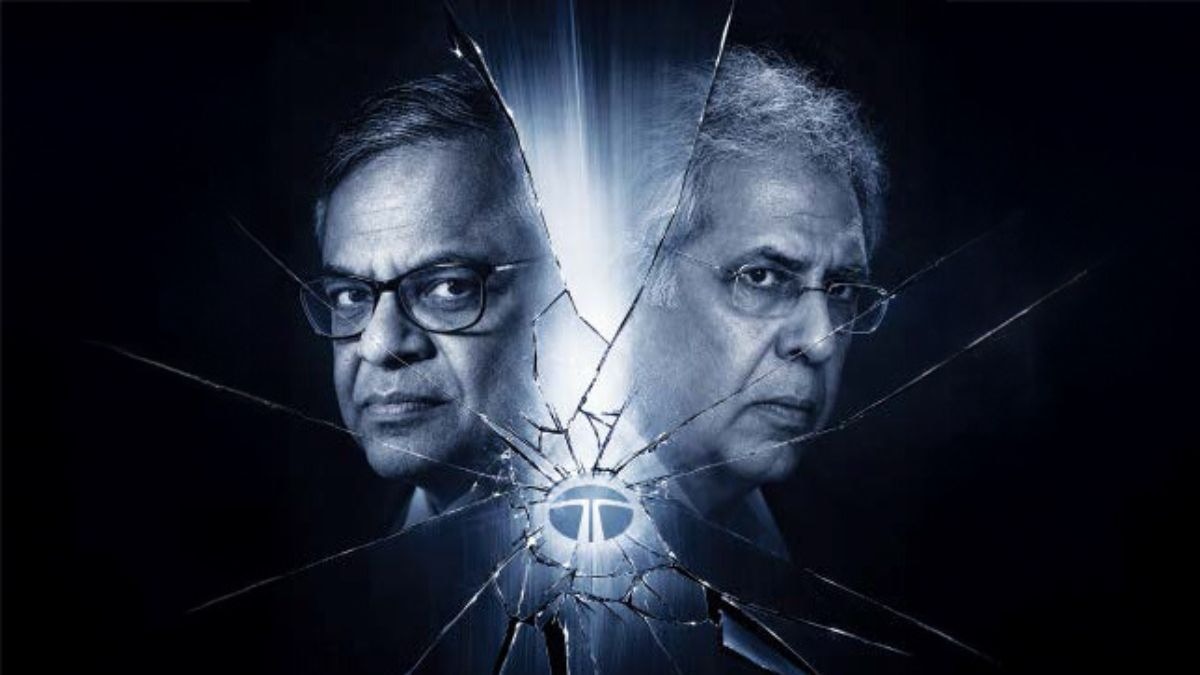
It was close to 10 am on September 17, and anticipation was building among mediapersons waiting outside the iconic, century-old Bombay House in South Mumbai. Tata Sons, the holding company of the $180 billion (Rs 17.2 lakh crore) Tata Group, was to hold a crucial board meeting. Its six-member board—comprising chairman Natarajan Chandrasekaran, Tata Trusts chairman Noel Tata, industrialist Venu Srinivasan, former Hindustan Unilever chairman Harish Manwani, investment professional Anita M. George and Tata Group chief financial officer Saurabh Agrawal—had two key matters before it. One concerned the leadership of Tata Sons, after Chandra announced on August 12 that he would not seek a third term when his current tenure ends in February 2027. The other was the proposed public listing of Tata Sons, a private entity.
Just days ago, on September 11, the Reserve Bank of India (RBI) had rejected Tata Sons’ application to surrender its status as a Non-Banking Financial Company (NBFC). Tata Sons falls under the upper-layer NBFC category, specifically as a Core Investment Company (CIC), because it is the principal holding and investment company, allocating capital and holding shares in various Tata Group companies. While the upper layer comprises NBFCs with an asset size of Rs 1 lakh crore and above, Tata Sons had standalone assets of Rs 1.75 lakh crore. It paid off over Rs 20,300 crore of debt to become debt-free and bolster its case for de-registration, but the RBI rejected its plea.
Curiously enough, the RBI did not insist on a public listing, but many saw it as inevitable, with business analysts arguing that it would bring greater accountability and transparency to the 158-year-old conglomerate, which spans automotive, defence, software, chemicals, steel, retail, financial services and hospitality.
Cameras blinked as the tall figure of 68-year-old Noel entered the building, carrying a folder containing three crucial documents that would later make him the sole dissenting voice among the six board members. One was a note on the Trusts’ position on the listing of Tata Sons and why the company would be better off without going public. The other was on why Chandra should not be allowed a third term. The third was a lengthy legal opinion from former Chief Justice of India D.Y. Chandrachud on the need for an ‘affirmative vote’ of the two nominee directors from the Trusts (Noel and Srinivasan) for any Tata Sons board resolution to become valid, as per its Articles of Association (AoA). That affirmative vote, as it turns out, would become the central point of contention as the two sides braced for what could be one of the most acrimonious legal battles in Indian corporate history.
The Tata Group is no stranger to internal upheavals. While the five-year legal battle with former Tata Sons chairman, the late Cyrus Mistry, was of recent origin, the group also witnessed a major tussle between promoters and professionals after Ratan Tata took charge as chairman in 1991. Ratan successfully challenged powerful, autonomous old-guard executives, or ‘satraps’, such as Russi Mody of Tata Steel, Darbari Seth of Tata Chemicals and Ajit Kelkar of Indian Hotels, centralising and modernising the conglomerate in the process.
The latest battle, if it moves from the boardroom to the courtroom, could have a far-reaching impact on the group’s reputation and impair potential investments, capital allocations and partnerships in its companies. Preparations appear to have begun, with Tata Sons roping in top lawyer Harish Salve to represent the firm, while Tata Trusts has chosen reputed lawyer and Rajya Sabha MP Abhishek Manu Singhvi as its counsel.
Matters turned dramatic at the September 17 board meeting. When Chandra stepped aside as his reappointment came up, four members—Srinivasan, George, Manwani and Agarwal—voted in favour, while Noel opposed it. Noel then raised the requirement for an affirmative vote by the Tata Trusts’ nominee directors on the Tata Sons board for any resolution to be passed. At this juncture, Manwani, who is also chairman of Tata Sons’ Nomination and Remuneration Committee, explained why Chandra was the best man to lead Tata Sons into an RBI-mandated listing. Backing his argument with legal advice from lawyer Sudipta Sarkar, Manwani also invoked what has since become a widely debated and contested issue: to override the ‘split vote’ between the two trustees, Srinivasan and Noel, he exercised his ‘casting vote’.
Noel’s preparation showed that he had anticipated Srinivasan favouring the opposite camp when it came to the resolutions. Srinivasan, chairman emeritus of Chennai-based TVS Motor, was brought on to the Tata Sons board by Ratan in August 2016, two months before the then chairman Mistry was ousted. Srinivasan is also the longest-serving member of the Tata Sons board.
After expressing his dissent, Noel tabled all three documents at the meeting for inclusion in the minutes. He also made two submissions. Given the differing legal opinions obtained by the two sides, he wanted a third opinion. He also sought shareholder ratification of Chandra’s appointment at the Tata Sons AGM. The AGM had been pending since the Charity Commissioner in Mumbai ordered one of the key Tata trusts, Sir Ratan Tata Trust (SRTT), not to hold any meeting amid an inquiry into whether the number of its lifetime trustees violated the 25 per cent statutory limit under Section 30A(2) of the Maharashtra Public Trusts Act. Now, three of its five-member board are lifetime members. The Tata Sons board reportedly agreed to both of Noel’s submissions.
Noel left the meeting under the impression that decisions on both matters would remain pending. To his consternation, he learnt later that day that the Tata Sons board had overruled him on both key issues. The board soon issued a media release announcing Chandra’s reappointment. Noel was livid. He and Tata Trusts then issued a series of press releases. Tata Trusts called the board’s decision on Chandra a ‘legal nullity’, maintaining that his decision not to offer himself for reappointment had already been accepted and had ‘attained finality’. Noel, for his part, said the ‘page has turned’ and ‘it’s time now to move on’. He also made public the documents he had tabled at the meeting, setting out why Tata Sons should remain unlisted.
Noel said, “Tata Sons is not a holding company in the ordinary sense.” Approximately 66 per cent of its equity is held by the Tata Trusts. Dividends received from the operating companies flow, through the Trusts, into public charity. “The interests which Tata Trusts bring to this board is public interest held for the millions of beneficiaries of the charities which the dividends of this company sustain. The commercial enterprise and the philanthropy are not adjacent to one another; they are one structure seen from two ends.”
Noel had struck at the heart of an issue that had dogged the Tata Group for years: how a philanthropic trust controls the affairs of a mammoth business enterprise comprising 26 listed and 17 unlisted companies, with total revenues of Rs 17.2 lakh crore, a market capitalisation of nearly Rs 22.7 lakh crore and 1.16 million employees. Tata Sons holds a majority stake in most group companies, while some also have cross-holdings in Tata Sons. Tata Sons itself is worth around Rs 9 lakh crore to Rs 12.5 lakh crore, as per different estimates, putting the value of the shares held in it by group companies at up to Rs 1.6 lakh crore. Tata Trusts’ 66 per cent stake is worth up to Rs 8.3 lakh crore, while the Shapoorji Pallonji (SP) Group, led by Shapoorji Mistry, brother of Cyrus, holds 18.4 per cent, worth up to Rs 2.3 lakh crore.
Unlike other promoter-run companies, where family members hold majority shares, Tata Trusts controls board decisions at Tata Sons through its nominee trustees on the board. The Trusts comprises eight entities, the largest being Sir Dorabji Tata Trust and Sir Ratan Tata Trust, which hold about 28 per cent and 24 per cent stake, respectively, in Tata Sons. Tata operating companies distribute profits as dividends to Tata Sons, which then channels 66 per cent of those funds to Tata Trusts for philanthropic activities. Apart from Noel and Srinivasan, Sir Ratan Tata Trust has Jimmy N. Tata (Ratan’s younger brother), businessman Jehangir H.C. Jehangir and lawyer Darius Khambata as trustees. Sir Dorabji Tata Trust has former bureaucrat Vijay Singh, Khambata, Noel’s son Neville N. Tata and former Titan MD Bhaskar Bhat, besides the two mentioned earlier.
The principal activity of Tata Sons, says Noel, is to invest in and support the companies of the Tata Group. If Tata Sons is publicly listed, the rights of Tata Trusts as majority shareholders stand to be seriously impaired, he argues. A listed Tata Sons would be accountable to institutional and foreign shareholders whose legitimate interest is financial return. “It is doubtful that such shareholders would sanction the deployment of capital to rescue a Group company in distress, or the funding of a greenfield venture whose returns lie fifteen years away. That is not a criticism of them. It is a description of their mandate, which is not ours,” he adds.
It is this basic structure that is now being challenged. Srinivasan’s decision to go against Tata Trusts is symptomatic of the differences that had been brewing within the trusts for some time. These differences spilled into the public domain last year when Mehli Mistry, a Tata Trusts trustee, along with Pramit Jhaveri, former Citibank CEO, Jehangir and Khambata opposed the reappointment of Srinivasan and Singh to the boards of Sir Dorabji Tata Trust and Sir Ratan Tata Trust. The Centre eventually stepped in, with home minister Amit Shah and finance minister Nirmala Sitharaman calling Noel, Chandrasekaran and some other trustees to Delhi for talks. Days later, Mehli stepped down from the boards of key Tata trusts.
Noel is betting on the AGM to ensure the Tata Sons board decisions are reversed. “As far as Tata Trusts is concerned, unless Chandra relents and sticks to his August decision (not to continue as chairman beyond February 2027), this matter will go to court,” says H.P. Ranina, a senior Supreme Court advocate. “And if it does, Tata Trusts will succeed, for the simple reason that the SC itself had pronounced a decision on it earlier.” When Tata Sons was caught in a legal tangle with Cyrus, it had evoked the sanctity of its AoA to build its case against the ousted chairman. “Tata Trusts is not going to relent. The law is on their side. The articles of Tata Sons clearly say that both the nominee directors of the Sir Ratan Tata Trust and Sir Dorabji Tata Trust must agree to the appointment of the CEO or any other changes,” Ranina adds.
On listing Tata Sons, he says that Tata Sons Pvt. Ltd has to be converted into a public company. Only a public company can be listed. So, the AoA has to be changed. To change it, shareholders’ approval is required. At the AGM, only shareholders can vote, not directors, unless they are shareholders themselves. When it comes to voting, Tata Trusts has the edge because of its majority shareholding. Ranina also questions whether the RBI can give such directions. According to him, the central bank is only a regulator. But in this case, it is asking for a change in the ownership structure. The SC will have to decide whether the RBI acted within its limitations, he says.
There are many who feel that Noel raised the right issues: the chairman being more accountable and open to scrutiny when it came to some of the key businesses of the group. Noel was concerned about the losses being made in Air India and the huge investments made in digital that have yet to yield returns. Air India, brought back into the Tata fold in 2022, doubled its net loss to Rs 22,238 crore in FY26. Tata Neu has yet to establish itself as a dominant super-app despite substantial investment, while the group’s semiconductor venture remains a long-gestation bet.
Shriram Subramanian, founder and MD of InGovern, a proxy advisory firm, says that basic corporate law holds that the interests of shareholders are above that of the board of directors, which gives the trusts an edge at the impending AGM. However, there are two caveats to this. “One is whether the trusts will be allowed to function normally,” he says, referring to the Charity Commissioner’s clampdown on Sir Ratan Tata Trust. “The other is whether the trusts will be able to come to a united view.”
Singhvi, who represented Tata Sons in the 2016 legal fight against Cyrus, says that the sanctity of Tata Trusts’ AoA should be held up. “No one can deny the 66 per cent ownership of Tata Sons by Tata Trusts. You cannot allow corporate governance to be turned on its head by a runaway board excluding the owners of the entity on whose board they sit,” he said in a media interview. Harish Salve, on the other hand, justified Srinivasan’s vote in favour of Chandra. In a TV interview, he said, “While the directors of a subsidiary are directly nominated by the holding company, the Supreme Court has held that they owe fiduciary duty to the subsidiary to which they are appointed. They are not puppets.”
The recent developments have shaken the edifice of one of India’s most diversified corporate groups, and arguably its most admired brand overseas. While there are big issues to be addressed, a protracted legal battle should be avoided, as it could erode the Tata Group’s reputation, nurtured over generations.