Tavern shootings expose South Africa’s struggle with organised violence - IOL
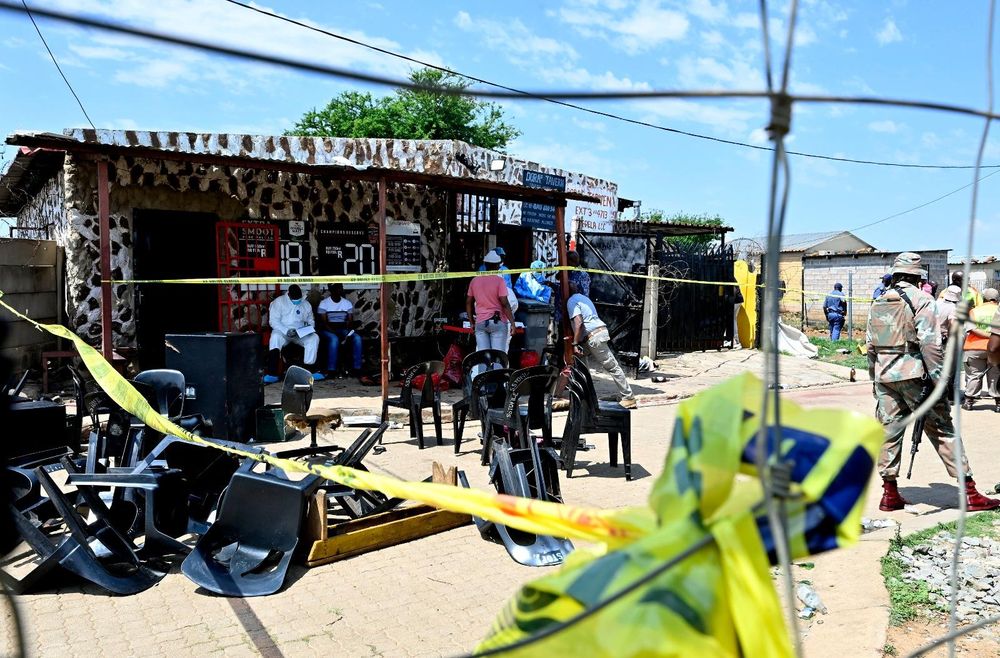
South Africa’s entertainment venues become battlegrounds as mass shootings claim over 40 lives.
As gunfire echoes through South Africa’s entertainment venues and palpable fear grips the nation’s patrons, crime experts have called on law enforcement agencies to employ intelligence-driven policing to stop the scourge of mass shootings in the country.
This comes as entertainment venues have increasingly become scenes of deadly violence, with many questioning when the next mass shooting may occur. In an alarming series of events, three mass shootings have claimed at least 40 lives in just a few days, with the bloodshed calling attention to an urgent and escalating crisis.
The violence kicked off in Carletonville, Wedela, where, on a fateful night, eight armed gunmen stormed a bar, brutally ending the lives of 18 people - 14 men and four women in the early hours of Sunday. Furthermore, 15 others were left with injuries from the shooting.
The horror did not end there; mere hours later, tragedy struck again at an entertainment venue in Lwandle, Western Cape, where another 10 lives were snuffed out, and 11 others sustained injuries in the early hours of Sunday morning.
Adding to the grim tally, less than a week earlier, 12 individuals were killed in an attack in KwaMakhutha, KwaZulu-Natal, in a series of incidents that implicate multiple provinces in a disturbing landscape of violence. Additionally, just before these shootings, a tragic event unfolded in Bekkersdal, where nine people lost their lives at the KwaNoxolo tavern.
Police reports reveal that these horrific incidents are just the tip of the iceberg, with more than 100 deaths in the country attributed to similar violence linked to illegal mining operations.
Security strategist Andy Mashaile, who has notably worked in conjunction with the police in high-risk areas like Bekkersdal and Carletonville, attributes these tavern shootings to ongoing territorial disputes among rival groups of illegal miners, known as zama zamas, who are fighting for control over abandoned mining shafts.
“The police are not doing enough to prevent this crime from happening,” Mashaile asserted. He expressed deep concerns regarding the visible state of impotence among law enforcement, noting that illegal mining activities have continued to flourish openly while police patrols remain indifferent.
“The illegal gunshots at night in various hot spots indicate that the police have no capacity to eradicate the scourge,” he said, further detailing how violent conflicts ensue between mining factions, leading to indiscriminate shootings of anyone perceived to be an obstacle.
Mashaile has called for immediate and drastic measures to confront this crisis. “We must begin isolating and blacklisting the banks and other institutions enabling this illicit trade,” he urged.
He further advocated for robust intelligence gathering on law enforcement members who are complicit in illegal mining and suggested that they must face criminal charges alongside frozen bank accounts to deter future collusion.
Ian Cameron, a member of Parliament and chairperson of the Portfolio Committee, said: “We need intelligence-led policing that identifies threats before gunmen arrive, supported by investigations guided by prosecutors from the outset.
“Police must investigate the shooters, those who organise and finance attacks, and the people supplying their weapons. That requires properly resourced detectives, rapid forensic and ballistic analysis, witness protection and targeted deployments around identified hotspots.”
Cameron further called for every recovered firearm to be traced and tested for links to other crimes. He said information about threats and extortion must lead to action before another family receives a call telling them someone has been killed.
The South African Council of Churches (SACC) has articulated its horror concerning the mass killings, particularly the recent events in KwaZulu-Natal where, on September 22, 11 people were shot dead at a house party in KwaMakhutha.
Additionally, the incidents in Gauteng and the Western Cape have raised alarms about a nationwide crisis. “This is no longer a series of isolated tragedies. It is a national crisis, and it says something deeply troubling about who we have become,” lamented Reverend Mzwandile Molo, general secretary of the SACC.
In the wake of the Wedela incident, the police in Gauteng arrested more than 100 suspects allegedly linked to illegal mining syndicates believed to be connected to a recent deadly tavern shooting in Gauteng province.
However, the police remained mum on a long-term strategy to stop the mass killings, with police yet to respond to a media enquiry sent to them.
Meanwhile, the government condemned the spate of country-wide mass shootings saying law enforcement agencies have intensified their presence on the ground and assembled specialised investigative teams to track down those responsible.
The government described the shootings as “senseless acts of violence” and said police were pursuing all available leads as authorities moved to strengthen their response.
“Government strongly condemns the ongoing spate of mass shootings that the country has recently witnessed. Such lawlessness has no place and will not be tolerated in our democratic society,” the government said.
The government said police had reinforced deployments in affected areas as investigations into the shootings continued.