Team Japan forced to look at alternate accommodation options at home Asian Games - Rappler
Already have Rappler+? Sign in to listen to groundbreaking journalism.
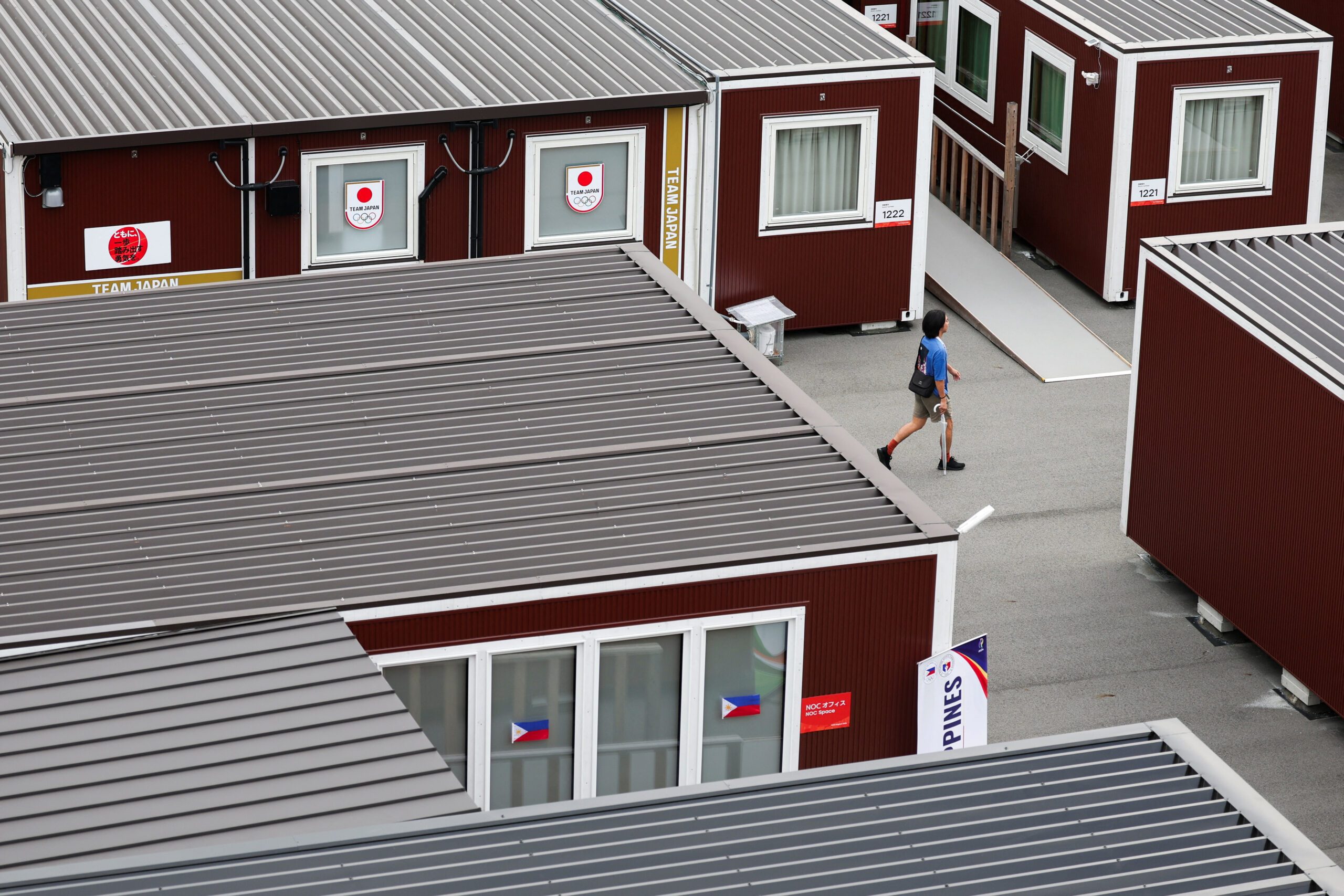
ATHLETES' UNITS. A person walks near wooden container units built to house athletes, including those for Japanese and Filipino athletes, ahead of the Aichi-Nagoya 2026 Asian Games in Nagoya, Japan.
This is AI-generated. Read the article for full context. Report any errors.
NAGOYA, Japan – Accommodation issues continued to plague the lead-up to the Aichi-Nagoya Asian Games on Thursday, September 17, with even the host Japan team looking at alternative arrangements after cases in which male and female athletes were allocated shared rooms.
Local organizers, having decided not to build a dedicated Athletes’ Village, looked to creative accommodation options to house the 17,000 competitors and officials arriving for the Games, which officially open on Saturday, September 19 .
The Italian cruise ship Costa Serena, which will host 4,000 participants, arrived on Tuesday, September 15, and 2,000 other athletes and officials will be accommodated in shipping-container style huts in the dock area of Japan’s biggest port.
“Since the cruise ship village opened yesterday, athletes have been arriving and going through the entry procedures,” Japan’s deputy chef de mission Hisashi Mizutori told a news conference on Thursday.
“However, the process took a significant amount of time, and due to issues with activation of their credentials, we have received reports that some athletes were left waiting for several hours.
“There have been cases where coaches, team officials, and athletes have been assigned to the same room. There are also situations where room assignments were made purely based on the numbers, such as assigning five twin rooms for a group of five men and five women.
“While the numbers match on paper, practically it creates challenging situations such as men and women being assigned together, coaches being assigned with athletes, or trainers who need to accommodate a lot of medical equipment being assigned together.”
The local organizing committee maintains that the accommodation issue arose because they were expecting 15,000 athletes and officials for the Games, only for numbers to increase as new sports were added.
In a joint statement with the Olympic Council of Asia (OCA) last week, the Aichi-Nagoya Asian Games Organizing Committee said numbers would be capped at 17,000 with all of those guaranteed a place to stay.
Mizutori said the Japanese Olympic Committee (JOC) had anticipated accommodation “challenges” and had secured hotel rooms in the city as a backup.
“We heard that the accommodation allocations are extremely tight,” said the former Olympic champion gymnast, who also sits on the JOC executive board.
“We are currently working to coordinate and negotiate adjustments wherever possible. For cases where that proves too difficult, we are considering using the backup accommodations that Team Japan prepared in advance as alternatives.”
Last Tuesday, Asian Games organizers said they were committed to addressing complaints from athletes and officials about accommodation.
There have been media reports of complaints from South Korean basketball players about the size of the beds in the shipping container-style huts on land that will be home to some 2,000 of the visitors.
“We are fully aware of the dissatisfaction and concerns voiced by the athlete delegations,” accommodation manager Yuta Matsuo told Reuters.
“However, we are not merely acknowledging these issues, we are already taking concrete steps to improve the environment for the athletes, including their living conditions during their stay.”
Matsuo said the core concept of the accommodation program had been sustainability and that while everything had been approved by the Japanese Olympic Committee, he understood that other delegations would have specific needs.
A resident center operating 24 hours a day would be available to address any complaints or problems from athletes or officials, Matsuo said.
“In this way, we are making every effort to ensure that athletes do not have to remain anxious or worried for prolonged periods of time,” he said.
Matsuo suggested that some of the cabins on the Costa Serena might be quite small but urged athletes to make the most of the extensive shared space on the ship.
“We hope the delegation will consider the ship’s facilities and relaxation options — taking a comprehensive view rather than focusing solely on cabin size,” he said.
The local organizing committee maintains that the accommodation issue arose because they were expecting only 15,000 athletes and officials for the Games, only for numbers to increase as new sports were added.
In a joint statement with the Olympic Council of Asia last week, the Aichi-Nagoya Asian Games Organizing Committee said numbers would be capped at 17,000 with all of those guaranteed a place to stay.
The weather has not helped with several hundred athletes and officials briefly evacuated from their accommodation after torrential rain battered Nagoya last week.
The Games, the third edition to be held in Japan, will run from Saturday until October 4. – Rappler.com