Tech CEOs’ Doomsaying Is a Distraction from Real, Existing Harms of AI - The Intercept
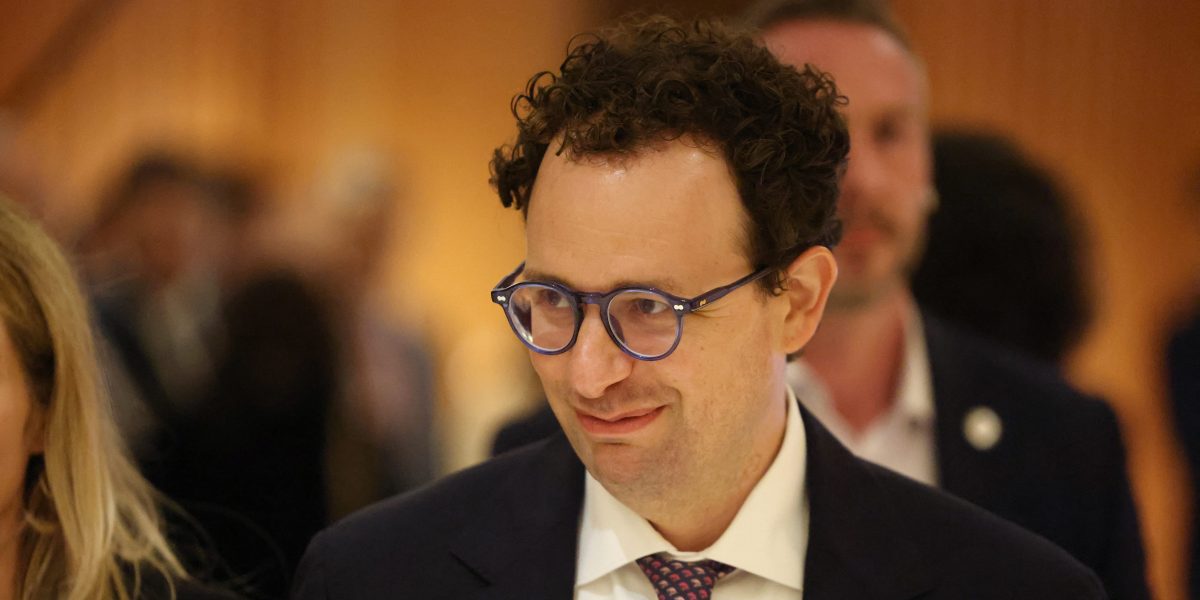
In the last week, a raft of top tech executives — including OpenAI’s Sam Altman, Anthropic’s Dario Amodei, and SpaceX’s Elon Musk — joined a chorus of doomsaying voices from Silicon Valley urging a slowdown in artificial intelligence development.
The executives feared, they said, that the tools would become too powerful too soon and pose an existential risk to humanity.
Why would three multibillionaire tech CEOs all come together to agree that the technologies their companies are developing might be too dangerous?
Do the overlords of Silicon Valley really think frontier AI models are likely to “kill all humans,” as one senior employee at Anthropic warned last week? Is this just another example of hype propagated to draw in more investment?
Talk of existential risk is a highly convenient way to not address the already known harms produced by AI.
The beneficiaries of the AI gold rush and the beneficiaries of investment in AI safety are, after all, likely to be the very same people, even if AI stocks have fallen in recent days amid the latest doom cycle.
We could waste a lot of time speculating about the apocalyptic or cynical worldviews of tech billionaires. Regardless of what these CEOs and their employees actually believe, however, one thing is clear: Talk of existential risk is a highly convenient way to not address the already known harms produced by AI technologies overseen by fascist billionaires like Musk and Palantir CEO Alex Karp.
It’s a suspicious time for Silicon Valley leaders to again offer up millenarian narratives about existential risks beyond our comprehension. The CEOs’ warnings, after all, came at the very moment a cross-political consensus is growing against the proliferation of actually existing harms of AI and its infrastructure. Consider, for example, mass opposition to data centers and classroom AI bans.
Silicon Valley talk about existential risk is hardly new. In 2023, hundreds of tech researchers, CEOs of the major AI companies, investors, and academics signed an open letter on AI risk just one sentence long: “Mitigating the risk of extinction from AI should be a global priority alongside other societal-scale risks such as pandemics and nuclear war.”
Pitiful international commitments to preventing future pandemics and nuclear wars are hardly a reassuring baseline, but the sentiment of the open letter played into a now typical AI story, thick with theological overtones: A threshold is supposedly approaching, which could lead to the total destruction of life on Earth — or our salvation.
That threshold, according to the figureheads of technocapital, is the birth of AGI: “artificial general intelligence,” or systems of equal or superior intelligence to humans. From that point, these stories go, mighty super intelligent machines would emerge through recursive cycles of AI self-improvement.
The destruction wrought by these AI systems could be total, so we are told, if they are not “aligned” with human interests. According to one particularly deranged thought experiment, our future robot overlords could turn everything on Earth into paperclips.
Alternatively, the utopian storyline goes, the magic of AI — and it is described with no more concreteness than gestures to magic — will solve every worldly problem and more, from climate devastation, to poverty, to illness, to mortality itself.
Consider how tech multibillionaires Bill Gates and Eric Schmidt have brushed off the issue of AI processing’s already ruinous, gargantuan consumption of energy and water use. The New York Times reported that Schmidt believes AI has “too much potential, to let concerns about climate change get in the way.”
Advanced AI will bring such growth, such prosperity, such environment-saving technology, such holy deliverance, they say, that only a small-minded technophobe could want to hold back the learning machines in their dizzying progress.
How will super AI do this? I can’t tell you. Crucially, neither can the billionaires and technologists bringing this alleged magic — or terror — to the world. Nor can those directing unprecedented, economy-redefining amounts of capital and energy toward data centers and AI research articulate artificial intelligence’s path to redemption.
The whole point is that those of us at the bottom of the food chain — the consumers, or maybe all of humanity — cannot possibly understand the forces at work here.
We should be skeptical of these propagandistic narratives. This is not to say that the AI industries are not world-changing. AI can already do extraordinary things, many far beyond human capacities; these technologies have already had profound effects on the world of work, on global infrastructure, on the applications of state violence, on the vast flows of capital and energy.
AI isn’t, after all, one thing: It’s collection of methods based in what’s known as machine learning, which is basically algorithms using statistics to find patterns in massive amounts of data, including in extraordinarily complex ways.
AI products and services abound, from text and image generative content to recommendation engines, like those used by Spotify and Netflix; fraud detection systems; and navigation systems such as Google Maps.
Yes, we’re swimming in AI slop, enshittified search engines, stolen content, deepfakes, embarrassing mistakes, and hallucinations. But there are also scientists using machine learning to revolutionize the detection and treatment of Alzheimer’s disease.
Meanwhile, AI systems are used to generate — and justify — kill lists in a genocide, or generate revenge porn, or populate predictive-policing databases along racist lines.
We’re independent of corporate interests — and powered by members. Join us.
Original reporting. Fearless journalism. Delivered to you. Will you take the next step to support our independent journalism by becoming a member of The Intercept?
By signing up, I agree to receive emails from The Intercept and to the Privacy Policy and Terms of Use.
The problem with AI fairytales, which take the development of “artificial general intelligence” as a teleological endpoint, is that the array of machine learning’s current and potential applications are collapsed together as part of a singular unstoppable force.
Instead of a serious reckoning with existing harms and possibilities of technological development, technocapital’s mouthpieces prefer a story of an inevitable Judgment Day: The great thinking machines are coming and will destroy or deliver us.
Pesky questions about the actual capacities and potentials of machine learning are cast away. So, too, are difficult discussions about the dark history of “intelligence” as a calculable quality and a messy, contested concept.
Genuine uncertainties and unknowns about how best or not to develop and deploy advanced machine learning technologies are obviated — considerations being reserved for the Great Men of Silicon Valley.
As the cognitive scientist Hagen Blix and machine learning researcher Ingeborg Glimmer wrote in their 2025 book “Why We Fear AI”: “If the stakes are as high as the very survival of humanity, then concerns about the effects that really existing artificial intelligence technology has right now—from excessive energy usage, to undermining the livelihood of artists and dock workers, to introducing cybersecurity vulnerabilities, to perpetuating and worsening discrimination, to disinformation and deep fakes, to supercharging mass surveillance, etc., are easily brushed aside.”
What we’re seeing right now from Donald Trump is a full-on authoritarian takeover of the U.S. government.
Court orders are being ignored. MAGA loyalists have been put in charge of the military and federal law enforcement agencies. The Department of Government Efficiency has stripped Congress of its power of the purse. News outlets that challenge Trump have been banished or put under investigation.
Yet far too many are still covering Trump’s assault on democracy like politics as usual, with flattering headlines describing Trump as “unconventional,” “testing the boundaries,” and “aggressively flexing power.”
The Intercept has long covered authoritarian governments, billionaire oligarchs, and backsliding democracies around the world. We understand the challenge we face in Trump and the vital importance of press freedom in defending democracy.
IT’S BEEN A DEVASTATING year for journalism — the worst in modern U.S. history.
We have a president with utter contempt for truth aggressively using the government’s full powers to dismantle the free press. Corporate news outlets have cowered, becoming accessories in Trump’s project to create a post-truth America. Right-wing billionaires have pounced, buying up media organizations and rebuilding the information environment to their liking.
In this most perilous moment for democracy, The Intercept is fighting back. But to do so effectively, we need to grow.
That’s where you come in. Will you help us expand our reporting capacity in time to hit the ground running in 2026?
I’M BEN MUESSIG, The Intercept’s editor-in-chief. It’s been a devastating year for journalism — the worst in modern U.S. history.
We have a president with utter contempt for truth aggressively using the government’s full powers to dismantle the free press. Corporate news outlets have cowered, becoming accessories in Trump’s project to create a post-truth America. Right-wing billionaires have pounced, buying up media organizations and rebuilding the information environment to their liking.
In this most perilous moment for democracy, The Intercept is fighting back. But to do so effectively, we need to grow.
That’s where you come in. Will you help us expand our reporting capacity in time to hit the ground running in 2026?