Tesla Cybercab bars kids under 13 as scrutiny grows
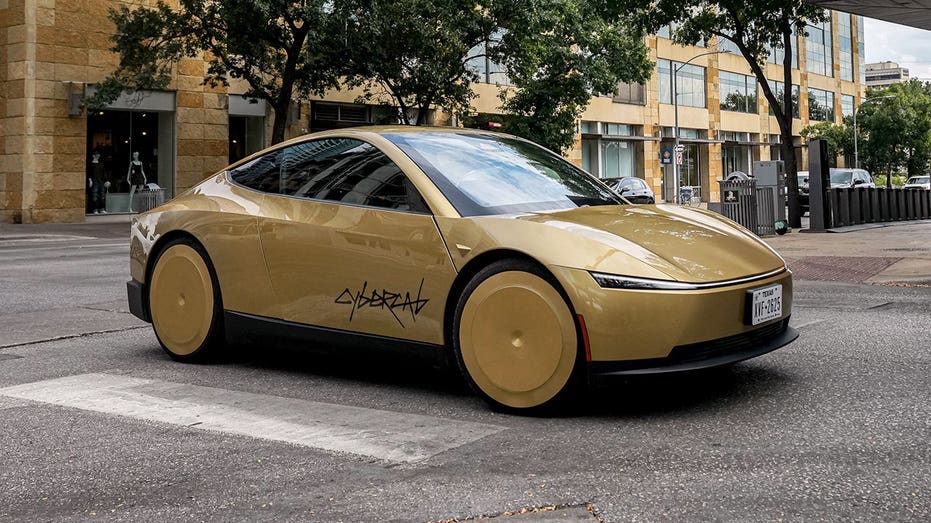
Tesla's Cybercab is finally carrying riders in Austin, Texas. And some of the details buried in the fine print may surprise you.
The gold two-seater has no steering wheel or pedals. Tesla says it uses cameras and AI to handle the driving, putting passengers entirely in the hands of its autonomous system.
Yet the Sept. 3 launch was unusually low-key for Tesla. The main presentation reportedly lasted about 15 minutes, and Elon Musk apparently did not speak. Then, on Sept. 4, federal safety regulators announced an investigation into how Tesla certified Cybercab for U.S. roads.
Tesla has spent years building toward this moment. Now that real riders are climbing inside, the little details suddenly become much more important. Here is what you should know before you step into a Cybercab.
ZOOX ROBOTAXI REDESIGN BRINGS BIG RIDER UPGRADES
NEW! Join our upcoming CyberGuy LIVE class: Get Better Healthcare With AI
In this free live online class, Kurt "CyberGuy" Knutsson will show you five practical ways AI can help you take a more active role in your healthcare. You’ll learn how to organize your health history, remember important appointment details, understand complicated medical information, research prescriptions and prepare questions for your next doctor’s visit. No technical
experience is needed.
Register for free now at CyberGuyLive.com
If you planned to call a Cybercab for a family ride, check the passenger rules first. Tesla says children under 13 cannot ride in Cybercab "at this time." Teens ages 13 through 17 can ride, although an adult must accompany them for the entire trip.
Interestingly, Tesla sets a different age limit for the Model Y vehicles in its Robotaxi service. Children ages 8 through 17 can ride in those vehicles with an adult. Guests under 8 cannot.
So, an 11-year-old could ride in a Tesla Model Y Robotaxi but could not take the same trip in a Cybercab. Tesla does not explain the reason for that difference in its current rider guidance. Then there is another detail parents may notice.
Tesla confirms that Cybercab has no LATCH or ISOFIX child-restraint system. If a rider needs a booster seat, Tesla says it must use a seat belt to secure it.
That may sound odd considering Cybercab does not allow children under 13. However, some older children may still need a booster seat depending on their size and local requirements.
Tesla gives instructions for using one, but there are no LATCH anchors to attach it to. It is the kind of detail most of us probably would not think about until a Cybercab showed up at the curb.
A driverless vehicle still needs a plan for the moment something goes wrong. According to Tesla documentation, a collision can trigger several automatic responses. The airbags can deploy and the doors can unlock. Hazard lights and interior lights can also switch on.
The vehicle can disable its high-voltage battery, move the windows into a vent position and apply the brakes until it comes to a stop. Tesla's system can also open a two-way connection with its Robotaxi Support team.
That support connection could become especially important in a vehicle where nobody can grab the steering wheel or hit the brakes. Tesla also gives riders ways to stop a trip themselves.
UBER LETS PARENTS WATCH TEEN RIDES LIVE
Look above you when you get inside a Cybercab. Tesla placed a dedicated Stop button between the dome lights. Pressing it sends an immediate pull-over request, ends the ride and connects you with Robotaxi Support.
You can also tap Pull Over on the touchscreen or make the request through the Robotaxi app. However, Tesla warns that an "immediate" pull-over may still take some time. For example, the vehicle may need longer to reach a safe stopping point while traveling on a highway. That is worth knowing before your first ride.
Tesla's electronic door releases have attracted criticism because passengers may need a mechanical backup when a vehicle loses power.
Cybercab still uses electronically controlled doors during normal operation. In fact, the nearest door can open automatically when the ride requester approaches.
Inside, you can normally open the door through the touchscreen or gently lift a lever on the door panel. Pull that lever firmly all the way up, though, and it activates the mechanical release. Both Cybercab doors have one.
I like that Tesla put the emergency release where a passenger can actually see and reach it. There is one important warning. Tesla says using the mechanical release can damage the window or trim. If the vehicle has no power and the window remains fully raised, Tesla warns the glass could shatter when someone activates the release. That is one instruction I would want to know before an emergency.
Tesla also made a major change underneath the vehicle. Cybercab uses a brake-by-wire system rather than a traditional hydraulic setup. Electronic actuators control the brake calipers instead of hydraulic lines carrying brake fluid.
Musk said in a post on X that electric brakes avoid the complexity of routing hydraulic plumbing around the vehicle. Tesla has already used steer-by-wire technology in the Cybertruck.
With Cybercab, passengers have no physical driving controls at all. That puts even more responsibility on the electronics and software to work properly every time.
Here is one of the stranger details Tesla included in its new rider guide. Cybercab passengers can lower the windows, but Tesla says they "cannot be fully opened at this time." The company does not explain why.
The window switches also sit underneath the center touchscreen rather than on the doors. So, yes, you can crack a window for some air. You simply cannot roll it all the way down right now.
WAYMO RECALLS ROBOTAXIS OVER CONSTRUCTION-ZONE RISK
At least you should have somewhere to plug in your devices. Tesla confirms that Cybercab has USB-C charging ports inside the cabin.
An attendee at the launch reported that those ports can deliver up to 90 watts of power. That could be enough to charge many laptops.
However, Tesla's current public rider guide does not list that wattage. So, I would treat the 90-watt figure as an early report until Tesla publishes the specification itself.
On Sept. 3, the National Highway Traffic Safety Administration opened what it calls an Audit Query into Tesla's certification that Cybercab meets all applicable Federal Motor Vehicle Safety Standards. NHTSA announced the action on Sept. 4 following the vehicle's commercial deployment in Austin.
Automakers in the U.S. generally certify their own vehicles as complying with federal standards. NHTSA can then audit those certifications and investigate when questions come up.
Cybercab presents an unusual case because it has no steering wheel, pedals or mirrors. Many federal vehicle rules were written around cars designed for human drivers. NHTSA's audit reportedly covers about 1,000 Cybercabs as the agency reviews how Tesla determined the vehicles comply.
That does not mean regulators have found Cybercab unsafe. It does mean Tesla now has to back up its certification with technical information that satisfies the agency.
If you get the chance to ride in a Cybercab, I would spend a minute learning the cabin before the car starts moving. Find the emergency Stop button. Know where the mechanical door release sits. Keep your seat belt fastened for the entire trip.
Tesla says every passenger must buckle up before the ride begins. Cybercab may pull over or cancel a trip if it detects improper seat-belt use. Parents should also pay close attention to the age rules. Cybercab and Tesla's Model Y Robotaxi do not follow the same limits.
Beyond that, remember how new this vehicle is. Tesla is putting a very different kind of car into real-world service, and regulators are already asking questions about how it fits existing safety standards.
We have seen how unexpected situations can challenge other autonomous vehicles too. CyberGuy recently reported how Waymo recalled robotaxis over a construction-zone risk after vehicles entered closed freeway construction areas.
The technology can be impressive. Still, the real test comes when these vehicles deal with everything ordinary roads throw at them.
Cybercab is finally moving from Tesla's big promise to something people can actually ride in. I like seeing safeguards such as the mechanical door release and emergency Stop button, especially when passengers have no steering wheel or pedals to grab. Still, the under-13 restriction, lack of LATCH anchors and windows that do not fully open caught my attention. Add the federal investigation, and Tesla now has something bigger to prove. Putting Cybercab on the road is one thing. Showing that people can trust it day after day is the real test.
Would you climb into a Cybercab today with no steering wheel or pedals, or would you want to see a longer safety record before trusting it with your ride? Let us know by writing to us at Cyberguy.com
Sign up for my FREE CyberGuy Report
Copyright 2026 CyberGuy.com. All rights reserved.