Texas Declares Diesel Price Emergency—Other States Are Paying More - Newsweek
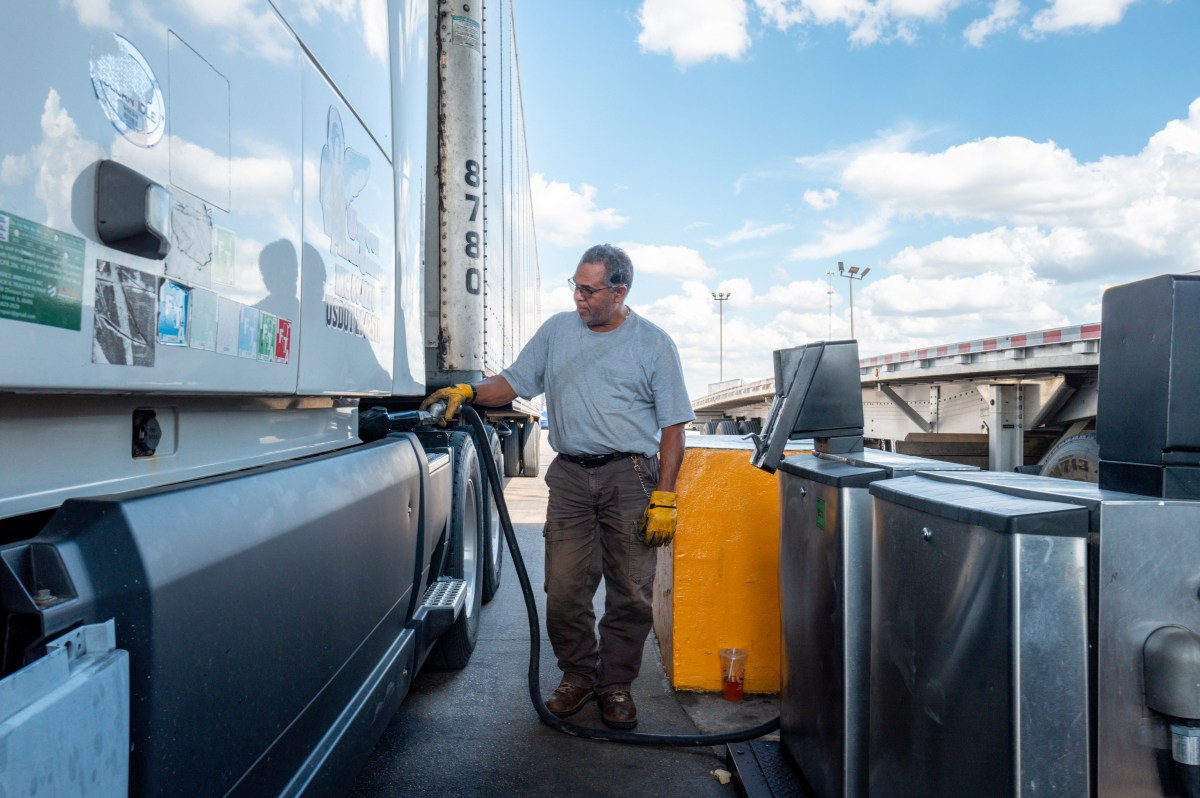
Texas Republican Governor Greg Abbott declared a statewide disaster over skyrocketing diesel prices, allowing the use of dyed diesel on the state’s roads in an attempt to bring down costs for drivers.
Normally, cheaper dyed diesel is banned for use on the road, but the Republican governor’s proclamation suspends state restrictions and associated penalties for 30 days so operators can use it freely on Texas roads. While Abbott suspended the penalties for using dyed diesel on public roads for 30 days, he did not waive the underlying fuel tax liability.
Under the declaration, some restrictions on the use of dyed-diesel for commercial transportation are also lifted, including: raising the allowable weight for fuel, agricultural, and timber loads; suspending Texas Low Emission Diesel (TxLED) rules to the extent authorized by EPA; suspending state oversize and overweight permitting requirements for vehicles loaded with fuel, agricultural, or timber products, allowing those loads at a gross weight of up to 95,000 pounds.
"Texas agriculture and freight run on diesel," Abbott said in a statement on Monday. "Record prices put both industries at risk and raise costs for every Texas family. Farmers and truckers can now use dyed diesel on Texas roads, and fuel, crop, and timber loads can move at a higher weight. These steps cut costs on the farm, on the road, and at the store."
The 30-day declaration of emergency can be extended indefinitely.
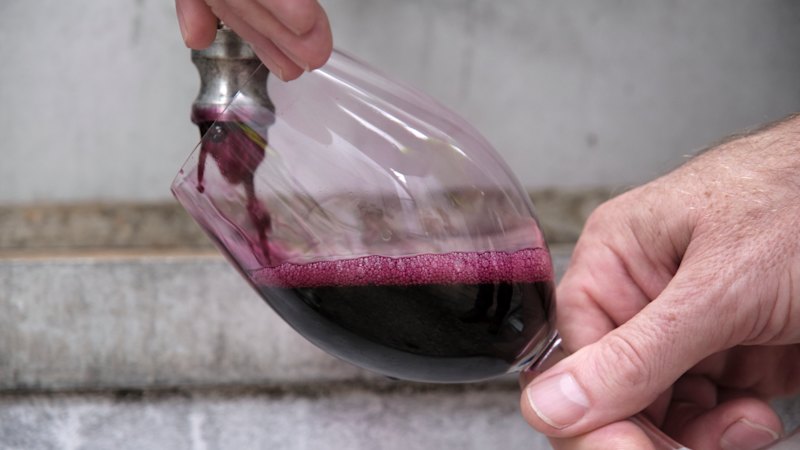
Dyed diesel and regular diesel are chemically identical, but the way they are taxed is fundamentally different. Dyed diesel is exempt from federal excise taxes and restricted to off-road use, such as for construction equipment and agricultural machinery.
It is dyed on purpose so that it can be easily identified and cannot be used in place of regular diesel in on-road vehicles. Under normal circumstances, if law enforcement catches a driver using dyed diesel on an on-road vehicle, they may face hefty fines.
Red dyed diesel is the most common, as it is used for off-road vehicles, machinery, and equipment, as well as home heating. Blue dyed diesel is used for U.S. Government vehicles and equipment only.
In his disaster declaration, Abbott stated that a "shortage of diesel fuel poses an imminent threat or occurrence of harm to the public health and safety" in Texas.
Shortages of the fuel have been reported on social media over the past week in stations across California, Florida and Texas, though they were not confirmed by industry data. One image posted on X last week showed a station in North Texas displaying an "out of diesel" notice, while another post on the social media platform said a station in Orlando, Florida, had also run out.
Patrick De Haan, head of petroleum analysis at GasBuddy, cautioned against "false alarmists" on social media misinterpreting individual stations’ shortages as a larger problem, suggesting the incidents were isolated cases.
"Many keep talking about a diesel ‘shortage’—that must be why prices are surging, right? But shortage implies outages," De Haan wrote on X. "I’d say supply/demand imbalance rather than shortage—we’re not there. We’re tight and expensive, which are very different things."
Diesel prices have shot through the roof in Texas, as in the rest of the country, since the start of the war in Iran, which has disrupted the transit of oil through the Strait of Hormuz and restricted oil and gas exports from the region.
As of Tuesday morning, the average cost of diesel in Texas was $5.86 per gallon, up from $3.17 per gallon a year earlier, according to the American Automobile Association (AAA), and $3.30 per gallon in early February.
While dramatically higher than this time of the year in 2025, the statewide average was significantly lower than the national average of $6.45 per gallon on the same day.
Removing restrictions on the use of dyed diesel and allowing vehicles fueled by it to run on the road "would save Texas truckers the 24.4 cents-a-gallon federal excise tax plus another 20 cents from Texas state tax," Javier Blas, energy columnist at Bloomberg, wrote on X.
Considering that many states have much higher taxes, with the national average for the state tax at 35.5 cents per gallon, a similar measure would result in much higher benefits. "It’s the same ULSD with red dye and no taxes, so it could save on-road users ~60c/gal" across the country, De Haan wrote on X.
But both Blas and De Haan point out that farmers, who are already struggling with higher diesel prices, will not benefit from waiving dyed-diesel restrictions. "Farmers already use dyed diesel and are still paying record prices," De Haan said. "Taxes aren’t the problem, supply is."
Another measure proposed by Abbott, the request for EPA to waive ULSD requirements, could also backfire against drivers and farmers.
"Allowing more sulfur will likely lead to engine damage on newer vehicles," he wrote on X on Monday, referring to Abbott’s request for EPA to waive ULSD requirements.
"More specifically, using higher sulfur diesel can clog diesel filtration, catalysts and DEF systems over a medium period of time, reducing performance and causing issues."
Newsweek contacted Abbott’s office for comment by email on Tuesday morning.
California is the most expensive state for diesel at $8.39 per gallon as of Tuesday, according to AAA, followed by Washington at $7.42 and Hawaii at $7.15. These were the only states where diesel prices were above the $7 per gallon mark. But in 17 states, they were above the national average of $6.45.
Texas has the lowest average at $5.86 per gallon, followed by Oklahoma at $5.93 per gallon and Louisiana at $5.95 per gallon. These were three of only four states where diesel prices have not reached above the $6 per gallon mark, including Mississippi, where the statewide average is $5.98 as of Tuesday. In South Carolina, it was $6.00 per gallon.
States across the country are rushing to introduce measures and waive taxation and regulations they hope will lower energy prices for voters ahead of the November midterms. In Georgia, Governor Brian Kemp suspended the state’s excise tax on fuel for 30 days, taking effect at 12:01 a.m. on Tuesday. The measure will reduce gas prices by roughly 33 cents per gallon, according to De Haan, and diesel by approximately 37 cents per gallon.
In the Golden State, Governor Gavin Newsom waived California Air Resources Board (CARB) gasoline transition dates, allowing the entire state to switch to cheaper winter-blend gasoline early. "Trump’s war in Iran has driven up the price of oil around the world, and Californians have been paying the price every time they fill up," Newsom, who is rumored to run for the presidency in 2028, said in a statement.
"For over seven months, the Trump administration and Republicans in Congress have failed to protect working families from their nationwide gas and diesel price crisis—and there is still no end in sight to the war. California will keep doing what we can to bring costs down and protect consumers—but states cannot indefinitely insulate families from a global oil shock. Trump must end his war."