Texas Is Democrat Blue Mirage. Paxton, Trump Polls May Bring It Into Focus - Newsweek
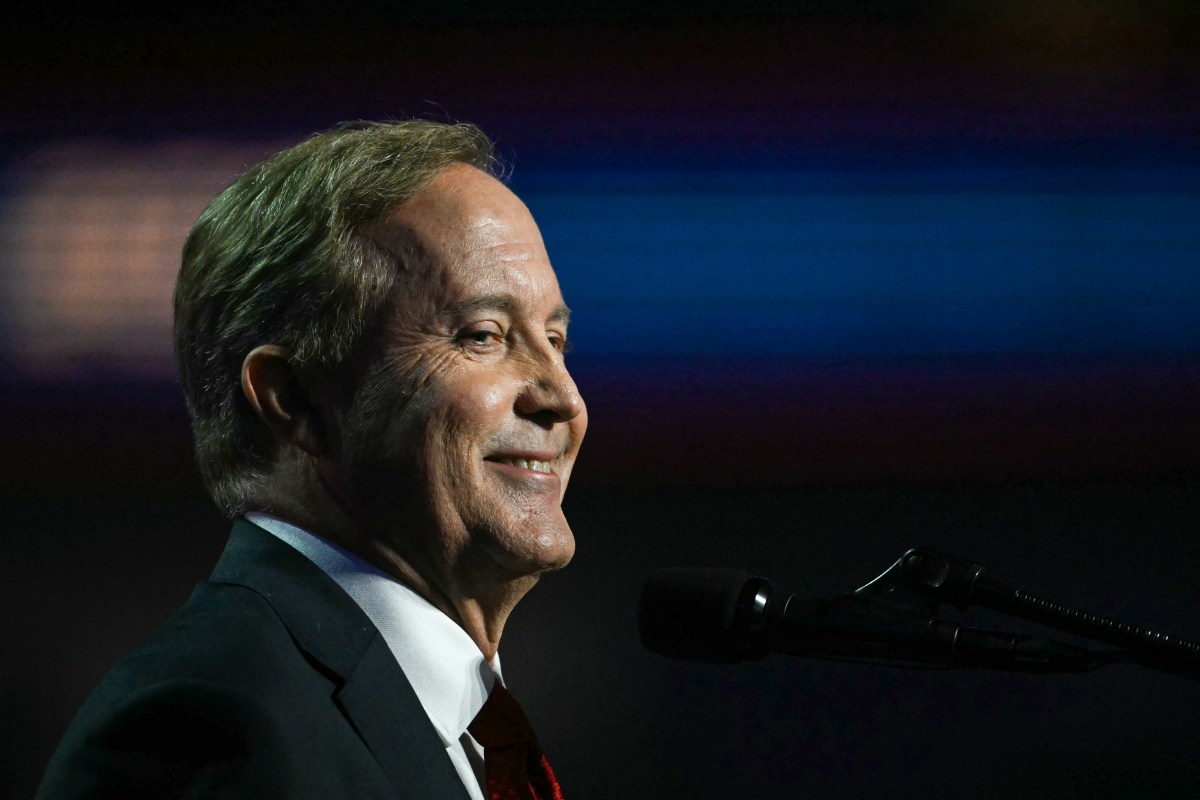
While experts disagree over CNN analyst Harry Enten’s claim Thursday characterizing Texas Attorney General Ken Paxton as the least popular Texas Republican Senate nominee of the century, they largely agree that Paxton is an unusually polarizing politician.
That is fueling Texas' current political paradox: a Republican nominee with deeply negative favorability ratings who remains competitive in a state that continues to lean Republican as President Donald Trump's ratings hit record lows.
Enten pointed to polling on CNN Thursday showing Paxton with a net favorability rating of negative 16 points and argued that no Texas Republican Senate nominee this century had been underwater at a comparable stage of a campaign. While Paxton continues to post deeply negative image ratings, the Republican nominee remains locked in a highly competitive contest against Democratic nominee James Talarico that is drawing record spending.
The Paxton campaign did not immediately respond to Newsweek's request for comment.
Not everyone agrees with Enten's characterization.
Mark P. Jones, political scientist at Rice University in Houston and fellow at the Baker Institute for Public Policy, told Newsweek the answer depends on how popularity is measured.
"From a pure statistical perspective, it's incorrect," Jones said.
He noted that outgoing Senator John Cornyn also faced significant image challenges with portions of the Republican electorate. But Jones said Paxton's political situation differs in an important respect.
“What's different is the intensity," he said. "Democrats dislike Paxton with an intensity that's much greater than they disliked Cornyn in 2020.”
At an event in Texas on Thursday, Trump said of Paxton, "He can be a pain in the ass sometimes, I'll be honest."
Cal Jillson, political science professor at Southern Methodist University in Dallas, said Paxton's political liabilities are forcing Republicans to spend heavily to defend a seat they would ordinarily expect to hold.
"Paxton is a weak Republican nominee in a tough Republican year, so it will cost Texas and national donors many tens of millions of dollars to, perhaps, elevate Paxton over Talarico," Jillson told Newsweek.
At the same time, Jillson argued that Paxton's candidacy reflects a broader trend within the Texas Republican Party rather than a complete break from it.
"Paxton is not unique in Texas Republican Party politics," Jillson said.
Despite those unfavorable ratings, Jones said Paxton remains very much in contention. "Right now, we're in a coin-flip situation. It's almost even money."
A polling average compiled by PollsMax on Thursday showed Talarico leading Paxton by just 0.2 percentage points, while other recent surveys have results from a narrow Democratic lead to a slim Republican advantage.
A Fox News poll released Thursday showed Talarico with a net positive personal rating of 8 points, while Paxton was underwater. The poll showed that Republicans are six times more likely to view Paxton unfavorably than Democrats do Talarico.
Texas remains a Republican-leaning state, and many voters who hold negative views of Paxton may still be willing to support him over a Democratic alternative.
Jones argued that Republicans face a difficult reality. "There's not enough money in the world to rehabilitate the image of Ken Paxton in the eyes of voters in Texas,” he said.
At best, he added, advertising may help "at the margins" by humanizing Paxton.
Instead, Jones believes Republicans are likely to focus on changing perceptions of Talarico. "The real open territory is raising Talarico unfavorables," he said.
The strategy mirrors lessons Republicans drew from previous statewide races, including Senator Ted Cruz's 2018 battle against Democrat Beto O'Rourke.
Jones said Republicans have been reluctant to repeat what some viewed as a delayed effort to define O'Rourke before he built significant statewide support.
Early voting in Texas begins on October 19 and runs through October 30, with Election Day set for November 3. The final weeks of the campaign may become a test of whether negative advertising can alter the trajectory of an exceptionally close race.
Jones said Republican outside groups and Senate allies are beginning to invest heavily in Texas after a relatively quiet summer. "The money is now coming in, and it's coming a little later than would be optimal," he said.
With a flood of advertising expected, Jones said the central question is no longer whether Paxton can dramatically improve his image.
Instead, he said, "it's an open question" how effective attacks against Talarico will be and whether they can shift enough voters to alter a race that appears evenly balanced.
For Democrats, the challenge is maintaining Talarico's current standing while avoiding the barrage of attacks arriving in the closing weeks.
For Republicans, the task may be even more difficult: winning a statewide race with a nominee whose favorability ratings remain deeply underwater.
As Jones put it, the question facing Paxton may simply be how much lower those numbers can drop.
Newsweek’s reporters and editors used Martyn, our AI assistant, to produce this story. Learn more about Martyn here. Contact Newsweek editors on this story: Edward T. Cummins