The afterlives of Biko: Remembering Mbongeni Baninzi - IOL
But they/They would have Me/They would haveYou/Believe/That Steve Biko is Dead/You and I…We know better. - Millard Arnold
On September 25, 1977, Steve Biko was buried. Beaten to death by the apartheid state. Spawning a new language of struggle and cajoling new subjectivities into being, Biko’s Black Consciousness Movement (BCM) influenced a generation.
What happened to BCM and the generation that came after?
Imprisoned, banned, their interior lives remain a closed book. In probing Biko’s comrades one searches for lost time, buried memories. Frelimo. 1974. The colonial overlord retreats.
A Black government, full of revolutionary promise on the doorstep. The Black Consciousness Movement (BCM) planned celebratory rallies across the country.
Speakers from Frelimo were advertised. The state banned the rallies.
At Curries Fountain in Durban, it defiantly went ahead.
The state used it as an excuse for a clampdown. It was to culminate in a trial which was to consign nine of the top BCM leaders to Robben Island.
In the midst of this, if the ANC was looking on from afar, Biko for all the ‘trying times’ was looking ahead. He was breaking taboos of all kinds, from apartheid-imposed identities to international allegiances.
On the United States and Russia Biko was crystal clear: ‘…in being so critical of the economic self-interest in the Third World on the part of American capitalism, I at the same time have no illusions about Russia. Russia is as imperialistic…
Here we are probably faced with the greatest problem in the Third World today.
We are divided because some of us think that Russian imperialism can be accepted as purely an interim phase while others, like myself, doubt whether Russia is really interested in the liberation of the black people.
A pox on both stars and sickles was where Biko was going. Thoughts like these apoplexed the South African Communist Party (SACP).
Responding to this challenge by young militants The African Communist railed Biko was ‘a “liberal,” an idealist, insufficiently anti-capitalist, a pacifist, and lack any understanding of mass struggle…’.
How ironic that Biko who put the liberals on the back-foot would be labelled one himself. Millard Arnold editor of The Testimony of Steve Biko writes ‘That in publishing the books, perhaps the most difficult issue to deal with were the allegations that Biko was a CIA spy.’
BCM was labelled by some SACP ideologues as the Third Force and furthering ‘imperialist interests’. In South Africa of 1984 to have these labels was to be fair game for beatings and assassinations.
It is an under-written part of our history of how BCM activists and those to the Left of the ANC/SACP were beaten, hounded out of townships and killed. I was witness.
Rounded up in the wide net of the State of Emergency. Injuries suffered in a car accident en route to Cape Town. Still weak. Infection. Bundled into an isolation cell.
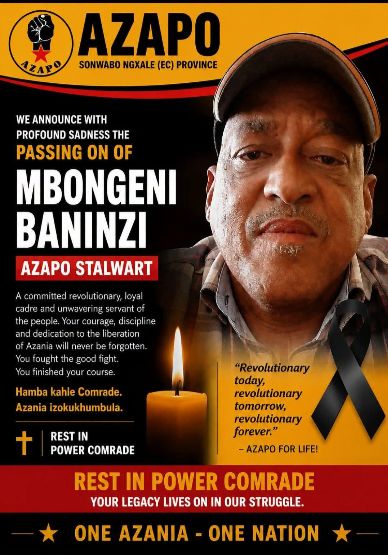
One day, the lone BCM detainee, Mbongeni Baninzi, asked if he could use my cell to study for the matric examination while I was out for exercise. He was an old friend. We were heavily involved in a soccer team, United Teenagers.
Born in Grahamstown, he opened the township world to me. I instantly agreed. I knew he was looking over his shoulder as he was harassed by Party comrades, who saw him as “problematic”.
When I got back to the cell, he was in the process of a beating from SACP goons. Rumours swirled that the Cradock Four, Matthew Goniwe, Sicelo Mhlauli, Fort Calata and Sparrow Mkhonto had died at the hands of BCM.
It was a ridiculous accusation but a convenient weapon to terrorise BCM and other groupings on the Left.
By now, BCM comrades were being chased out of Grahamstown townships by Charterist jackbooters. They took refuge on top of a hill that we referred to as Sugar Loaf.
Everywhere labelling and ostracism was taking hold. It was part of a whispering campaign that labelled critical voices counter-revolutionary. At the heart of this was Rhodes University “radical” Olivia Forsyth.
Her word gospel. Olivia was an apartheid spy!
At a time when we were supposed to be at our most imaginative, prefiguring the society to come, we faced the most the zealous policing of the boundaries of resistance.
The ANC/SACP were worried that the rebellion of the 1980s was running beyond their organisational habit.
And so, on the ground, the path to negotiation would be prepared by slandering, marginalising and even killing those who did not genuflect to “the line” that came from Lusaka via Leningrad.
Head honcho of the SACP, Joe Slovo did pen a mea culpa in 1990. It has rather the same feel as the words of Whites who condemned apartheid after it had fallen: ‘It is not enough merely to engage in the self-pitying cry: “we were misled”; we should rather ask why so many communists allowed themselves to become so blinded for so long.
And, more importantly, why they behaved like Stalinists towards those of their comrades who raised even the slightest doubt about the “purity” of Stalin’s brand of socialism.’
“Behave like Stalinists‟ is mentioned as if this was some snarky middle-class encounter at a meeting or a snub on a street. No. It was ice-picks.
Stalinist enforcers were prepared to kill and would kill those who were seen to stray from the “line”. One wonders how many times this would have involved tipping off the regime, how many times problematic individuals were brought to the attention of the enforcers by the SB and how many would pay with their lives for not behaving like Stalinists.
As the crusty Trotskyite Baruch Hirson wrote we should never forget how Slovo and his “comrades” have acted as replica Stalin’s through their entire political lives. …’.
In his 20s, banned, exiled, detained, Biko refused the ideological straitjacket of Stalinist theology. Battling for example in his writing between ideas of innate qualities and ethics of African people and Fanon’s warning that a ‘black skin is not the repository of specific values’.
Memorably in a contemporary world of constant accusations of cultural essentialism and purity, Biko tells us, “cultures affect each other, like fashions, and you cannot escape rubbing up against each other’s cultures”.
There would be criticism from the inside and without about BCM masculinity and the marginalisation of women.
Daniel Magaziner reflects that ‘Women were reduced to witnesses, watching and celebrating as their men attained a rhetorical victory…’.
It is a story as long as the very first liberation movements. Still, for some of us a generation before, the women of BCM swaggering down the streets of Durban’s Casbah, smoking, holding hands across racial boundaries, pumping clenched fists at the head of demonstrations, were an object of fascination.
But object, nevertheless. To whom did they ever speak or scream? What did it feel like to love a man whose being was, by definition, clandestine?
Who invoked a mission no less important than liberating thirty million people?
Who, at the end of the day, was content to put his adventures, some wrong-headed a mile away, above a life he promised when making children with you?
As I pursued afterlives, there are stories here whispered to me in late night phone calls only for the next morning for me to be begged to wipe it from my memory.
Weighty secrets seem to haunt these once youthful members of the BCM, whose lives were shattered by arrests, torture and prison-terms.
What’s worse, when they did emerge from jail, the political pendulum had swung decisively towards the party of exile, the ANC.
So, many either had to make their peace with the ANC or sneak away into personal ghettoes, wheeled out when reminiscences about BCM historical contributions were tolerated, to tensely reflect on what was and what would never be. Sometimes, I would get a promise that “all would be revealed” only for the person to retreat.
Others through the hard years, little by little… put aside the burning summer in their bodies and all they were left with was “lust and rage.”
I will not betray a confidence with identifying detail. But one of the most devastating and yet unshrinking confessions was no more than a midnight doubt: What if we were just a gang? With style as a politics? I mean we had a good time.
We were twenty friends, jolling, arguing, fucking around, sticking it to Nusas, not really attempting - but tempting something. And then we’re taken serious. And the press came. And the police came.
And they kill Steve and they throw a bunch of us in jail. For a long time. And by the time we get out, we’re smashed inside and politics has moved on and being Black is obvious but being African is more. And that’s it for BC. Some frittered off into AZAPO but it’s over. We cannot recreate the scene we made.
There is a call for the Natal Medical School to be named after Biko. He was a student there.
The new corridors of power swing into action. It will bear the name of Mandela; funding and prestige we are told. Biko. Dead. Is still danger. It was a time when ‘the winners seek to re-write history… to obliterate other impulses, other figures of history that could puncture the single narrative’.
And what of the afterlives of Slovo’s people? The SACP post 1990 hung onto the coat-tails of the ANC. Giving it Left cover, rewarded with Ministerial and other cadre deployed posts. With the ANC a minority they abandon ship as if the mess has nothing to do with them.
In 1985 the SACP were decisive in turning COSATU into a surrogate of the ANC. In 2026, vulture like, they are back, trying to snare COSATU into their electoral gambit.
One can only think of Marx’s reminder that history repeats itself ‘the first time as high tragedy the second time as low farce.’
August 2026. I receive news that my bra General, Mbongeni Baninzi had died.
Memories of when he was attacked, the dignity he carried afterwards, the moment when we bonded joy and plotted hope, flash like an icepick.
Ashwin Desai is Professor of Sociology at the University of Johannesburg.