The big Japan-Bangladesh jobs deal that never was: Tokyo debunks viral claim
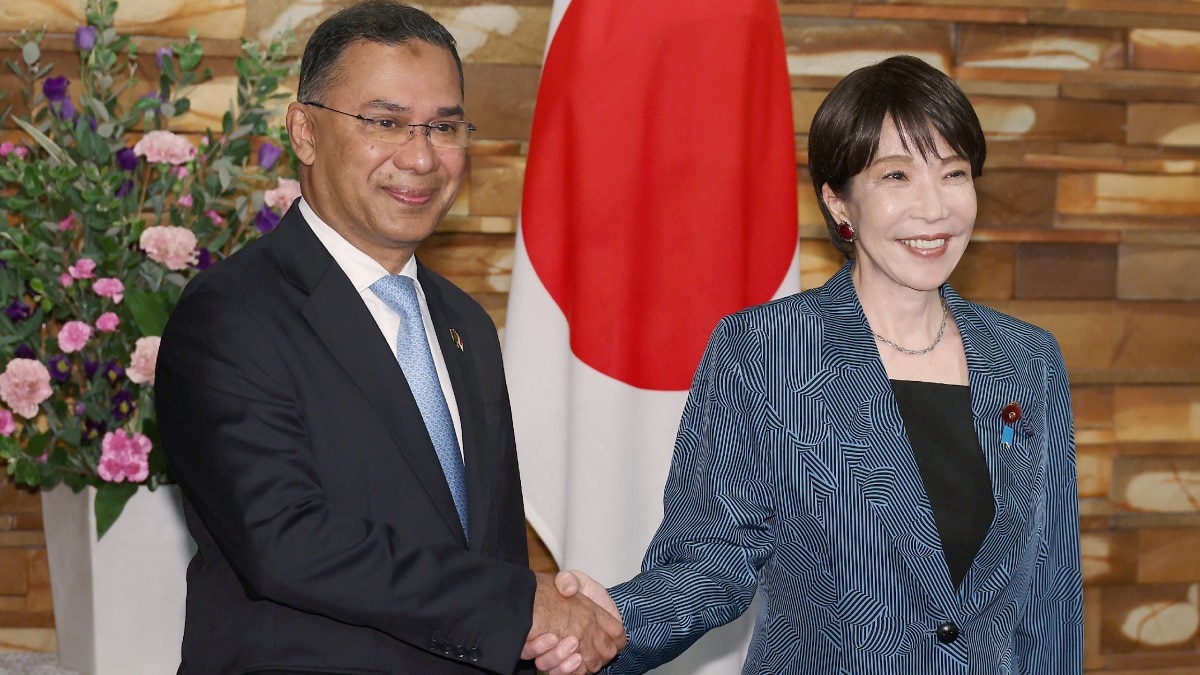
Japan has rejected claims circulating on social media that it agreed to accept 1 lakh workers from Bangladesh, clarifying that no such agreement or commitment was reached during Prime Minister Tarique Rahman's recent visit to Tokyo. Putting the rumours to rest, Japan's foreign press secretary termed the claims false. The speculation had even drawn comparisons with India, with questions being raised over why Delhi had been unable to secure a similar deal.
In a post on X on Thursday, Kitamura Toshihiro, Japan's foreign press secretary, said no such discussions were held during the bilateral meeting between Prime Minister Sanae Takaichi and Rahman. "While recent social media posts have falsely suggested that the government of Japan agreed to accept 1,00,000 workers from Bangladesh, no such fact exists, including within the discussions during the Japan-Bangladesh Summit meeting on October 27," Toshihiro tweeted.
The source of the viral claim is not known. It was amplified by several Bangladeshi channels, which said a large-scale plan had been finalised to send 1,00,000 skilled Bangladeshi workers to Japan each year.
According to a report in bdnews24, during Rahman's visit, Dhaka sought to expand employment opportunities for Bangladeshis under Japan's Specified Skilled Worker (SSW) and training programs. However, Japan has made no blanket commitments.
Under SSW, eligible foreign nationals are allowed work in sectors facing labour shortages.
The recruitment system in Japan involves language tests and technical certification. There is no such program that involves automatic allocation of jobs to individual countries.WHAT WAS DISCUSSED DURING THE SUMMIT?
According to the Japanese government's official statement, the October 27 summit focused on strengthening economic cooperation, investment, connectivity and regional security.
Japan projected that private investment by Japanese companies in Bangladesh could reach around 1 trillion yen (Rs 60,398 crore) over the next five years, potentially generating 2 lakh jobs.
Both countries also agreed to promote the Bay of Bengal Industrial Growth Belt initiative under a new framework called "BIG-B for Shared Prosperity".
Both sides also signed six bilateral agreements and two major loan pledges focused on local governance, industrial investment, and maritime safety.HOW DID THE 1 LAKH WORKERS FIGURE EMERGE?
The viral claim appears to be linked to an earlier announcement made in May 2025.
At a human resources seminar in Tokyo, Japanese business representatives had announced plans to welcome at least one lakh Bangladeshi workers over five years to address Japan's labour shortages.
Two memorandums of understanding (MoUs) involving Bangladeshi employment agencies and Japanese organisations were also signed. However, this announcement was separate from the October 27 summit.
Presently, around 45,000 Bangladeshi nationals work in Japan, according to data from the Immigration Services Agency. They are involved in small businesses and in manufacturing and caregiving sectors.JAPAN-BANGLADESH EMPLOYMENT AGREEMENT
On October 17, a separate employment and skills-development agreement was indeed signed between Japan and Bangladesh. It included a framework for recruitment, worker protection and skill development.
Recruitment under this arrangement is scheduled to begin on April 1, 2027. The agreement will initially remain in force for five years, with an option to extend it for another five years.
However, nowhere does the agreement set a compulsory annual quota of 1 lakh Bangladeshi workers to be sent to Japan.- Ends