The Big Read: With vaping increasingly rampant among youths despite ban, what more can authorities do? - CNA
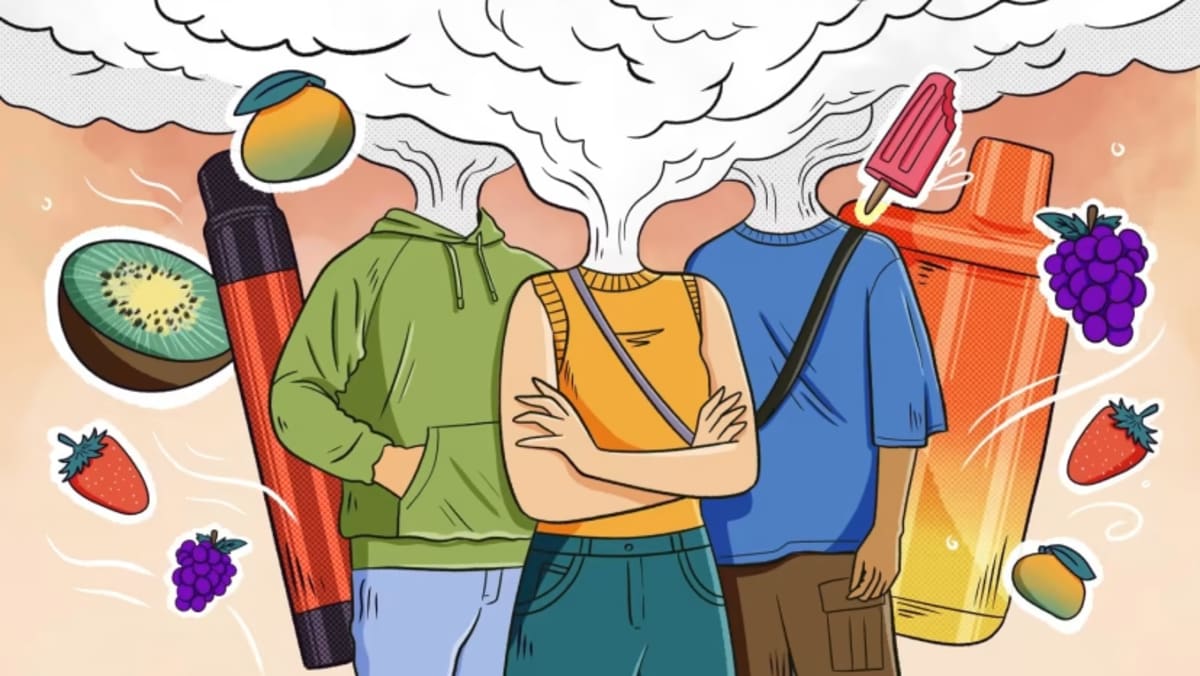
SINGAPORE: When Henry first started using electronic vaporisers, or vapes, back in 2020, it was because it “seemed easier to hide” and “tasted better” than normal cigarettes.
While the 28-year-old was already a smoker, the COVID-19 measures imposed then meant that he had to stay at home most of the time, in close proximity with his family.
In those few months, his vaping device — which along with all vaping related-products are banned in Singapore — came in handy.
“I definitely vaped more during the circuit breaker, because my family doesn’t know I smoke, so it’s a bit strange to just go out randomly for a smoke break,” said Henry, who works in publishing.
CNA Games Guess Word Crack the word, one row at a time Buzzword Create words using the given letters Mini Sudoku Tiny puzzle, mighty brain teaser Mini Crossword Small grid, big challenge Word Search Spot as many words as you can Show More Show Less “I could just vape in my room, and no one will know.”
Henry is far from being the only user of vape here, with the illegal practice attracting more and more young people here.
TODAY spoke to 11 “vapers” between the ages of 20 and 28, all of whom, including Henry, were given pseudonyms, as they are aware that what they are doing is against the law.
The handheld battery powered device, which looks like a highlighter pen or pod, works by inserting a pod of vaping liquid into it, which comes in a variety of different flavours.
From the liquid, the vape then creates an aerosol that looks like water vapour, but contains nicotine, flavouring, and other chemicals. Users then inhale the aerosol, and the nicotine and chemicals pass into the bloodstream.
They exhale the remnant vapours, which has the appearance of mist, and while this vapour is sweet smelling, the scent does not linger on clothes.
Vaping became popular around the world in the early 2010s. While there are no official statistics to show how many people in Singapore currently vape, indications are that the practice has been growing in popularity over the past few years, particularly among youths.
Last year, the Health Sciences Authority (HSA) caught 4,916 people for vaping, an almost fourfold increase compared with 1,266 people in 2020.
The increasing prevalence of vaping is not only confined to those above 21, the legal smoking age, but has also seen children and teenagers pick it up as well.
The Ministry of Education (MOE) said last year that the number of students caught for smoking and vaping offences was at about seven for every 1,000 students over the past three years.
The number might well be larger, as there are students who have never been caught vaping.
This was the case for Sarah, who began vaping in 2020 during her first year of junior college, when she was 17. She had already been smoking at that time, but found it hard to get her hands on cigarettes as she was underage, and noticed that the smoke left a smell on her clothes that was easy for her teachers or parents to detect.
With vaping, she did not have these issues, as there was virtually no smell left behind by the vapour, and the small device was easy to conceal.
“I think vaping is way more accessible, when you’re purchasing them, the sellers don’t really ask for IC,” she added.
Now that she is 20 and in university, Sarah still finds herself vaping “all the time”, whenever she has free time alone, or in private social settings.
Then there is Joseph, 23, who has vaped for about seven years, and in 2020 decided to sell vape products as well.
The university student said that he had observed that vaping was getting more popular in Singapore, with more of his peers doing it and more online channels popping up, such as on Telegram where vape products were being sold.
Thus, he began to buy products in bulk from a local supplier, and would sell them for a profit to friends or friends of friends through word of mouth.
Joseph stopped selling the products about a month ago, but not because he was afraid of getting caught. The logistics of arranging the sales became too much of a hassle, he said.
However, his “side hustle” had earned him an average of about S$500 to S$600 (US$375 to US$450) a month over the past three years.
“In the black market, vape selling is one of the most profitable businesses around,” Joseph said.
The likes of Henry, Sarah and Joseph show that despite the government’s ban on vaping products in 2018, the vaping “scene” is very much alive and thriving.
In turn, the government has taken or is considering firmer action against offenders.
Earlier this month, over 85,000 e-vaporisers and components were seized in the authorities' largest haul to date.
While the Singapore authorities are sticking to their zero-tolerance stance towards vaping, this is not the case around the world.